Investors Challenge DOJ Defense of Solar Plant Fraud Case Dismissal
Private investors argue that a lawsuit over a failed Nevada solar project could recover up to $1 billion for the federal government, yet the Justice Department is defending its dismissal.
By Grace Almasi ·
Investors in the failed Crescent Dunes solar plant are questioning the Justice Department's decision to defend a lawsuit dismissal that they believe could result in billions of dollars in recovery for federal taxpayers. The dispute centers on a $275 million grant awarded to the project, which investors allege was secured through misleading claims about the plant's readiness for operation. While the Trump administration has prioritized the fight against government waste, its own legal team is fighting to keep the case closed.
The lawsuit was filed in 2020 by CMB, an investment group that lost $90 million in a loan to a company tied to the project. The group alleged that companies linked to the Spanish construction giant ACS misled federal officials. They claim the developers stated the plant was ready for use despite major construction defects and a months-long shutdown caused by a molten salt tank failure in late 2016.
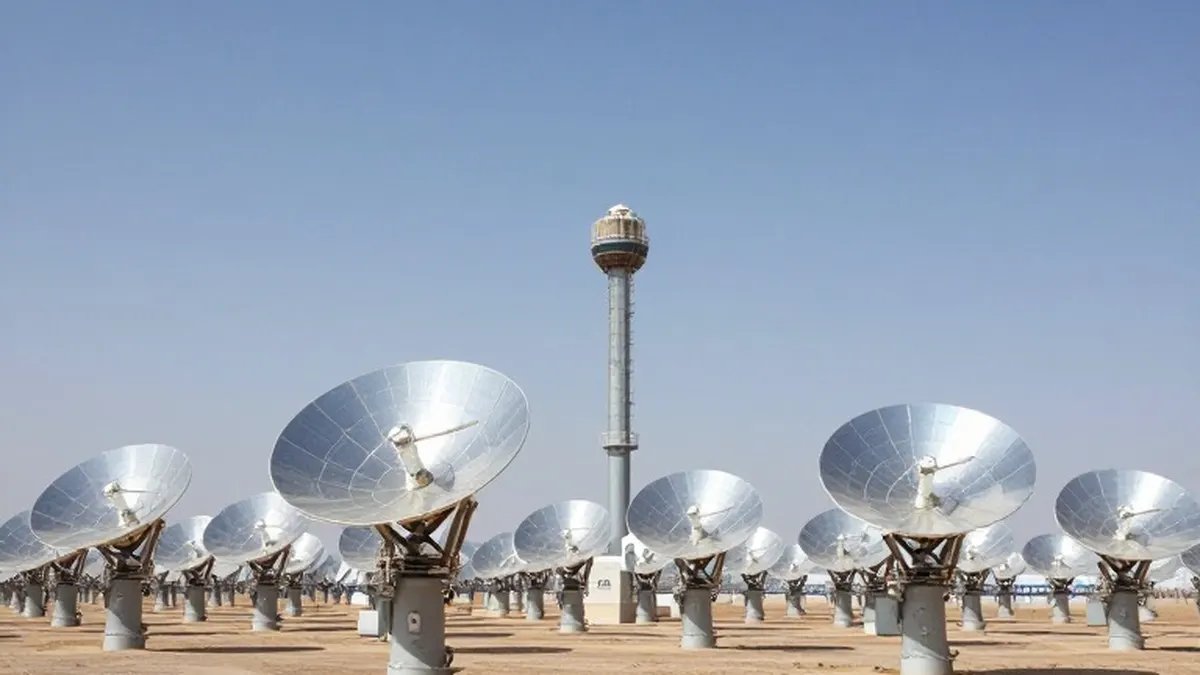
Crescent Dunes, located in Nevada, was a billion dollar government-backed project that began operations in 2015. It utilized a technology involving mirrors to concentrate sunlight onto a receiver to heat molten salt, allowing for electricity generation after sunset. However, the facility suffered from engineering failures, repeated shutdowns, and two bankruptcies before being sold for $7 million in July.
The legal battle has a complex timeline. In November 2024, just two days after Donald Trump's reelection, the Justice Department under President Biden moved to dismiss the case, arguing it would burden federal agencies. The incoming Trump administration could have reconsidered this stance in early 2025. Instead, in an April 2026 filing, the department defended the earlier dismissal to the Ninth Circuit Court of Appeals.
Pat Hogan, who heads the investment group, argues the government is missing a chance to recover funds. He stated that the situation represents a fleecing of the federal government by a foreign entity. Hogan noted that under the False Claims Act, liable companies can face damages of up to three times the government's proven losses, potentially reaching $1 billion in this case.
Court records indicate that Treasury officials questioned the plant's status months before approving the grant. In September 2016, the agency noted that the builder had not formally handed control to the owner. Despite a major tank failure in October 2016, the parties signed a provisional acceptance agreement in December, days before the year-end deadline for grant qualification. This agreement allowed the handover despite roughly 500 outstanding construction items, including seven major deficiencies.
Treasury approved an initial grant payment of $243.7 million in March 2017, while the plant was still offline. A further $31.9 million was approved in February 2018. The Department of Energy, which held a $737 million loan guarantee, also approved the revised handover and waived missed deadlines. Hogan points out that much of the initial grant money was used to repay federal loans, meaning the government effectively paid itself while the plant remained non-functional.
The dismissal has drawn attention from Congress. Representatives Lance Gooden and Carol Miller urged Attorney General Pam Bondi to investigate the decision. Gooden also called for a pause on federal contracts with ACS-affiliated entities, citing a $2.84 billion Navy dry dock project that has already faced delays. The Ninth Circuit must now decide whether the lawsuit can proceed or if the Justice Department's dismissal will stand.
A legal expert noted that while the government's intervention is unusual, it is not extraordinary, as the Supreme Court grants the government substantial discretion in these matters. The government may have a private assessment of the case's value that differs from the whistleblower's view. For now, the investors remain hopeful that the court will reopen the case, offering a final chance to recover their losses and protect taxpayer funds.
More News · National news · Report a business · Got a Story?