AGBO Execs: AI Will Cut Costs, Not Replace Hollywood's Top Talent
At the Tokyo International Film Festival, AGBO leaders argued that artificial intelligence serves as a tool to streamline production processes rather than a substitute for human artistic judgment.
By Amit Chukwu ·
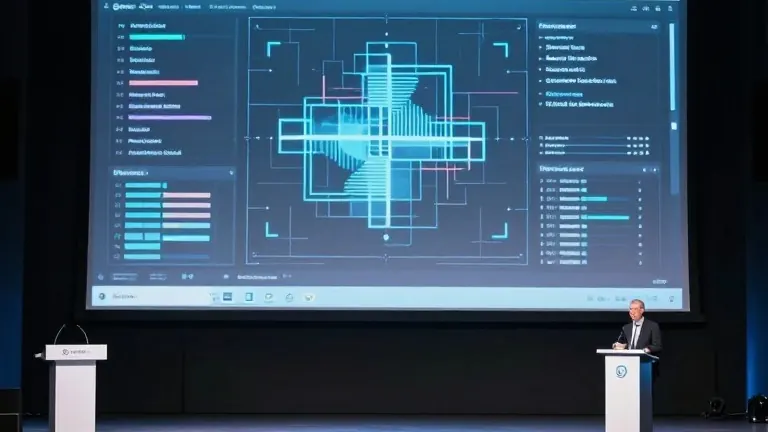
Chris Brearton and Dominic Hughes, senior executives at the Los Angeles-based studio AGBO, stated on Thursday that artificial intelligence is best understood as a productivity tool rather than a replacement for human creators. The pair delivered a keynote at TIFFCOM, the content market associated with the Tokyo International Film Festival, to clarify how their company integrates emerging technology into its visual storytelling workflow.
AGBO, founded by Anthony and Joe Russo, has produced major films including Extraction, Everything Everywhere All at Once, The Gray Man, Extraction 2, and The Electric State. Brearton traced the firm's philosophy to the Russo brothers' early work on the television series Arrested Development. He noted that they used digital cameras and editing techniques to realize a script that would have been prohibitively expensive under traditional methods. This history frames the company's current view that technology should empower narrative possibilities.
Hughes, who serves as the company's chief scientific officer, emphasized that humans must remain in control of algorithmic outputs. He cited Pixar as a model for this balance, observing that the studio developed 3D rendering to tell stories, yet the technology alone did not create the art. At AGBO, Hughes explained that his team builds tools to support artists, ensuring that creative decisions stay with people rather than machines.
The executives addressed industry anxiety regarding job displacement. Brearton argued that misinformation exaggerates the immediate impact of AI on employment. He predicted that the technology will primarily improve process efficiencies in the medium term, allowing creators to focus on craft instead of tedious technical tasks. Hughes added that while artificial general intelligence is approaching, it does not signal the end for elite artists. He compared top-tier creative minds to historical figures like Brahms and Beethoven, suggesting that such pinnacle-level talent is difficult for machines to replicate.
A specific distinction in the discussion concerned the limits of AI generation. Hughes noted that AI excels at critiquing existing work but struggles to create novel content from scratch. He illustrated this by stating that AI could determine if a discovered play was by Shakespeare, but if asked to write an original play, the result would feel like it was written by a twelve-year-old. Brearton added that AI can provide data to help writers struggling with character development in specific acts, offering insights rather than definitive solutions.
The pair also discussed how AI might lower barriers to entry for new filmmakers. Brearton suggested that emerging directors could produce movies on smaller budgets by using AI to achieve their visions. Hughes warned, however, that the technology can generate vast amounts of mediocre content. He viewed the solution as raising the bar for quality, a shift he described as exciting for high-quality entertainment.
Addressing copyright and compensation, Hughes highlighted the importance of tracking tool usage to maintain a clear paper trail. He argued that producing enduring works of art still requires many humans in the production loop. Brearton concluded by describing the future of entertainment as concurrent, where audiences consume multiple media sources simultaneously. He stated that creators must build rich worlds that deliver quality stories across all these platforms at once.
The keynote was moderated by Naman Ramachandran, the Asia Editor for Variety.
Source: Variety
More News · National news · Report a business · Got a Story?