Board of Peace warns Security Council that fragile Gaza ceasefire risks collapse
The body overseeing the US-brokered Gaza truce told the UN Security Council that delays by Israel and Hamas are endangering the agreement and leaving civilians facing another winter in tents and rubble.
By Renata Mehta ·
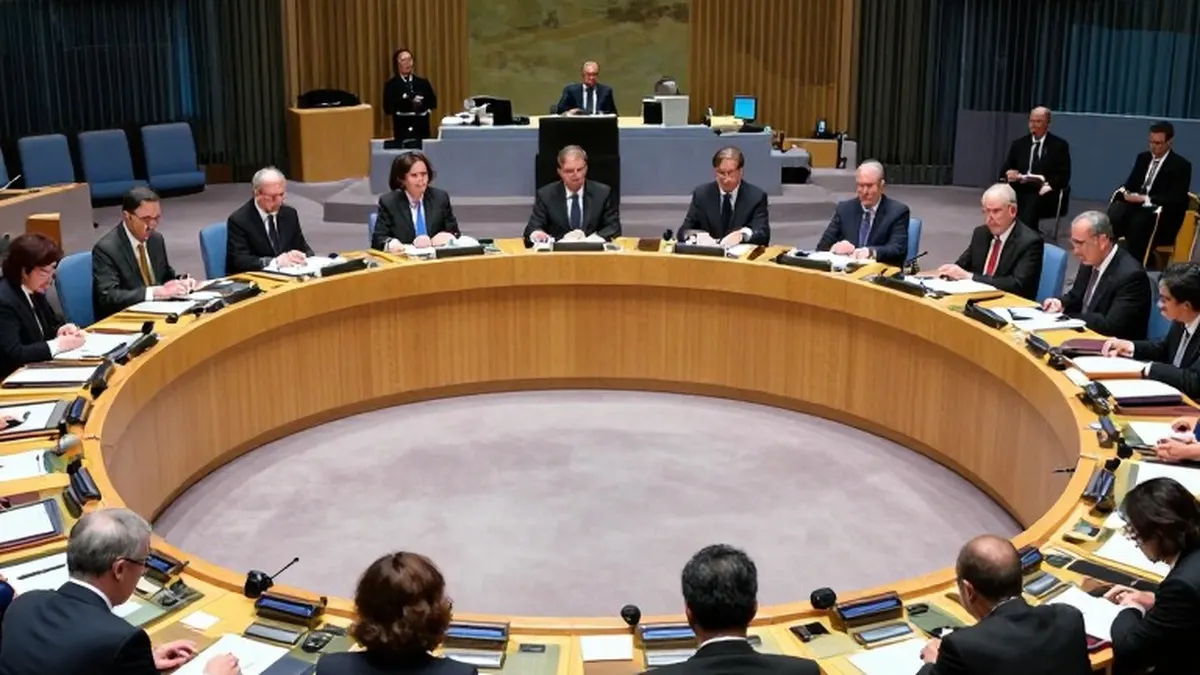
The body supervising the US-brokered ceasefire in Gaza issued a grim assessment to the United Nations Security Council on Tuesday, cautioning that the fragile agreement could fall apart unless steps are taken to carry it out in full.
In its report, a copy of which was obtained by the Associated Press, the Board of Peace pressed both Israel and Hamas to honor the commitments they made last year and called on the Security Council to throw its support behind the deal. "The distance between what has been agreed and what is happening on the ground nonetheless remains the principal risk to the process," the report said.
The board pointed in particular to Israeli delays in approving several of the bodies created to govern the Gaza Strip, arguing that the policy in Jerusalem was effectively keeping Hamas in power. It also criticized Israeli restrictions on the entry of winter shelter equipment, which the board said it had been requesting for months. Israel says it has moved to address the crisis, but 70,000 tents were reportedly flooded by winter rains earlier this month.
The report is the latest in a series of warnings from the board in recent weeks, as deadly Israeli strikes on Hamas operatives and continued limits on some aid have added to the strain on Gaza's civilians, who the board said face "another winter in tents and rubble." Citing Israeli restrictions on supplies and equipment alongside funding shortfalls, the report demanded an immediate "scaled-up entry of shelter and winterization materials" and approvals for pumps, generators and heavy machinery.
The board's first report was delivered in May by its senior envoy, Nickolay Mladenov, a former UN Middle East envoy, who told the Security Council at the time that the truce brokered by US President Donald Trump had stalled since taking effect in October of last year, with the deadlock over disarming Hamas paralyzing progress. Six months later, the new report points to the same problems, noting that ongoing Israeli strikes and Hamas military activity have stalled efforts by both sides to follow the road map.
"A ceasefire that delivers nothing visible cannot be sustained indefinitely," the report said. "Should it collapse, there would be no road map to return to, no administration to deploy and no enabling environment to rebuild."
Hamas agreed to the board's disarmament plan on July 30 after months of drawn-out talks, but progress has since stalled over Israeli objections, with Israel arguing the plan will not result in the terror group actually surrendering all its weapons. The board largely held back from confronting Israel in the following months, believing Prime Minister Benjamin Netanyahu would resist such pressure during an election campaign in which he cast his opponents as soft on Hamas. The October 27 election has now passed, but its results were inconclusive, and with Jerusalem focused on forming a new government, the report sees little room for optimism in the interim.
The report also laments that the Palestinian technocratic government created by the board to run Gaza on an interim basis has still not been permitted by Israel to begin its work. "The absence of decisions by the government of Israel on the necessary conditions and arrangements for the training, deployment and return of civilian police to Gaza continues to impede full implementation of the Comprehensive Plan," it said, urging Israel to act "without delay." The missing approvals have in turn held up an international stabilization force, which is central to Israel's troop withdrawal, Hamas's disarmament and the start of reconstruction.
Appealing to the Security Council to put its full weight behind the agreement it endorsed last year, the board said neither side may use the other's delay as an excuse for its own, and that the process "must lead to the credible pathway to Palestinian self-determination and statehood," with no unilateral step allowed to foreclose it.
The report landed as Ron Dermer, a former top aide to Netanyahu and ex-strategic affairs minister, said Israel should "work with the Board of Peace" on an episode of the "School of War" podcast released this week. Noting that the year-old ceasefire requires Hamas to disarm and Gaza to be demilitarized, Dermer said: "I say give a shot to this Board of Peace," adding that Israel would need to allow steps such as tax revenues, training a new police force and a technocratic government. "You do whatever you can in order to see this done the easy way," he said. The board shared his comments approvingly on social media.