Clarence Thomas Warns Declined California Case Leaves Door Open to Government Compelled Speech
The Supreme Court on Monday turned away a California doctor's challenge to the state's implicit bias training requirement, drawing a pointed dissent from Justice Clarence Thomas, who said the move could let states force private speakers to carry the government's message.
By Grace Almasi ·
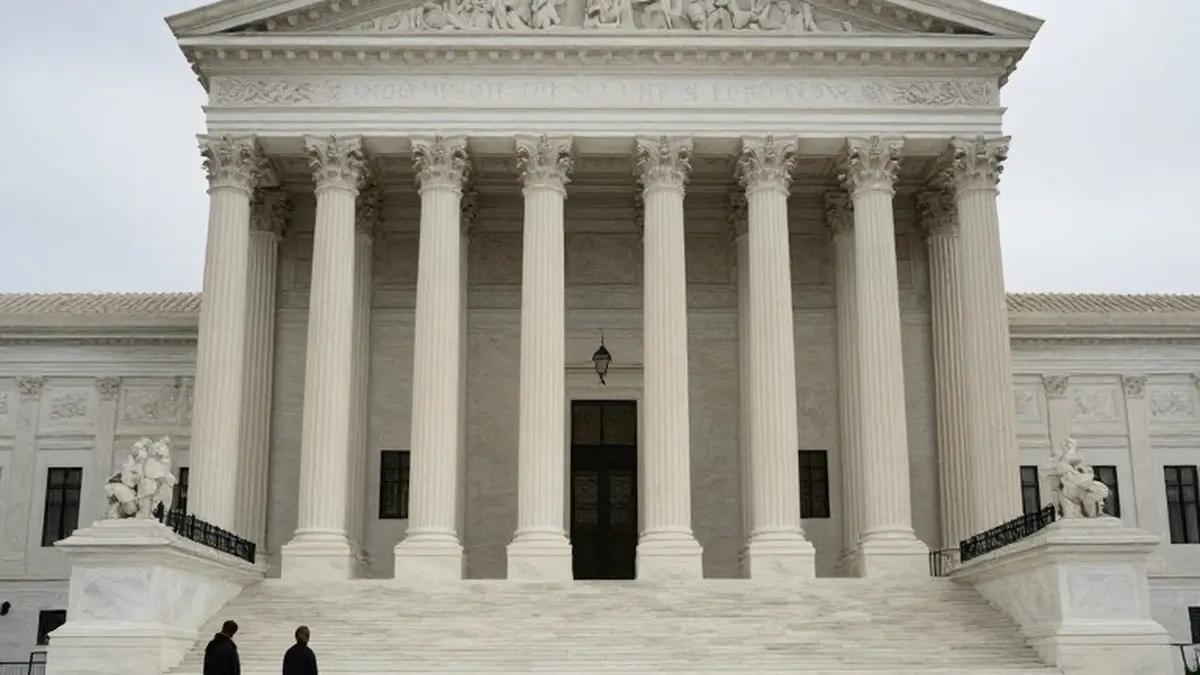
Justice Clarence Thomas warned Monday that the Supreme Court is leaving the door open for states to compel speech from private citizens, after the justices declined to hear a California physician's challenge to a state rule requiring doctors to address implicit bias in mandatory training courses.
Thomas, joined by Justice Samuel Alito, dissented from the court's decision to turn away the petition, arguing that allowing California's requirement to stand could have implications reaching far beyond the medical field. Justice Neil Gorsuch also dissented from the decision not to hear the case, though he did not sign on to Thomas and Alito's argument, and his reasons for wanting to grant review are not publicly known.
The case centers on California's mandate that all licensed physicians complete 50 hours of state-approved continuing education courses every two years. The state requires those courses to include instruction on implicit bias, either through examples of how it affects physicians' treatment decisions and health outcomes or through strategies for addressing how such biases may contribute to healthcare disparities.
Dr. Azadeh Khatibi, who teaches a continuing education course in California, sued the state alongside the nonprofit Do No Harm, arguing the requirement compels private instructors to convey a government-favored message in violation of the First Amendment. Her legal team said she does not want to include discussion of implicit bias in her courses because it is not relevant to her topics and would eat away at the limited time she has for relevant material, adding that she also disagrees that implicit bias is the primary factor driving disparities in healthcare.
California countered that while instructors must include the topic, they are not required to personally endorse the theory and may openly disagree with it. In its brief defending the law, the state wrote that instructors who do not believe implicit bias exists "are free to say so" and may tell course attendees that any discussion of the subject is included solely to comply with state requirements. The state also argued it must be given broad authority to determine what doctors must do to retain their licenses.
The Ninth Circuit ruled last year that continuing medical education courses constitute government speech because of California's extensive regulation of the medical profession, meaning the state's requirements are not subject to First Amendment free-speech scrutiny.
"When, as here, the government does not issue its own messages but instead requires private speakers to communicate the government's viewpoint, the First Amendment applies," Thomas wrote. He added that the government-speech doctrine must not be wielded as a cover for censorship or a cloak for compelled speech, and he disputed the state's claim that it was not forcing instructors to take certain positions, writing that the rule "leaves petitioners no choice but to discuss the topic in a way that affirms the State's view" that implicit bias causes disparities in health outcomes.
Thomas warned the reasoning could extend to other licensed professions, asking whether California could require a keynote speaker at a statewide legal education conference to oppose racial preferences in law firm hiring. "Applying the Ninth Circuit's logic, enough government regulation of the field would convert the private speaker's message in each of these hypotheticals into government speech unprotected by the First Amendment," he wrote. "That result does not follow from this Court's precedents, and it certainly does not follow from the Constitution."
The court's decision leaves the Ninth Circuit's ruling intact but does not settle whether California's requirement violates the First Amendment. A spokesperson for Do No Harm told Fox News Digital it is "disappointing the Supreme Court declined to take up our case," while expressing encouragement that some justices acknowledged the free-speech questions at stake. "We will keep fighting for constitutionally-protected free speech to ensure that healthcare providers are never conscripted to deliver the government's message," the spokesperson said.
More News · National news · Report a business · Got a Story?