
Data Center Power Draw: Harvard Study Finds Hyperscale Sites Match State Usage
Researchers measured electricity consumption from 403 facilities and found output comparable to Missouri, though industry leaders argue the figures are already outdated due to rapid AI expansion.
By Renata Mehta ·
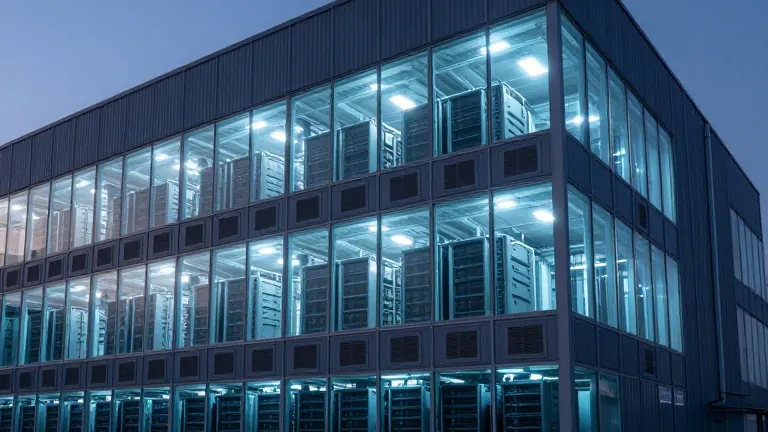
Researchers at Harvard University calculated that the largest data centers in the United States consume as much electricity as some entire states. The new study appears in Nature Sustainability and analyzes specific hyperscale facilities built for artificial intelligence workloads.
The team tracked 403 sites across the country during a twelve-month period from May 2024 to April 2025. During that window, these buildings used 82 terawatt-hours of power. That amount equals 1.8% of total U.S. electricity consumption and matches the annual usage of the state of Missouri or the nation of Denmark.
Gianluca Guidi, the lead author of the paper, noted that the facilities also generated 26 metric tons of carbon dioxide. He explained that the structures house tens of thousands of computers that run continuously. The machinery produces intense heat, requiring constant cooling systems that keep the sites operating like factories that never stop.
Guidi told CBS News that the reported numbers likely understate current demand. He described the April 2025 cutoff date as ancient history in the context of AI development. Since that measurement period ended, the number of large-scale operating facilities in the U.S. has more than doubled.
The industry is now planning or developing an additional 2,000 sites. Guidi said the pace of construction outstrips the ability of researchers to track energy usage in real time. He emphasized that every digital interaction, from email to streaming, passes through these windowless buildings.
While Guidi supports the capabilities of AI, he advocated for earlier public review of environmental impacts. He argued that assessments should happen before construction begins rather than after the fact. He questioned whether society is confusing what is profitable with what serves the public interest.
Guidi directed a challenge to major companies including Amazon, Meta, and Microsoft. He stated that the industry has proven it can build quickly and must now demonstrate it can build correctly. This push for transparency arrives alongside a voluntary pledge introduced by the United Nations.
Simon Stiell, the U.N. climate chief, launched the initiative at COP31 in Turkey on Monday. The pledge asks companies and governments to power AI with cleaner energy sources. Stiell warned that future promises do not excuse rising pollution and higher bills today. As of Tuesday, the U.S. tech firms driving the buildout had not yet signed the pledge.
More Tech · National news · Report a business · Got a Story?