David Greaves Frames 'Once Upon a Time in Harlem' as a Modern Act of Resistance
David Greaves explains why his late father's decades in the making documentary on the Harlem Renaissance is a vital counter to contemporary efforts to erase Black history.
By Grace Almasi ·
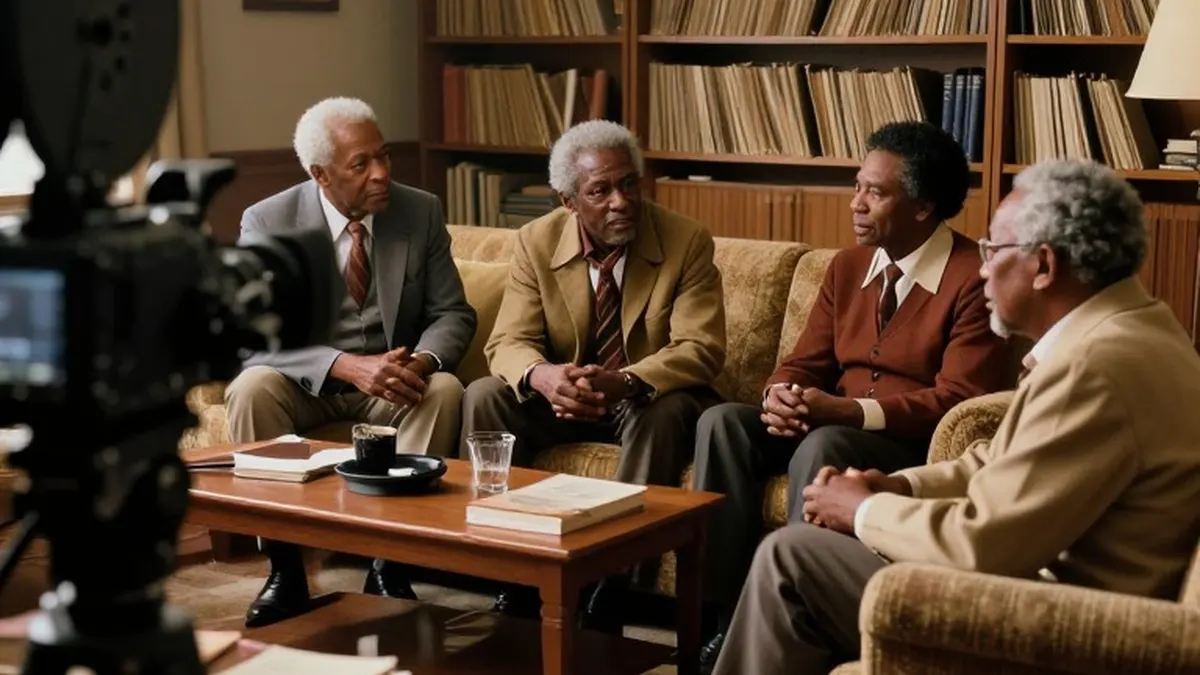
Veteran newspaperman David Greaves has faced skepticism from audiences who question the appeal of a documentary centered on elderly figures engaging in conversation. When he first introduced the project, which was built around footage from a 1972 reunion of Harlem Renaissance luminaries at Duke Ellington's apartment, some inquired why viewers would want to watch a group of older people sitting and talking. Greaves recalled his internal reaction during an interview at the recent SCAD Savannah Film Festival, noting that he was thinking, "Oh, yeah, watch this!" because he understood the profound significance of the discussions taking place.
The documentary, titled Once Upon a Time in Harlem, has since proven Greaves' instincts correct through its strong reception. The film serves as a unique chronicle of a pivotal chapter in African-American history. It made its debut at the Sundance Film Festival in January of this year and was subsequently screened at the Cannes Film Festival in May. In October, the film received a theatrical release from the distributor Neon.
The completion of the project marks a significant milestone for the Greaves family, though it arrived after the passing of William Greaves, the legendary documentarian who had attempted to finish the work for decades. William Greaves died in 2014, meaning he did not live to see the final cut. His son, David, stepped in to complete the vision. At the time of the 1972 gathering that forms the core of the film, David was a 26-year-old cameraman. He had never directed a feature film prior to this undertaking.
David Greaves emphasized the personal connection he felt to the material during a post-screening Q&A at Savannah's Lucas Theatre. He stated frankly that he could not imagine anyone else being the one to finish the project. Greaves also participated in the festival's Doc to Watch Panel, where he was one of ten directors recognized for their outstanding documentary work in 2026.
The more than fifty-year gap between the initial filming and the final release is largely attributed to the perfectionist standards of William Greaves and his second wife, Louise. Louise, who was David's stepmother, passed away in 2023. The couple continued to shoot material over several decades, further tracing the history of the Harlem Renaissance. David Greaves expressed regret that his father and stepmother are no longer alive to witness the enthusiastic response from audiences of diverse ages and racial backgrounds.
Despite the sadness of their absence, Greaves believes the timing of the film's release was intentional. He asserted that the documentary was made to emerge during a particularly important period in American history. He noted that some individuals in positions of power are currently seeking to erase Black history. In his view, the film functions as a form of resistance against these efforts.
The narrative of the film highlights the enduring legacy of the Harlem Renaissance through the perspectives of those who lived through it. By preserving these voices, the documentary provides a tangible connection to a foundational era in cultural history. The success of the film suggests that audiences are eager for this kind of deep, historical engagement.
Greaves' perspective underscores the ongoing relevance of the Harlem Renaissance in contemporary discourse. The film's journey from a personal family project to a widely released documentary reflects the broader cultural need to preserve and celebrate Black artistic achievements. The reception at major festivals like Sundance and Cannes signals a critical appreciation for this preserved history.
The collaboration between father and son, separated by time but united by artistic vision, resulted in a work that feels both timeless and urgently current. The fact that the footage was captured in 1972 yet released in 2026 adds a layer of historical depth to the viewing experience. Audiences are able to witness the continuity of cultural memory through the eyes of the participants.
As the film gains traction, it stands as a testament to the patience and dedication required in documentary filmmaking. David Greaves' completion of his father's life work not only honors their legacy but also contributes to the broader conversation about how history is remembered and taught. The film remains a powerful statement on the importance of preserving Black history against the tide of erasure.
More News · National news · Report a business · Got a Story?