Deep-Sea Mining Auction Near American Samoa Proceeds Amid Lawsuits and Island Opposition
The Trump administration is set to hold its first auction of Pacific seafloor mining leases near American Samoa despite a court ruling, pending lawsuits and fierce resistance from the U.S. territories involved.
By Amit Chukwu ·
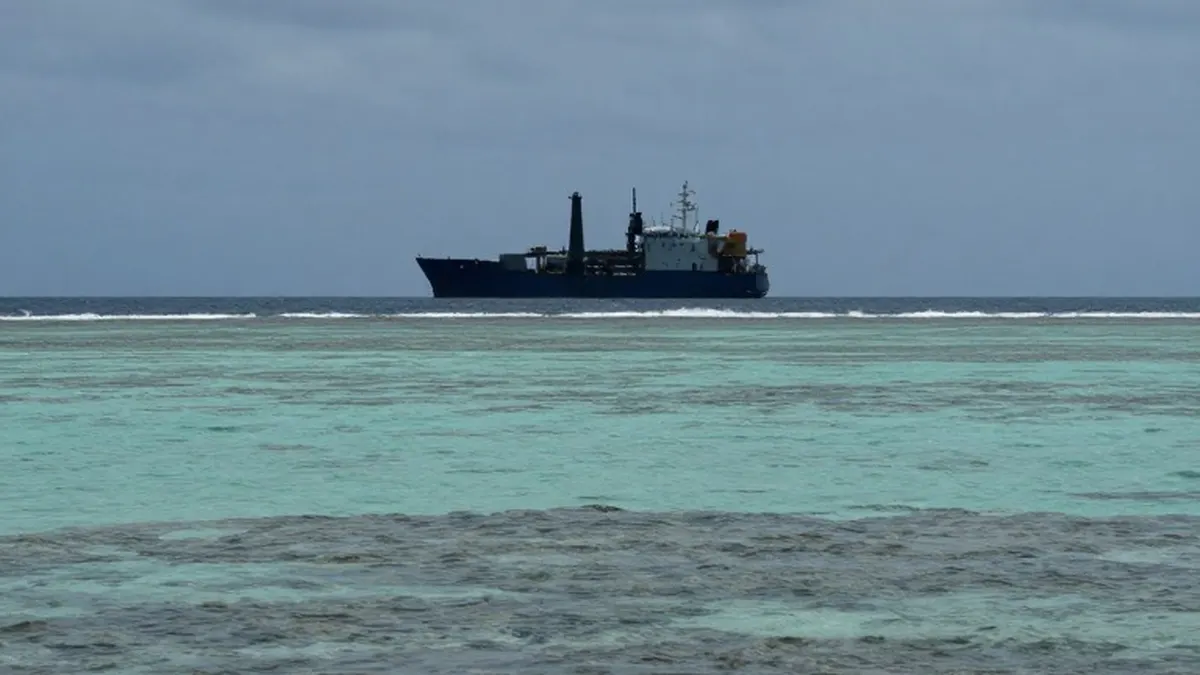
The Trump administration is moving ahead this week with its first auction of deep-sea mining leases in U.S. waters, offering companies access to two stretches of the Pacific seafloor near American Samoa, each more than 15 million acres in size. For an opening bid of $3 million, firms can compete for 20-year leases granting the exclusive right to mine commercially, contingent on further environmental reviews. The sale was scheduled for Thursday in Thousand Oaks, California, thousands of miles from the islands it would affect.
Whether the auction actually happens remains uncertain. A judge ruled on Monday that the government violated the Endangered Species Act by failing to consider the full impacts of a deep-sea mining lease, and by Wednesday morning the administration had not delayed the sale. Two other lawsuits are pending, including one joined by the Faleula o le Manu'atele, the ancient governing council of Manu'a, the American Samoan district closest to the potential lease sites at about 100 nautical miles.
The sale is a pillar of President Donald Trump's push to expand U.S. control over minerals critical to the technology and defense industries. In April of last year, he directed his administration to expedite the search for metals such as nickel, cobalt, manganese and copper on the ocean floor, within and beyond U.S. borders. Another auction of five parcels near the Northern Mariana Islands is proposed for December, sales near Virginia and Alaska could follow next year, and federal regulators are reviewing applications from companies seeking to mine international waters.
Opponents in the territories have rallied to stall the auctions. Sabrina Suluai-Mahuka, founder of the environmental group Finafinau, named for the Samoan word for resilience, traveled from American Samoa to California to protest, carrying a bottle of seawater so members of the Samoan diaspora could touch the waters she is fighting to protect. "If these people are going to be selling our ocean, they're going to see our faces when they do these bids," she said.
Residents of American Samoa and the Northern Mariana Islands, two chains of volcanic islands home to about 50,000 people each, have no voting representative in Congress and cannot vote for president. "When they ask us for public comments, it always feels like we're just screaming at a moving train," said David Cabrera, who leads a group reviving Indigenous net fishing in Saipan. The proposed mining areas border protected marine monuments that include Rose Atoll and parts of the Mariana Trench, the deepest place on earth.
"The ocean is life. It's sacred to us," said Malouamaua Tuiolosega, who represents the Manu'a council. "We lose the ocean, we lose life." The newly formed Marine Minerals Administration has stressed that the auctions grant only initial exploration rights, with any mining subject to more review. Zeno Camacho Deleon Guerrero Jr. of the Micronesia Climate Change Alliance called that assurance "cold comfort," adding, "Once you find what you want, you're going to get it. You're going to start mining." Former Bureau of Ocean Energy Management Director Elizabeth Klein noted a granted lease would be difficult for a future administration to undo.
White House spokesperson Taylor Rogers said in a statement that Trump "recognizes the enormous potential of America's offshore critical minerals to drive technological innovation, economic prosperity, and national security," adding that "a lease sale is not a mandate to mine." Some island leaders see opportunity. "If we don't look for some kind of manufacturing process, something that people will buy, we're going to be destitute," said John Wasko of the American Samoa Economic Development Council. The startup Impossible Metals has offered to share 1% of any future profits with the American Samoan community.
Critics note the leases merely ask companies to "make every reasonable effort" to hire locally, with no binding targets, and no law requires sharing mining revenue with the territories, unlike offshore oil and gas drilling, which returns 37.5% of revenue to Gulf states. Officials also fear for the tuna industry that sustains American Samoa's last cannery. "We're extremely concerned that the disappearance of our longline fleet could translate into the cannery leaving American Samoa, which would be an economic disaster for the territory," said Nathan Ilaoa, the territory's marine and wildlife resources director. American Samoa issued a mining moratorium in its own waters in 2024, and Gov. Pulaali'i Nikolao Pula once wrote that opposition was unanimous, but he now welcomes the auction, calling it "a historic moment for American Samoa and for our nation."
In the Northern Mariana Islands, residents are watching closely as they brace for their own potential auction. The territory is reeling from two super typhoons in April and July and a fiscal crisis that brought a five-day government shutdown in October. "You just want to worry about keeping your lights on and putting food on the table, so it's a challenge to get support for anything other than that," Cabrera said.
More News · National news · Report a business · Got a Story?