Czech Director's Documentary Follows Cuban Punk Dissident Through Exile
Hana Jakrlová's feature documentary, 'Porno Para Ricardo,' chronicles the twelve-year journey of a Cuban punk musician who was forced into exile by the government.
By Renata Mehta ·
Czech documentarian and photographer Hana Jakrlová returned to Cuba in 2014 with a sense of profound déjà vu. Having spent her first two decades in communist Czechoslovakia, she found the crumbling streets and spiritual misery of the Caribbean island strangely familiar. This visit coincided with the early stages of warmer diplomatic relations between the United States and Cuba, a period when many in New York feared that global capitalism would rapidly transform the island. For Jakrlová, however, the experience felt like a step back into her youth, marked by hopelessness and absurdity.
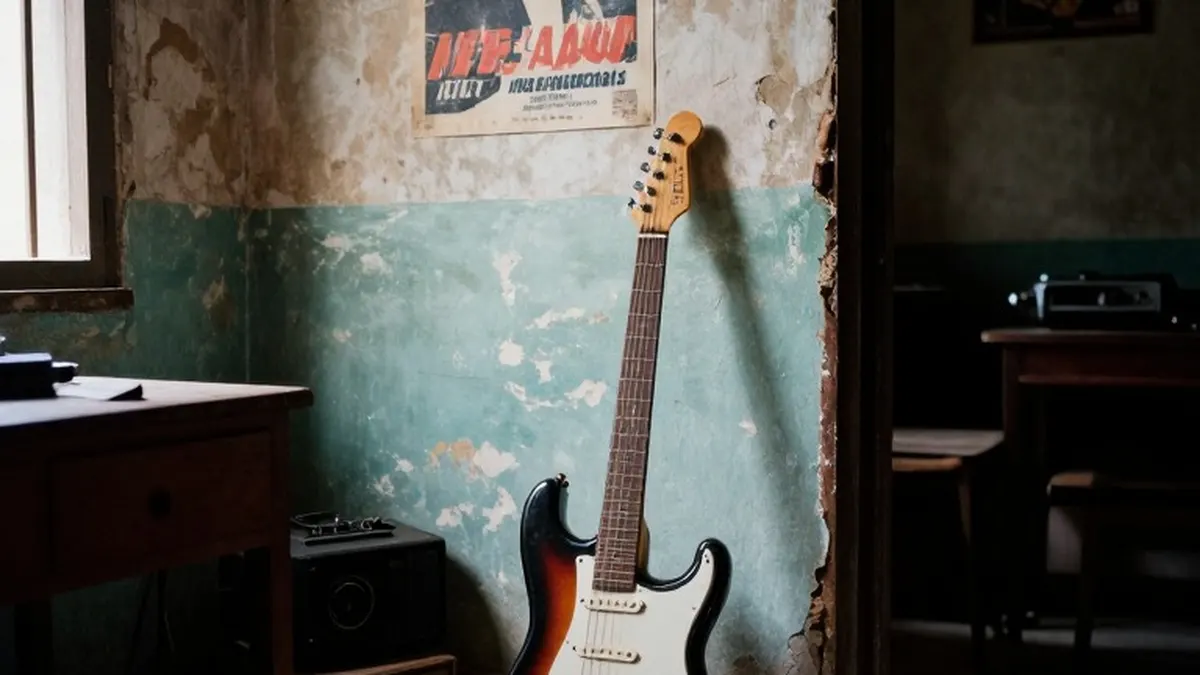
During this trip, Jakrlová met Gorki, the leader of the banned punk group Porno para Ricardo. The band had been driven completely underground by the Cuban regime, forcing them to rehearse in Gorki's home rather than public venues. After attending a rehearsal and speaking with the musician, Jakrlová realized she wanted to create a project centered on his life. Initially, the work was part of a broader photography project focused on Cuban anti-regime artists, but she soon decided to concentrate exclusively on Gorki and his band.
Jakrlová began filming in 2014, starting with her own camera before hiring a professional director of photography. She has since visited Cuba ten times, spending nearly a year in the country in total. She noted that it remains a mystery to her how the establishment continued to allow her entry despite the political climate. To capture the striking visuals of Gorki's struggles, she collaborated with respected Czech cinematographer Adam Olha. The production also relied on local talent, including sound technicians, some of whom faced serious repercussions for their courage in working with the international crew.
The director aimed to portray the struggle of a free spirit trapped in a cage. Gorki had dedicated his life to fighting a totalitarian regime, spending three years in prison and facing daily persecution. The film also highlights his personal pain, particularly his love for a five-year-old grandson who lives in exile with his daughter in Florida, a child Gorki had never been able to see. Jakrlová incorporated archival material shot by the late Cuban filmmaker Claudio Fuentes and occasionally filmed herself to document the process.
The narrative took a dramatic turn when the Cuban authorities issued Gorki a clear ultimatum: he must leave the country or go back to prison. Following this threat, Gorki entered forced exile, which shifted the film's focus from a punk essay on freedom to a story about the experience of exile. During the shoot, the crew faced daily harassment and threats from the police. They also feared for Gorki's safety, noting that several Cuban dissidents had died in mysterious car accidents.
Jakrlová believes the regime avoided arresting the crew because they were concerned about their international image. However, the team was constantly followed, a fact that became apparent during Gorki's subsequent arrest. The director noted a deep connection between herself and Gorki, as both are freedom-loving individuals. While she witnessed the fall of communism in her own country during her adolescence, Gorki had to fight for his freedom throughout his adult life. She compares his courage to that of historical figures like Václav Havel, Oswaldo Payá, and Nelson Mandela.
The greatest challenge in completing the documentary was the deep dysfunction of Cuban society. Jakrlová described the difficulty of directing in a country where systems frequently fail and people rarely expect things to work. Despite these obstacles, Gorki proved to be the most reliable member of the project. He was always ready to work and even risked his life by waiting for the crew to arrive after the regime had threatened him.
The film recently screened at the Ji.hlava International Documentary Film Festival. Jakrlová expressed that she feels incredibly lucky to have met Gorki and Havel, two truly inspirational people. Gorki now resides in Mexico, where he is waiting for a decision on a U.S. visa that would allow him to reunite with his wife, daughter, and grandson in Florida.
More News · National news · Report a business · Got a Story?