DOE Keeps West Michigan Coal Plant Open for Seventh Time
Federal regulators ordered the J.H. Campbell facility to remain in service through February 2027, overriding a recent D.C. Circuit court ruling that the agency exceeded its legal authority.
By Amit Chukwu ·
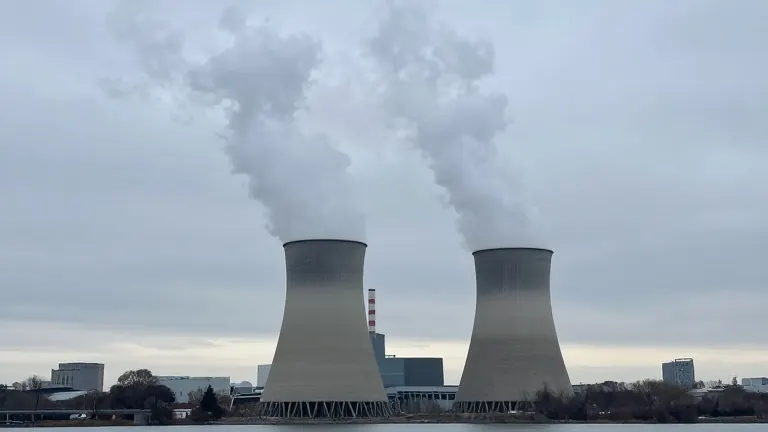
The U.S. Department of Energy issued its seventh consecutive 90-day emergency order on Nov. 13, requiring the J.H. Campbell coal plant in Port Sheldon Township to remain available for operation through Feb. 12, 2027. The directive took effect on Nov. 15 and instructs the Midcontinent Independent System Operator and Consumers Energy to maintain the 1,420-megawatt facility's operational readiness. The order relies on economic dispatch to limit the financial burden on ratepayers while addressing emergency grid needs.
This latest mandate follows a Sept. 11 ruling by the U.S. Court of Appeals for the D.C. Circuit that struck down the agency's original authority to block the plant's retirement. In that decision, Circuit Judge Cornelia Pillard wrote that the department's interpretation of the Federal Power Act would allow it to pick preferred power sources in any state. The court warned that such an approach invites frequent federal interventions that threaten energy market stability. Despite the ruling, the Energy Department has petitioned the full court for a rehearing and continues to invoke its emergency powers.
The plant, which began operating along the Lake Michigan shoreline in 1962, was scheduled to burn its final ton of coal on May 31, 2025. That date was part of a 2022 state-approved clean energy transition plan intended to save ratepayers approximately $600 million by 2040. Federal officials intervened with the first 90-day mandate just eight days before the planned decommissioning. State officials estimate the extended operation has added between $259 million and $295 million in extra costs as of September 2026, with daily unbudgeted expenses ranging from $640,000 to $1 million.
Energy Secretary Chris Wright defended the continuation of the orders in a statement accompanying the new directive. He stated that keeping dispatchable coal generation active is necessary to prevent winter blackouts across the region. Wright cited a joint report from the Federal Energy Regulatory Commission and the North American Electric Reliability Corporation regarding the Winter 2026 Arctic Cold Period. During that event, MISO declared energy emergency alerts and the Campbell plant generated more than 201,000 megawatt-hours of electricity.
Local political tensions preceded the federal intervention. The Ottawa County Board of Commissioners voted 9-1 in February 2025 to approve a nonbinding resolution urging a pause in the closure. Commissioner Josh Brugger, who authored the resolution, told the Ottawa News Network that the board felt close to the area of concern. He noted that the community was divided, with some residents wanting the plant to stay open for reliability and others concerned about environmental issues.
Protests continued after the federal mandates began. On Aug. 12, 2025, environmental advocates and state Rep. Stephen Wooden, D-Grand Rapids, gathered outside the facility gates. Three days later, roughly 100 residents marched in downtown Holland to U.S. Rep. Bill Huizenga’s district office. Michigan Attorney General Dana Nessel, who led a multistate legal challenge, held a press conference outside the plant on May 21, 2026. She argued that the facility should have been retired more than a year ago and that the extensions were imposing high costs on ratepayers.
Consumers Energy, which did not request the emergency orders, confirmed it will comply with the seventh mandate. The utility has added 1,200 megawatts of generating capacity elsewhere in West Michigan to offset the planned retirement. Net operating losses for the plant exceeded $135 million in early 2026. Consumers Energy is seeking regional cost recovery across MISO’s 15-state grid so that Michigan customers do not bear the entire expense. Once the federal mandates expire, the utility expects the remediation and restoration process to take roughly five years.
More Business · Customer Complaints · Report a business · Got a Story?