COP31 Concludes Without Central Climate Pact
The Antalya climate summit in Turkey ended without a binding political agreement, highlighting deep geopolitical divisions and the shift toward implementing existing climate commitments.
By Grace Almasi ·

The 31st Conference of the Parties to the UN Framework Convention on Climate Change concluded in Antalya, Turkey, without reaching a consensus on its central political document, the Antalya Pacts. This outcome marks the longest running climate negotiation in United Nations history that failed to deliver on its primary goal of accelerating climate action. The summit took place against a backdrop of unmistakable evidence of environmental change, including glacier collapses, record high temperatures in Europe, and widespread wildfires across Asia. Despite the joint hosting efforts by Australia and Turkey, the two nations were unable to bridge the gaps between the participating countries.
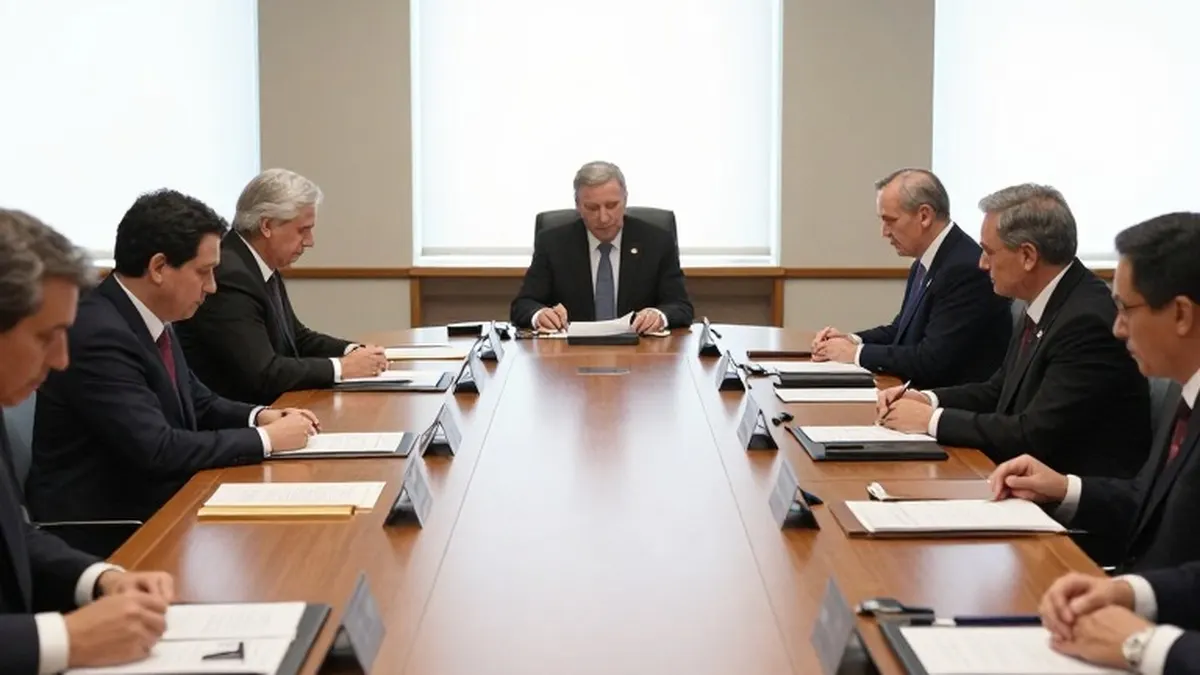
Tensions came to a head on the final day of the talks, which was described as dramatic and fractious. Delegates from several nations walked out of the session in protest over the absence of specific language regarding fossil fuels in the draft text. Disagreements over financial mechanisms for climate adaptation also contributed to the breakdown. These events have intensified questions among observers about whether the annual COP process can still effectively drive global progress on the climate crisis.
This conference was the first to be held after the United Nations warned that global average temperatures are expected to exceed 1.5 degrees Celsius above pre-industrial levels. This threshold was a critical target established in the 2015 Paris Agreement. The draft agreement had acknowledged that previous climate action had failed to meet this crucial benchmark, but that recognition was lost in the final outcome. UK Energy Secretary Miatta Fahnbulleh noted that the summit aimed to confront the hard truth that global warming is set to overshoot the 1.5C limit, necessitating more urgent emissions reductions.
The draft document had proposed keeping the temperature overshoot as short and small as possible while suggesting the use of carbon dioxide removal techniques. This process, which extracts greenhouse gases from the atmosphere, had not been explicitly included in previous final COP agreements. While natural methods like tree planting have limitations in scale and permanence, technological solutions remain controversial and less advanced. The failure to agree on the central pact has left these proposals unratified.
Deep divisions over the role of fossil fuels and climate finance exposed a troubling reality that diplomatic consensus does not last indefinitely. Although a pledge to transition away from fossil fuels was made at COP28 in Dubai three years prior, this year's negotiations could not sustain that alignment. Rich nations also failed to specify an additional figure for financial support to developing countries for adaptation. This occurred despite a previous commitment to triple funding from 40 billion dollars to 120 billion dollars by 2035, a target whose interpretation remains contested. Australian Minister Chris Bowen noted that the geopolitical environment was the most complicated in living memory.
The final meeting featured pointed remarks that highlighted these rifts. EU representative Darragh O'Brien stated that the talks had been hijacked by certain oil states. In a direct address to the EU delegation, Russian delegate Sergei Kononuchenko switched to English to accuse them of providing climate finance only in the form of loans. He described this approach as an old colonial distribution of labor under a new banner. This friction represents a significant blow to multilateralism, the concept that nations can set aside other differences to solve shared problems.
Despite the failure to pass the central political agreement, the summit achieved progress on other items. The agenda included 164 other topics, and several were successfully agreed upon. Notably, funds generated from the global carbon credit system will now be directed toward helping developing nations adapt to climate impacts. The parties also agreed to advance a just transition framework intended to protect workers and communities as economies shift toward clean energy. However, many other issues were left for the next conference, including the work program responsible for driving emissions reduction actions.
The energy transition continues to gain momentum independent of these negotiations. The International Energy Agency reported that the disruption to oil and gas supplies through the Strait of Hormuz has been the largest energy supply shock in history. This uncertainty is strengthening incentives for countries to switch to domestically generated electricity. Furthermore, the economics of solar panels, batteries, and electric vehicles have become increasingly competitive. IEA head Fatih Birol told the BBC that the world has arrived at the age of electricity, with energy security and climate policies now closely aligned.
New investment announcements emerged at the summit as part of the Action Agenda, which mobilizes action from businesses, investors, and cities with a focus on electrification. Dr. Jennie Dodson from the World Business Council for Sustainable Development noted that while much of the transition is cost competitive, policy barriers regarding infrastructure and permitting remain significant. This suggests that while formal negotiations may become less central to the pace of change, governments still play a crucial role in facilitating the shift.
The outcome of COP31 illustrates a changing role for these annual conferences. For the first 30 years, the focus was on building the international framework, culminating in the Paris Agreement. Now that the architecture is largely built, the emphasis is shifting to implementation. Camilla Born, who helped develop the UK strategy for COP26, described the current process as more procedural. It is less about fundamental negotiations and more about ensuring existing machinery works. Veteran negotiator Alden Meyer suggested that the COP process acts as a mirror held up to governments each year, implying that if the reflection is disappointing, the issue lies with the governments rather than the system itself.