Former SpaceX Engineer Drives Minnesota Vikings Defensive Success
Chenzo Funari, a former rocket scientist, brings a unique analytical approach to the NFL's top-ranked defense as an assistant coach for the Vikings.
By Grace Almasi ·
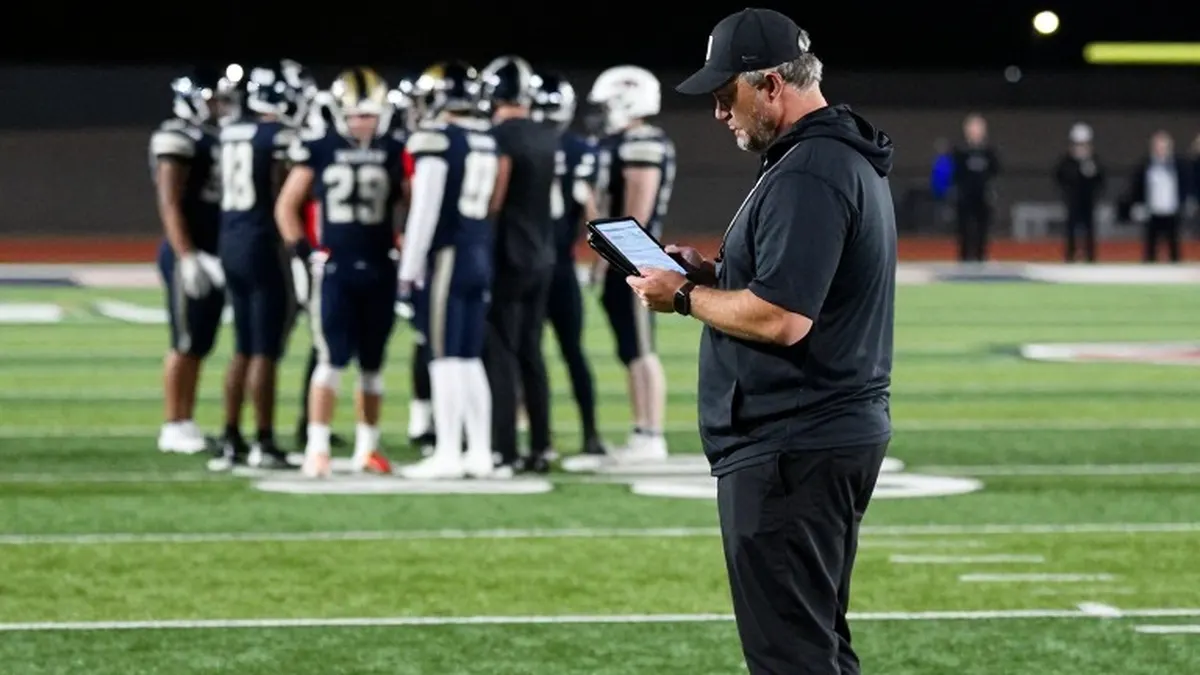
The Minnesota Vikings field one of the most dominant defensive units in the National Football League this season. Known for their unpredictable blitzes and aggressive pressure, the group has made life difficult for opposing quarterbacks. The team currently leads the league in total touchdowns allowed, conceding only 12 scores, and holds the top spot in average points allowed per game at just 14. Additionally, the defense has recorded 37 total sacks, a statistic that highlights their ability to disrupt passing attacks effectively.
A significant factor behind this success is the input provided by Chenzo Funari, the team’s assistant defensive backs coach. Funari brings a distinctive background to the sideline, having previously worked as an aerospace engineer. Before joining the Vikings staff, he spent time at SpaceX, where he contributed to the company’s combustion devices group and the development of the Starship system.
Funari, who is 32 years old, decided to leave his position in the aerospace industry after roughly 18 months. He was not yet 30 at the time of his departure. The move was unexpected to many of his friends and family members, who questioned his decision. Funari recalled that people often asked if he was crazy or what was wrong with him. However, his mother supported his choice, encouraging him with the phrase 'YOLO,' or you only live once.
Born in Cleveland, Funari initially dreamed of playing professional football. He suffered several significant knee injuries as a teenager, which eventually ended his playing career. He also had to adjust to his height of 5-foot-5. After leaving SpaceX, he took a job at TaylorMade Golf before applying for a volunteer coaching position at Youngstown State University in Ohio. This transition involved periods of uncertainty, including nights spent sleeping on air mattresses, as he navigated his new professional path.
Funari found a strong parallel between his engineering work and defensive football strategy. He described the process of creating a rocket as starting with an idea, designing it on a computer, manufacturing the parts, and then testing the final product. He views the development of defensive schemes in a similar light, focusing on how to communicate complex concepts to players so they can execute them effectively on the field. He noted that while the schemes may appear chaotic, the underlying goal is to translate ideas into actionable plays.
Vikings head coach Kevin O’Connell has praised Funari’s ability to analyze opposing teams. O’Connell referred to Funari as a genius and described his analytical skills as a superpower. The head coach explained that Funari often pauses during conversations not because he is searching for words, but because he is determining which layer of his brain to access to make complex information understandable. This ability to break down offensive tendencies has been a valuable asset for the coaching staff.
Defensive coordinator Brian Flores, who is known for implementing exotic blitz packages, was initially surprised when Funari presented him with a detailed research packet on an opposing quarterback. Flores noted that while such information can sometimes be overwhelming, Funari’s analysis was clear and logical. Flores credited Funari with tying together his football background and scientific expertise. Now, Flores uses a mental check he calls the 'Chenzo Filter' whenever the staff needs to run numbers on defensive fronts or coverages. This process ensures that the team is always seeking an analytical edge.
Harrison Smith, a safety for the Vikings in his 15th NFL season, works directly with Funari on a daily basis. Smith, the team’s longest-tenured player, believes Funari understands the game at a high level. He sees Funari’s journey as an example of building toward a specific dream. Smith noted that while it is inspiring to follow one’s passion, Funari also qualified himself for the role through his skill set and dedication. Smith suggested that building rockets was another dream Funari pursued, and his transition to football was a natural extension of his analytical mindset.
Funari remains optimistic about his future in the league. He stated that the sky is the limit for his career trajectory. Potential future roles include becoming a position group coach, a coordinator, or even an NFL head coach. He emphasized that it is never too late to pursue what brings joy to one’s life. For Funari, the key is to always chase a passion, whether it is in aerospace or professional football.
More News · National news · Report a business · Got a Story?