Kim Orders Nuclear Expansion After Snubbing Trump Meet
North Korea's leader inspected two uranium sites and declared its arsenal irreversible, days after skipping a U.S. summit invitation.
By Amit Chukwu ·
North Korean leader Kim Jong Un visited two nuclear materials factories on Thursday and ordered the state to build more weapons, days after he declined President Donald Trump's offer to meet in Asia. The visit, announced by the Korean Central News Agency, marked the latest step in Pyongyang's push to grow its arsenal while U.S. officials maintain that denuclearization remains a core goal of any future talks.
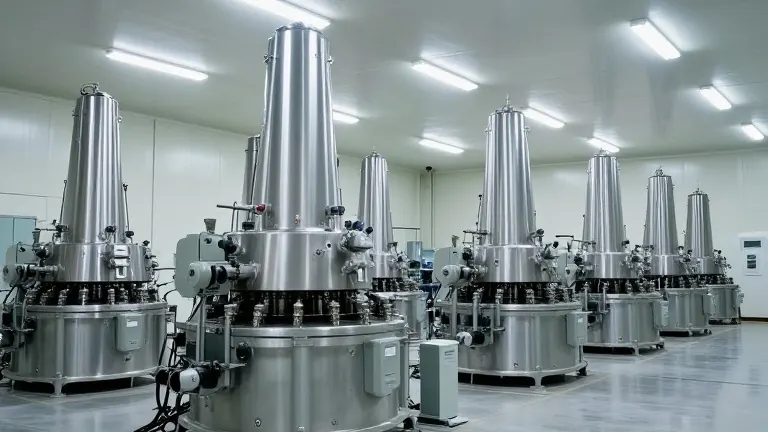
KCNA released images showing Kim walking through facilities with senior military officers. The photos depicted dense rows of equipment identified by analysts as centrifuges used for uranium enrichment and halls displaying what appeared to be warheads. Some of the published images were blurred. On Wednesday, Kim also toured a nuclear-powered equipment base and a research institute. The state media did not specify the locations of the two production factories inspected on Thursday.
Kim justified the buildup by citing changing threats in the region. He accused the United States of encouraging allies to acquire nuclear-powered submarines and share nuclear weapons with them. According to KCNA, Kim stated that the possession of nuclear weapons and the trend of increasing their quality and quantity are now an irreversible reality. He also emphasized the urgency of deploying low-yield battlefield nuclear weapons to counter what he called the most dangerous enemy state across the border.
Moon Seong Mook, an analyst at the Seoul-based Korea Research Institute for National Strategy, said the visit signals Kim's intention to demonstrate the power of the North's arsenal. Moon noted that Kim likely wants to convey that the United States should not demand denuclearization if it seeks a meeting. The analyst added that the inspection may also serve as a status check on annual goals before a year-end party conference.
South Korea's Defense Ministry said it takes Kim's comments on battlefield weapons seriously. The ministry stated that Seoul maintains firm military readiness against North Korean nuclear threats in alliance with the United States. The Joint Chiefs of Staff declined to share an analysis of the facilities reported by KCNA, labeling the information as confidential.
Trump, who visited China last week for the Asia-Pacific Economic Cooperation summit, reiterated his desire to restore diplomacy with Kim. In an interview with the New York Post this week, Trump dismissed the idea that Kim had rebuffed the outreach. He said, "No, he didn't ignore it. You know, we had many leaders there … There'll be a time when we meet … It was just not really the right time. It was a very busy two-day period." Trump also suggested he could restart their correspondence at any time.
International Atomic Energy Agency Director General Rafael Grossi assessed last week that North Korea has been expanding its original uranium enrichment facility at Yongbyon, calling the move a cause for serious concern. South Korea's Unification Minister Chung Dong-young told officials last year that the North operates four uranium enrichment facilities running daily. Kim has previously said he would return to talks if the U.S. drops its hostile policy and accepts the North as a nuclear state.
The next scheduled milestone for the nuclear program is the year-end Workers' Party conference, where Kim is expected to set future goals.