Language: Cambridge Names 'Human' Its 2026 Word of the Year
The dictionary selection contrasts human qualities like responsibility and emotion with the growing influence of artificial intelligence in daily life.
By Renata Mehta ·
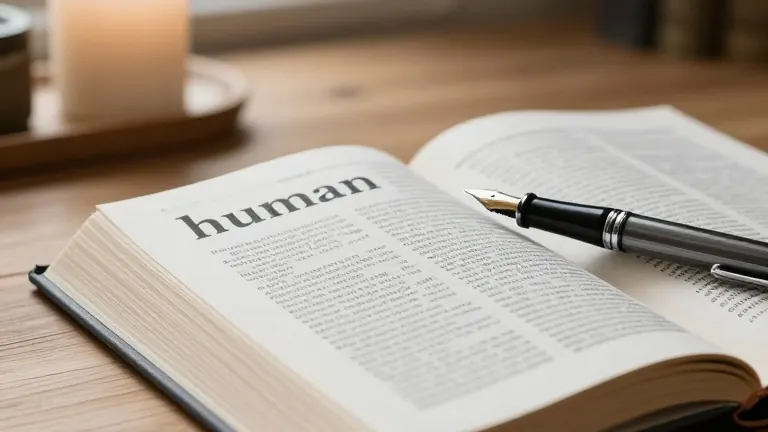
Cambridge Dictionary has selected the word human as its Word of the Year for 2026. The organization chose the term to reflect the current moment where artificial intelligence is becoming increasingly embedded in daily routines. This selection follows the 2025 choice of parasocial, which described an unreciprocated emotional connection often formed with a chatbot. It also follows the 2018 selection of nomophobia, defined as an irrational fear of having no mobile phone service.
Cambridge defines human as having the qualities, faults, and feelings that people possess, distinguishing them from gods, animals, or machines. The dictionary does not provide a detailed list of these specific traits. The selection arrives as many individuals observe AI seeping into their lives, a trend that evokes a sense of urgency or existential concern among some observers.
According to the perspective accompanying the announcement, a defining characteristic of being human is the sense of responsibility. People can acknowledge mistakes by stating, I am sorry, that is my fault. This contrasts with digital interfaces that often display messages such as SYSTEM OVERLOAD or UPDATE IN PROGRESS, 12% COMPLETE. The ability to take fault for errors is presented as a distinct marker of personhood.
Humans are also described as seeking joy rather than merely continuing to exist. This pursuit includes laughter, tears, love, and poetry, driven by feelings rather than algorithms. Emotions such as fear, anger, desire, and courage combine to make human behavior unpredictable and irreverent. These experiences also instill judgment and an appreciation for what endures in life.
The designation of human as the 2026 Word of the Year serves as a reminder of human fragility. Unlike the robots currently in development, humans are aware that they do not last forever. This awareness encourages individuals to strive, laugh, and love while they have the opportunity. The Cambridge Dictionary leaves the specific meaning of the word to the people who use it.
Previous selections from the dictionary included nomophobia in 2018 and parasocial in 2025. The current choice stands apart from those earlier terms, which focused on specific anxieties related to technology and social connections. The 2026 selection broadens the focus to the fundamental nature of the user themselves. The definition provided by the dictionary remains concise, emphasizing the difference between people and non-human entities.
The timing of the selection coincides with increased public discussion about the role of AI in society. The accompanying commentary notes that some people view the integration of AI with a sense of alarm, comparing it to ancient dinosaurs watching an asteroid approach. Others, however, might feel reassured by the scale of their own existence. The dictionary has now placed the term at the center of annual linguistic recognition for the coming year.