Michigan Election: State Board Certifies Results After Four-Year Shift
The bipartisan board voted unanimously to finalize outcomes, validating a Democratic sweep and correcting a minor counting error in Wayne County.
By Renata Mehta ·
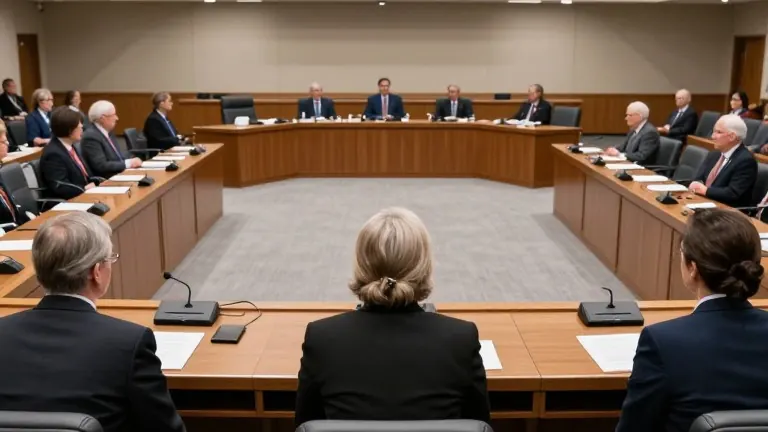
The Michigan Board of State Canvassers met in Lansing on Monday, November 23, to make the state's general election results official. The four-member body voted 4-0 to finalize the outcomes, ending the unofficial status of the November 3 vote. This decision confirms a major political shift in the state, which had supported President Donald Trump in the 2024 election.
State Elections Director Jonathan Brater described the certification process as painstaking work that begins immediately after polls close. Local officials count ballots and reconcile tabulator totals with poll books. These finalized statements are then sent to the state's 83 bipartisan county canvassing boards. Each county board consists of two Republicans and two Democrats and must certify local results within 14 days of Election Day.
Brater noted that voter turnout in 2026 matched levels seen in the 2012 and 2016 presidential cycles. He stated that 4.8 million Michiganders voted, continuing a streak of five consecutive federal elections with record-breaking participation. He attributed the high volume to a crowded ballot and high-profile races that drew intense scrutiny from various groups.
The certification covers statewide races, including the governor's office, attorney general, secretary of state, and U.S. Senate seats. Democrats won all four positions, along with control of both legislative chambers. The board also certified the defeat of Proposal 1, which sought a constitutional convention, and the passage of Proposal 2. Proposal 2 bans campaign contributions from specific regulated utility entities and government contractors, a measure now facing court challenges.
One error occurred during the process in Wayne County. The county informed the state on Friday that 282 ballots were missing from certified totals because they were not properly loaded from absentee ballot scanners. Brater said the county provided corrected numbers quickly, and the change does not affect the outcome of any race. He noted that fewer errors occurred in 2026 than in 2024, when clerks were adjusting to the first election with early voting.
Public comment during the meeting included one attendee who was removed after shouting about Sharia law in Dearborn. Canton Township Clerk Michael Siegrist criticized the comments as abusive to the body. Lisa Capatina, vice chair of the Wayne County Board of Canvassers, identified several vulnerabilities in current procedures. She cited the complexity of election data, the difficulty of retaining experienced inspectors, and shorter preparation times between cycles.
Former Republican Senator Patrick Colbeck submitted a written request for a physical audit of electronic voting systems before the certification vote. He argued that the audit would give the public confidence in the results, stating that certification should be substantive rather than a rubber stamp. Mary Ellen Gurewitz, vice chair of the state board, responded that the board has confidence in the machines and the procedures followed by the Bureau of Elections.
The certification triggers a two-day window during which candidates can request a recount if they believe results are incorrect due to fraud or error. This voluntary process is distinct from the automatic recounts triggered in close races. No legal challenge or legislative inquiry has yet substantiated claims of widespread fraud in Michigan's recent elections.