Oil exports hit 80% of prewar levels despite 20% drop in November
Analysts say global supply remains stable even as Saudi forces intercept Houthi weapons and Iraqi troops move into a militia stronghold.
By Grace Almasi ·
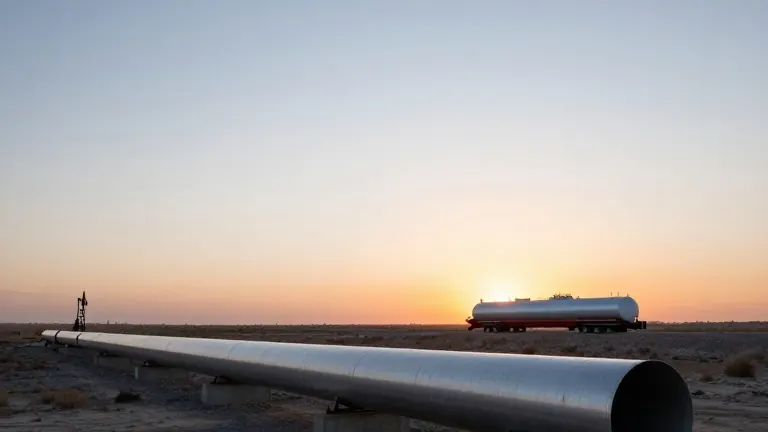
Energy analysts reported that Mideast producers are exporting roughly 80% of their prewar oil volumes. This flow persists despite a recent surge in Iranian attacks on shipping lanes. The data comes from Rystad Energy, which tracks global energy markets.
Exports in the first two weeks of November fell to approximately 13 million barrels per day. This represents a 20% decrease from October, when shipments reached 15 to 16 million barrels per day. Analysts attribute the decline to tankers avoiding the Strait of Hormuz and disruptions to a key Saudi pipeline leading to the Red Sea port of Yanbu.
The stability in oil flows stands in contrast to the kinetic activity on the ground across the region. On Friday, the Saudi-led coalition announced strikes on Houthi targets in Yemen. The coalition said it aimed to disrupt operations used to smuggle and transport weapons and ballistic missiles.
The coalition stated that it targeted Houthi operations in Hodeidah, Yemen's main Red Sea port. It also reported a military operation in Sanaa, the rebel-held capital, early Friday. Forces there aimed to degrade Houthi military capabilities to protect civilians in Yemen and Saudi Arabia.
The Houthis responded with attacks on Saudi Arabia. A Houthi military spokesperson, Yahya Saree, claimed the rebels struck Jazan's port and a power station in the Al-Shuqaiq area. The Saudi-led coalition confirmed it intercepted five drones and one ballistic missile fired Friday morning. Riyadh was among the targeted locations.
Debris from the intercepted missiles fell in the Al-Shuqaiq area, though the coalition did not immediately report damage. These exchanges followed a major air campaign launched days earlier across Houthi-controlled territories. The previous day, the rebels had targeted Saudi airports, air bases, and Riyadh's financial center.
In Iraq, security forces established a command headquarters on the outskirts of Jurf al-Sakhar. This area south of Baghdad is a longtime stronghold for the Iran-backed militia Kataib Hezbollah. Tensions had risen after the government accused the group of using the area to smuggle oil.
Two Iraqi officials speaking anonymously said the government and Kataib Hezbollah reached an agreement. The deal allows Iraqi army, federal police, and energy sector police to deploy to the area. In a compromise, fighters from the Popular Mobilization Forces, a collection of mostly Shiite armed groups close to Iran, are also part of the deployment. Kataib Hezbollah will withdraw its fighters within a month.
The agreement followed negotiations facilitated by Esmail Qaani, commander of Iran’s Quds Force. The Quds Force is a branch of the paramilitary Revolutionary Guard responsible for operations outside Iran. This intervention helped de-escalate a situation where the militia had threatened to fight security forces if they attempted an incursion.
Meanwhile, Israeli strikes killed six people in central Gaza on Friday. Health officials at Awda hospital and Al-Aqsa Martyrs hospital confirmed the casualties. One person died in an overnight strike in Nuseirat Refugee camp, another in Deir Al-Balah in the afternoon, and four in Bureij Refugee camp in the evening. Israel’s military said it attacked militants in those areas.