Over 1,000 strikes hit Iraq's Kurdish region
Iranian attacks have intensified since February, testing the autonomy of the Kurdistan Regional Government and its relationship with Baghdad.
By Grace Almasi ·
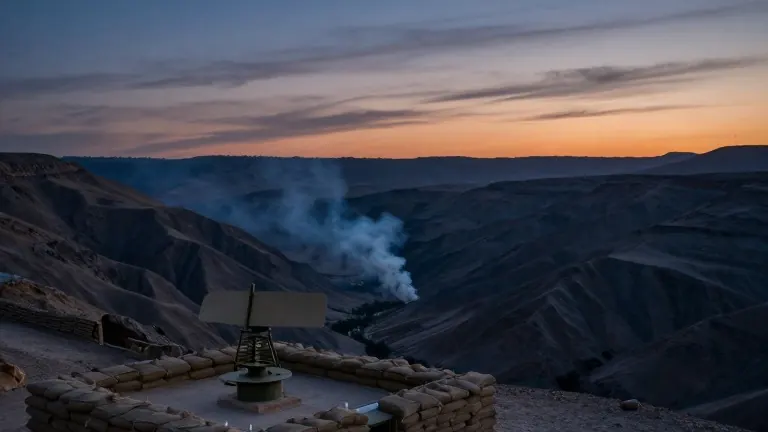
Iran has launched more than 1,000 drone and missile attacks on the Kurdistan Region of northern Iraq since February 2026. The campaign began as the United States and Israel initiated airstrikes on Iran. Rick Francona, a retired US Air Force intelligence officer, told The Jerusalem Post that the Iraqi Kurds are currently the only group with a realistic chance of keeping their autonomy.
Francona, who served at the National Security Agency, the Central Intelligence Agency, and the Defense Intelligence Agency, described the region as a strategic target. He noted that the Kurdistan Regional Government faces a difficult choice. It must maintain relations with Baghdad to secure its budget, yet it lacks air defenses because Baghdad has not supplied them.
The primary source of the conflict is the presence of roughly six Iranian Kurdish opposition groups in the region. These groups fled Iran over the years and formed a loose coalition in late 2025. They attempted to formalize this alliance in early 2026, just before the conflict escalated. Their presence provides Tehran with a reason to launch strikes against the KRG.
"As long as the Iranian Kurds maintain a presence in the KRG, they will be targets for the IRGC," Francona said. He argued that the Iraqi Kurds cannot avoid providing a safe haven for their Iranian counterparts. This dynamic places the KRG in a passive position during the hostilities.
When the next round of US combat operations begins, the KRG must decide how to act. Francona outlined two options. The government could ask the Iranian groups to stay quiet, or it could support cross-border operations against the Islamic Revolutionary Guard Corps. If the KRG chooses the latter, US intelligence agencies may provide targeting data.
Internal divisions among the Kurdish parties complicate the situation. The Kurdistan Democratic Party and the Patriotic Union of Kurdistan have distinct political leanings and often clash. Francona recalled the 1990s, when US officials struggled to keep the two parties from fighting each other instead of focusing on the Iraqi regime. He believes this pattern of limited cooperation will continue.
Baghdad's new Prime Minister, Ali al-Zaidi, has received support from US President Donald Trump. Francona suggested that Trump hopes al-Zaidi will distance the Iraqi government from Iran and control the Iranian-backed militias. These militias have frequently attacked the Kurdistan Region and US diplomatic facilities. In January 2024, the militia Kataib Hezbollah killed three Americans in Jordan.
The status of the Kurdish region depends heavily on its legal standing within Iraq. The existence of the KRG is codified in the Iraqi constitution, providing a framework that other Kurdish populations lack. In Syria, the Kurdish-led region that existed from 2013 to 2026 collapsed in January 2026. The Syrian Democratic Forces have since been disbanded as US forces withdrew.
In Turkey, the disarmament of the PKK would lead to the assimilation of Kurdish fighters into Turkish society. This process would reduce tensions between Ankara and the Iraqi Kurds if the fighters leave their bases in northern Iraq. Francona noted that while the Iraqi Kurds have a legal foundation, the broader concept of Kurdish autonomy continues to face pressure from neighboring powers.
Francona expressed skepticism about a long-term US strategy for the region. "We have a sad history of leaving the Kurds on their own," he said. The KRG remains stable for now, but it faces ongoing pressure from Iran, Baghdad, and internal political divisions.
Source: The Jerusalem Post