Second Tiger Released in Kazakhstan as Project Nears $30 Million Milestone
Kazakh authorities released a male tiger into the Ile-Balkhash reserve, where a female has already established herself.
By Renata Mehta ·
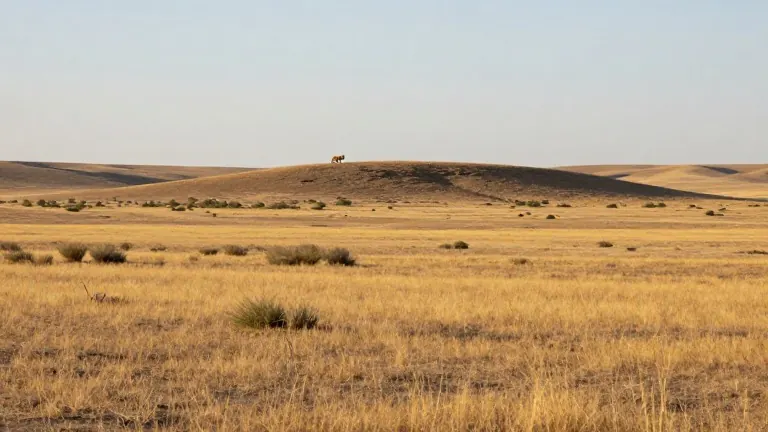
A male tiger named Amur was released into the wild in Kazakhstan on November 2.
The Ecology and Natural Resources Ministry confirmed the release, marking the second addition to a reintroduction program aimed at restoring the species to the country. Amur now shares the Ile-Balkhash State Nature Reserve with Umit, a female tiger from Russia that was released into the same area on July 31. The reserve is situated approximately 300 kilometers northwest of Almaty. Within ten days of her arrival, Umit had hunted and consumed a boar and a wolf, indicating successful adaptation to the local environment.
Local residents near the release site have expressed concerns about the project. Valery Bilyachenko, who operates a recreational fishing base close to the reserve, stated that opposition is common among nearby communities. "The main livelihood in the local villages is livestock farming," Bilyachenko said. "There are pastures and cattle, and naturally, local people are worried that the tigers will kill their animals." Several villages are located only tens of kilometers from the tiger release zones.
Officials have outlined specific measures to manage potential conflicts. The tigers are fitted with satellite tracking collars to allow for constant monitoring of their movements. Specialized teams are prepared to intervene if the animals approach human settlements. Kazakhstan has committed to maintaining anti-conflict teams to prevent clashes between tigers and livestock. Additionally, automated text messages will be sent to residents when a tiger enters a five-kilometer radius of a village or farm.
Alibek Kuantyrov, a representative of the Ecology and Natural Resources Ministry, stated that the primary objective is to establish a stable, independent breeding population. "Our main goal is not simply to return these predators to their historic range but to establish a stable population capable of living and breeding independently in the wild," Kuantyrov said. While officials hope the two tigers will mate, experts note that the probability of this occurring is low.
The project involves a $30 million joint effort between Kazakhstan and Russia, with funding provided by the World Wildlife Fund, the UNDP, and the Kazakh government. Two additional young tigers are scheduled for release in 2027. The long-term target is to sustain a population of approximately 50 tigers in the Kazakh wilderness. The reserve, established in 2018, has been stocked with more than 200 deer and over 100 kulans to support the tigers' prey base. Tigers were last believed to exist in Kazakhstan in 1948, following a decline from an estimated 10 animals in the mid-1930s.
Sergey Aramilev, director-general of Russia's Amur Tiger Center, described the initiative as a signal to other nations. "This project sends a signal to the world. No country has ever restored a historically extinct species of large mammal, especially a predator," Aramilev said.
Source: RFE/RL