Shekel Slides, Stocks Drop as Election Count Suggests Government Deadlock
Financial markets reversed two days of gains on Wednesday after partial results indicated neither political bloc would command a Knesset majority.
By Grace Almasi ·
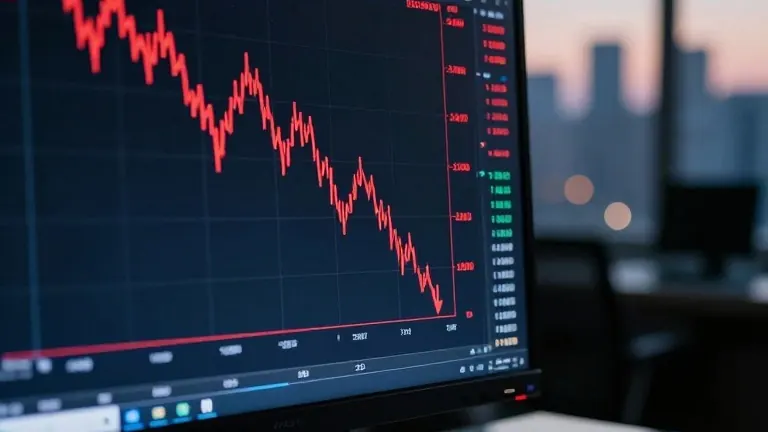
The Israeli shekel and Tel Aviv stocks fell sharply on Wednesday morning after preliminary election data pointed to a political stalemate. This move reversed the optimism that had built over the previous two days, a period in which investors had priced in a likely change of government.
The currency market moved first. The dollar, which had strengthened against the shekel to approximately 3.10 NIS by Wednesday morning, had recently traded near 3.02 NIS on Tuesday. The shekel reached its highest point in about five weeks on Tuesday before reversing course as early exit polls showed a narrow lead for the anti-Netanyahu bloc, though one that fell short of the 61 seats needed for a majority.
As trading resumed on the Tel Aviv Stock Exchange, the benchmark TA-35 index lost 2.85% and the broader TA-125 index dropped 3.3%. The construction sector led the decline, with shares falling approximately 8%. Real estate and insurance indices also suffered steep losses of more than 6%, while banking stocks fell about 4% and the TA-90 index dropped 4.6%.
Bond yields rose in tandem with equity losses. The yield on the 10-year government bond increased by roughly 0.06 percentage points to around 4.1%. This shift indicates that bond prices fell as investors demanded higher returns to compensate for the added political uncertainty.
The market reaction was driven by the disappearance of a clear outcome. On Monday, the final trading session before the election, the TA-35 had surged 1.99% and the TA-125 had gained 1.81%. Investors had bet that high voter turnout would benefit the bloc opposing Prime Minister Benjamin Netanyahu. The expectation was that a government change would reduce diplomatic tensions and lower Israel's risk premium with Western nations.
Partial results from the night of the vote suggested that Netanyahu's bloc held between 55 and 57 seats, while the opposing bloc held between 47 and 50 seats. The remaining seats were attributed to Arab parties. Neither side currently possesses the 61 seats required to form a stable government on its own.
JPMorgan economists estimated in late August that the election could trigger a 3% move in the shekel, a figure the recent volatility is approaching. Research from the Tel Aviv Stock Exchange notes that volatility typically rises by as much as 45% in the weeks following elections, a trend observed across the last 10 election cycles. Institutional hedging activity and thinner trading volumes during the holiday period likely amplified these swings.
Investors now focus on the practical questions of governance. Key issues include whether a stable government will form, who will lead the Finance Ministry, and if a 2027 budget can be passed. These factors will directly impact the national deficit and defense spending levels.
Source: The Jerusalem Post
More Business · Customer Complaints · Report a business · Got a Story?