NWSL faces infrastructure and financial hurdles despite record investment
Despite a surge in billionaire ownership, the National Women's Soccer League continues to grapple with stadium conflicts and the high costs required to compete globally.
By Renata Mehta ·
The National Women's Soccer League is currently navigating a complex period where increased financial resources have highlighted longstanding structural issues. As the league prepares for its 13th championship game on Saturday, recent playoff experiences have exposed the difficulties teams face regarding venue availability and field quality. These challenges have drawn attention to the gap between the league's growing ambitions and the practical realities of its operational infrastructure.
In the past six years, all but one NWSL team has undergone a change in ownership. This shift has brought in billionaires who have invested in training facilities and, in some instances, dedicated stadiums. However, the league still requires significant additional capital to achieve its goal of becoming a major global force with full stadiums and extensive media coverage. From player contracts to travel arrangements, the path forward appears to demand substantial spending.
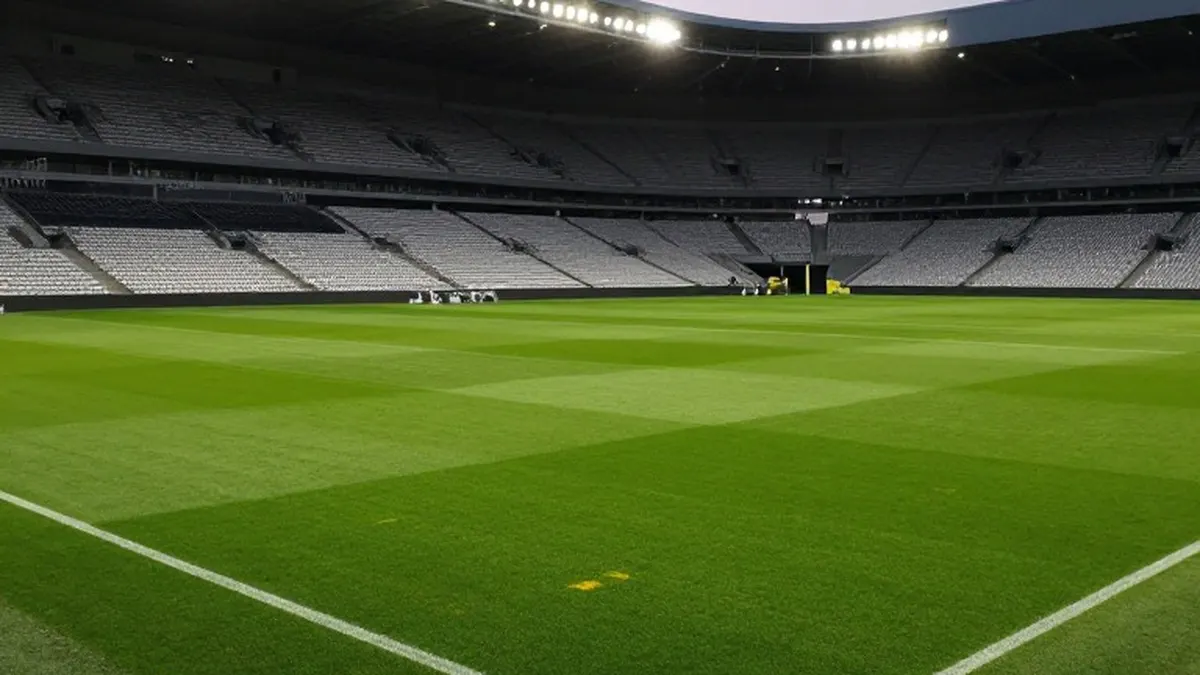
The most pressing issue remains the status of NWSL teams as tenants in their home stadiums. In most cases, these venues are owned by billionaires who also operate men's sports teams, which typically take priority for field usage. This dynamic was evident during this year's playoffs when Gotham FC played its semifinal at the 5,000-seat Icahn Stadium. The club chose this amateur venue because it deemed the field at Sports Illustrated Stadium, operated by MLS side Red Bull New York, to be unsafe for a match of such importance.
The conflict with the Red Bulls was further complicated by scheduling overlaps. The men's team scheduled a rugby doubleheader and an exhibition match that coincided with potential NWSL semifinal dates. Although Gotham FC and the league attempted to repair the field at their own expense, the Red Bulls' exhibition game acted as a barrier because they could not guarantee the field would be ready for their event. The NWSL had announced its schedule eleven months prior, and the Red Bulls' friendly against Club America was confirmed in early October.
Similar difficulties affected the Washington Spirit, which was forced to play its semifinal at an NFL stadium rather than its preferred venue at Audi Field. An NCAA Division III football game scheduled by D.C. United, the operator of Audi Field, necessitated an eleventh-hour agreement to host both events. This arrangement cost the Spirit six figures, a sum covered by a team sponsor, and resulted in the NWSL match being played on yellow soccer lines superimposed over white football lines. This is the third consecutive year the Spirit has appeared in the championship game, yet the field conditions remain a point of uncertainty.
The NWSL is attempting to address these infrastructure gaps through expansion. The league selected Atlanta and Columbus as new teams for 2028, partly to solve venue issues by sharing ownership with MLS clubs that control their respective stadiums. This model aims to ensure equal cohabitation between men's and women's teams. Alternatively, building a dedicated stadium remains an option, though it requires hundreds of millions of dollars and years of development, a feat that may be impossible in markets with political or real estate constraints.
Beyond facilities, the league faces financial pressures in player compensation. To remain competitive with top European clubs that lack salary caps, the NWSL must offer higher wages. The new High Impact Player rule allows teams to pay top athletes up to $1 million over the salary cap, but general managers have indicated this is not yet sufficient. Expansion fees have also risen sharply, with Columbus paying $205 million, a hundredfold increase compared to fees paid six years ago.
Travel logistics present another significant cost. As the schedule intensifies, there is a growing demand for charter flights. While the MLS and WNBA have adopted charter-only policies, the NWSL still relies on a mix of commercial and limited charter travel. General managers have described charter flights as a necessity, noting that the transition could cost up to $50 million in the short term based on WNBA estimates. This investment is seen as critical to maintaining the comfort and health of high-profile athletes.
A few years ago, players and fans accepted smaller venues and commercial flights as part of the league's development. Minimum salaries in 2013 were significantly lower than today's standards. However, current ambitions have shifted. The league and its billionaire owners now aim to position the NWSL alongside other major U.S. sports leagues. This requires addressing the Diderot effect, where spending in one area necessitates increased spending in others to maintain quality and visibility.
To become a big-time league, the NWSL must pay for new stadiums, better leases, rising salaries, transfer fees, and improved travel. The influx of money has raised expectations and scrutiny. If the league does not continue to invest in all areas, the same challenges will persist, potentially amplified by the league's increased global profile.
More News · National news · Report a business · Got a Story?