Renowned Strategist Joachim Klement Liquidates Personal Stock Portfolio
Panmure Liberum strategist Joachim Klement has sold his entire personal equity portfolio, citing a bearish shift in market dynamics and the deflation of the artificial intelligence bubble.
By Amit Chukwu ·
Joachim Klement, a London-based strategist at Panmure Liberum and a widely followed market commentator, has effectively moved his personal retirement portfolio out of stocks and into long-term government bonds. Klement has maintained a 100% equity allocation in his personal holdings for many years, but he decided to change his stance following recent market movements. In a morning note to clients, he confirmed that he would sell his personal stock positions at the end of European trading on Wednesday.
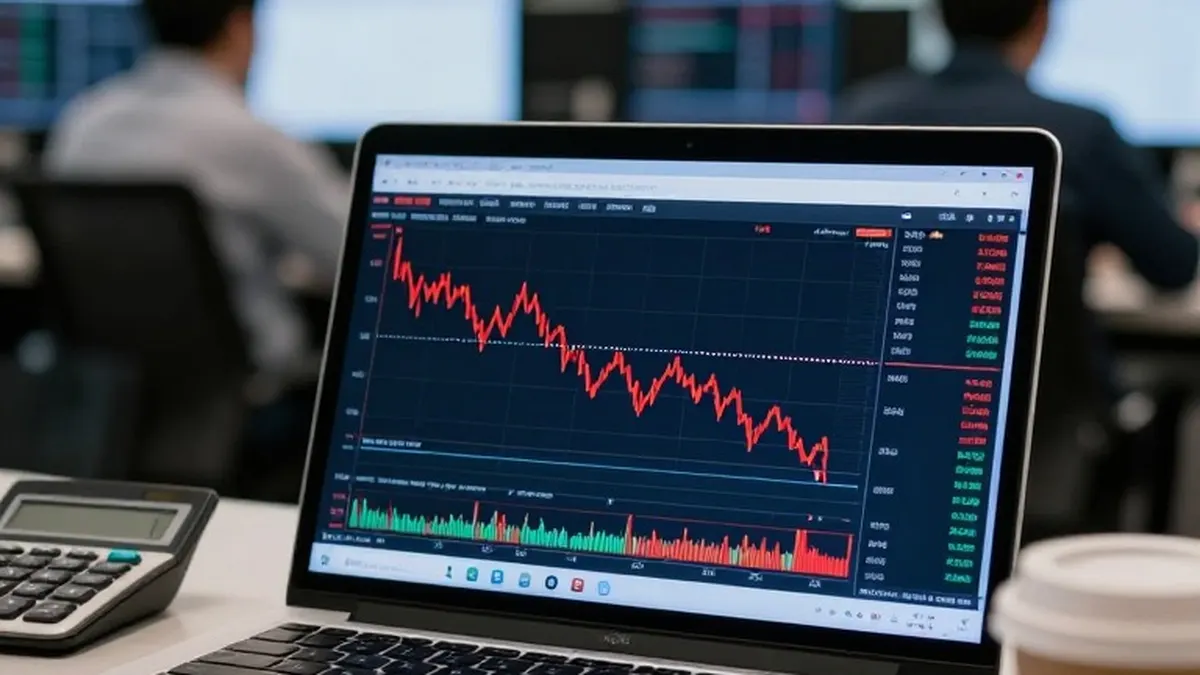
The decision was triggered by the S&P 500 index breaking below its 200-day moving average. Klement described this technical indicator as a signal that market dynamics have turned decisively bearish. He noted that while the indicator is not infallible, it has historically helped investors avoid the worst bear markets over the past century. The strategy involves selling when the index falls below the average and buying back when it rises above it, a method popularized by Meb Faber of Cambria Investments for reducing portfolio volatility.
Klement has warned of an artificial intelligence bubble since May, with his bearish outlook intensifying since September. Early last month, he predicted that the collapse of the AI sector would drag down the broader market, forecasting that the S&P 500 would end next year at 5,000. This projection represented a drop of one-third from current levels. His recent predictions regarding the timing of the index breaking below the 200-day average proved accurate this week, although he acknowledged that luck can play a role in such timing.
The strategist cited several signs that the AI bubble is deflating. These include falling prices for AI tokens, slowing revenue growth as revealed in the Anthropic IPO prospectus, and growing market anxiety over artificial intelligence capital expenditure. He also pointed to increasing instances of circular financing within the AI sector, a pattern reminiscent of the vendor financing seen during the dot-com mania. Klement believes the investment assumptions supporting the current Wall Street AI mania are heroic and may not yield the expected returns for the tech giants pouring trillions of dollars into data centers.
Historical precedents suggest that while transformative technologies like railways and the internet have reshaped the economy, many investors in those sectors lost significant capital. Klement, a former board member of the US CFA Research Institute, is viewed as a cautious strategist rather than an extremist. He has gained additional public recognition for accurately predicting the winners of the 2014, 2018, and 2022 soccer World Cups as part of an experiment on the difficulty of making predictions.
Recent turmoil in technology stocks has further supported Klement’s defensive stance. Major players such as Intel, SanDisk, Taiwan Semiconductor, SK Hynix, and Nvidia have experienced significant volatility. The stock of Nvidia, a flagship of the industry, had been in freefall even before recent leadership controversies. Klement believes that bubbles are driven by mass psychology and belief, and he thinks the market has finally begun to realize the potential downside risks.
For months, clients had asked Klement when he would back his bearish views with his own money. He had consistently stated that he was waiting for the S&P 500 to fall below the 200-day moving average as his trigger. He plans to buy back into the market if and when the index rises above this threshold again. He acknowledged that this approach could lead to significant trading churn if the market fluctuates around the average, but he believes it ensures he will be positioned correctly if the bubble bursts or if setbacks prove to be temporary.
Klement admitted that he could be wrong about the timing and the nature of the current market correction. However, he stated that his trading rule would ensure he re-enters the market without incurring too much opportunity cost if the dip is short-lived. While this specific strategy is not suitable for all investors due to potential trading costs and capital gains taxes, Klement suggests that the current environment is a good time for individuals to review the amount of risk they are taking in their own portfolios.
The move marks a significant shift for a commentator who has been closely watched by Wall Street. By aligning his personal actions with his public analysis, Klement aims to demonstrate confidence in his bearish outlook. As the market continues to navigate the challenges posed by high valuations in the technology sector, his decision to move into bonds serves as a notable signal among professional investors and market analysts alike.
More News · National news · Report a business · Got a Story?