Khalifa Haftar Visits Ankara in Historic Meeting with Turkish President
Longtime rival Khalifa Haftar met with President Recep Tayyip Erdogan in Ankara, signaling a significant shift in relations between Turkey and Eastern Libya.
By Renata Mehta ·
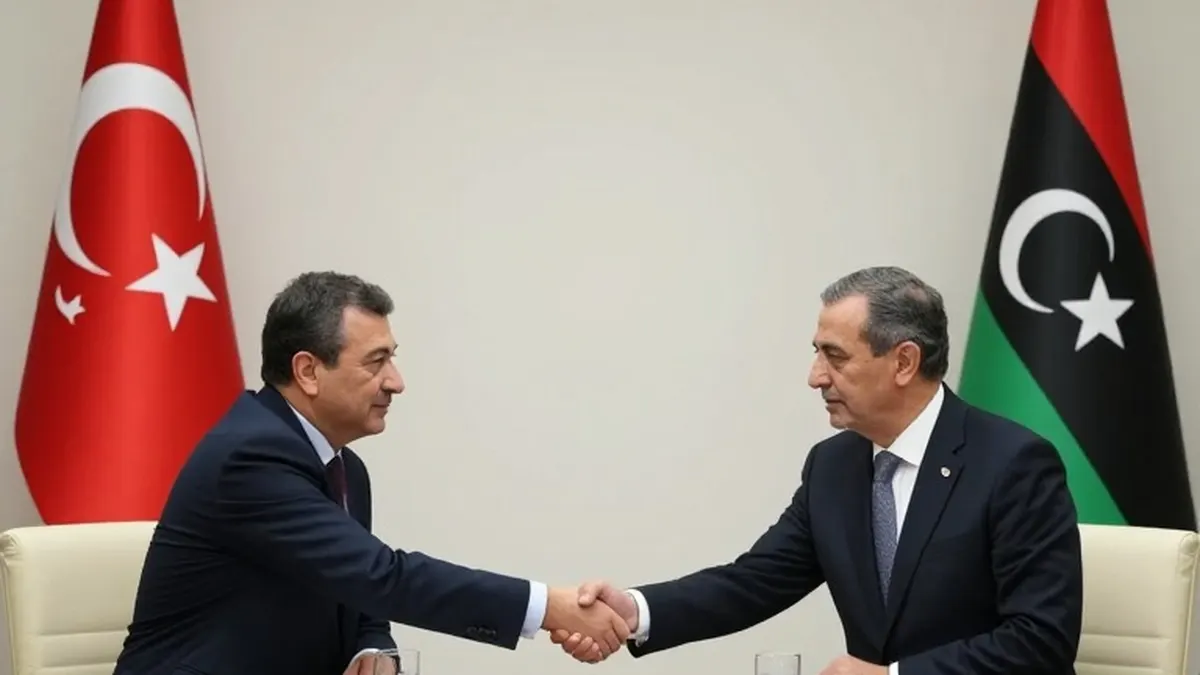
A notable diplomatic development occurred on Wednesday as Khalifa Haftar, the military leader of Eastern Libya, traveled to Ankara to meet with Turkish President Recep Tayyip Erdogan. This gathering marks the first official visit by Haftar to Turkey and represents a major pivot in the relationship between the two longtime rivals. The meeting highlights a changing dynamic in the region, particularly regarding the ongoing conflicts and political alignments in Libya.
The context of this meeting is rooted in the complex history between the two nations. In April 2020, Turkish media reported that civilians were injured by shelling from Haftar’s militias in Tripoli. At that time, Turkey was actively supporting the Western-backed Government of National Accord (GNA) and had deployed forces, including drones, to assist them. Omer Celik, a spokesman for the Justice and Development Party, warned in May 2020 that Haftar’s forces would be viewed as legitimate targets if Turkish missions in Libya were attacked, following the GNA’s successful push of Haftar’s troops from the Watiya air base.
The shift in relations appears to be linked to recent moves by the government in Benghazi. In October, the Eastern Libya government recognized a 2019 maritime agreement between Turkey and Libya. This decision indicated that Haftar was making strategic moves to align with Ankara. Haftar’s government has traditionally maintained strong ties with Egypt and the United Arab Emirates, but this new engagement with Turkey suggests a broadening of alliances.
The strategic importance of this partnership lies in Turkey’s concept of the Blue Motherland, or Mavi Vatan. Turkey’s 2019 deal with Libya was designed to extend its maritime influence across the eastern Mediterranean. Ankara argues that Greek islands do not have claims to international waters, meaning Turkey’s maritime borders effectively intersect with those of Libya. Since Israel supports Greece and Cyprus, any deepening ties between Turkey and Eastern Libya are likely to be closely monitored by Jerusalem.
During the visit, Haftar was accompanied by his son, Saddam Haftar, who is expected to assume greater control over his father’s domain in the future. Khalifa Haftar, born in 1943, returned to Libya after the fall of Muammar Gaddafi and has since consolidated power in the east. His rise to prominence came after a period when extremists threatened Benghazi and following the 2012 murder of US Ambassador Christopher Stevens.
According to reports, Haftar held discussions with several Turkish officials, including the foreign and energy ministers, the intelligence chief, and military leaders. A statement from Haftar’s office noted that both sides explored ways to strengthen cooperation across various sectors to serve their shared interests. This high-level engagement suggests a comprehensive approach to rebuilding and expanding bilateral relations.
The international community is watching this development with interest. France24 described Haftar as visiting an old foe, while France, Italy, and Greece, all of which have interests in the eastern Mediterranean, are also observing the situation. Israel, Cyprus, and Egypt are expected to pay close attention to how this alliance evolves, especially given the recent warming of ties between Turkey and Egypt.
The growing relationship between Turkey and Egypt has been a focal point in recent defense analyses. A recent policy brief highlighted Turkey’s increasing stake in Egypt’s defense industry. Helin Unal noted that defense cooperation is expanding, citing a proposal by Turkish Naval Forces Commander Adm. Ercument Tatlioglu to build warships jointly with Egypt under the MILGEM program. This proposal was made during the Sea of Friendship 2026 naval exercises off Alexandria, three years after the two countries restored diplomatic relations following a decade of hostility.
While no formal agreement has been signed yet, a shipbuilding partnership would grant Ankara greater influence over one of Washington’s key Arab partners. It could also potentially expand Turkish arms production across Africa and the Middle East, further cementing Turkey’s role as a major regional power.