
Ukraine Destroys One Arch of 19km Kerch Bridge in Multi-Weapon Strike
The collapse of a 227-metre span blocks car traffic and submerges 200 metres of tarmac, severing the primary land link between Russia and Crimea.
By Grace Almasi ·
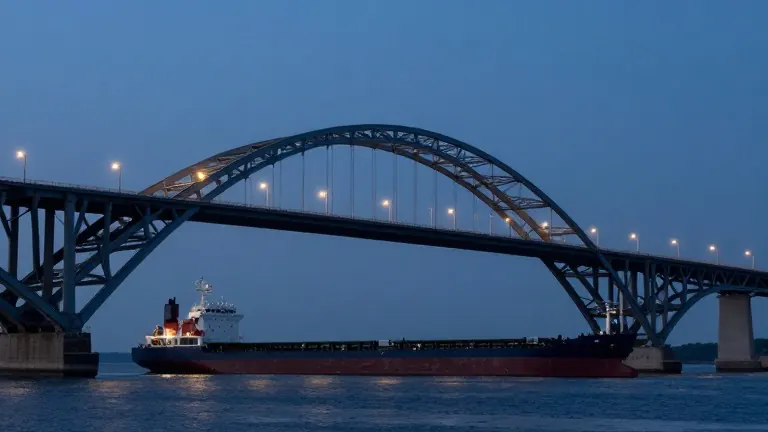
Ukraine executed a coordinated attack on the Kerch Strait bridge on Tuesday, collapsing one of the structure's main arches. The operation utilized heavy drones, cruise missiles, and specific Ukrainian-developed systems to target the 19-kilometre crossing that links southern Russia to the Crimean peninsula. President Volodymyr Zelenskyy characterized the mission as flawless, noting the precision with which the forces engaged the target.
The physical damage to the infrastructure is extensive. One arch, spanning 227 metres and weighing thousands of tonnes, fell into the deepest part of the Kerch Strait. The collapse blocked all car traffic and restricted rail operations to a single track. Approximately 200 metres of tarmac were heavily damaged and left submerged in the water, obstructing the path for freighters carrying grain and steel from southwestern Russia.
Zelenskyy identified the specific weaponry involved in the assault. He stated that Ukrainian-made drones struck the bridge at night, while Neptune missiles targeted the rail section. Flamingo missiles were also deployed during the operation. Destinus, a Netherlands-based firm, told Reuters that seven of its Ruta cruise missiles hit the bridge during the multistage attack. Military sources indicated that Ukrainian forces spent weeks disabling Russian air defence systems, radars, and drone jamming equipment to clear the path for the strike.
The loss of the arch creates immediate logistical hurdles for Russian supply chains. Igar Tyshkevych, a Kyiv-based analyst, described the situation as Crimea turning into an island. He noted that the blockade further isolates Russian farmers from shipments to the Black Sea and the Mediterranean, a factor that could drive up global grain prices. The strategic timing of the strike coincided with Russian President Vladimir Putin’s travel to Shenzhen, China, for the Asia-Pacific Economic Cooperation summit, where he is scheduled to meet with Chinese President Xi Jinping and United States President Donald Trump.
Kremlin spokesman Dmitry Peskov accused the Kyiv regime of escalating the war by striking civilian targets. On Wednesday, he asserted that the bridge would be restored and would be better than before, while declaring Moscow’s intention to continue hostilities. Russian media initially reported the damage as insignificant, citing only temporarily delayed trains. However, Ukrainian drone pilot Taras, who withheld his last name, argued that the Kremlin does not fully account for the technological advancement of Ukrainian forces in its assessments of the conflict.
The attack prompted an immediate Russian response targeting infrastructure within Ukraine. On the same day, Russian strikes damaged two of the five bridges across the Dnipro River in Kyiv. Previous attacks on these crossings have paralyzed road and subway traffic, leaving residents in prolonged congestion. Aleksey Kushch, another Kyiv-based analyst, observed that Russian strikes are expanding beyond logistics and energy to include hypermarket chains and mining companies. He described this as a strategy to create an empty economic space that would reduce Ukraine’s GDP, jobs, and tax revenue.
Nikolay Mitrokhin, a researcher at Germany’s Bremen University, offered a different military perspective. He noted that there had been little movement of military personnel or supplies along the Kerch bridge for a year, with the exception of occasional gas truck columns. Mitrokhin suggested the attack was counterproductive in military terms, arguing that Zelenskyy should have commissioned more mid-range drones to block roads in occupied regions along the Sea of Azov.