Ukrainian air defence intercepts 462 Russian missiles and drones in overnight strike
Ukraine’s Air Force reported repelling a massive combined attack involving ballistic missiles, cruise missiles, and hundreds of drones during the night of November 19 and 20.
By Grace Almasi ·
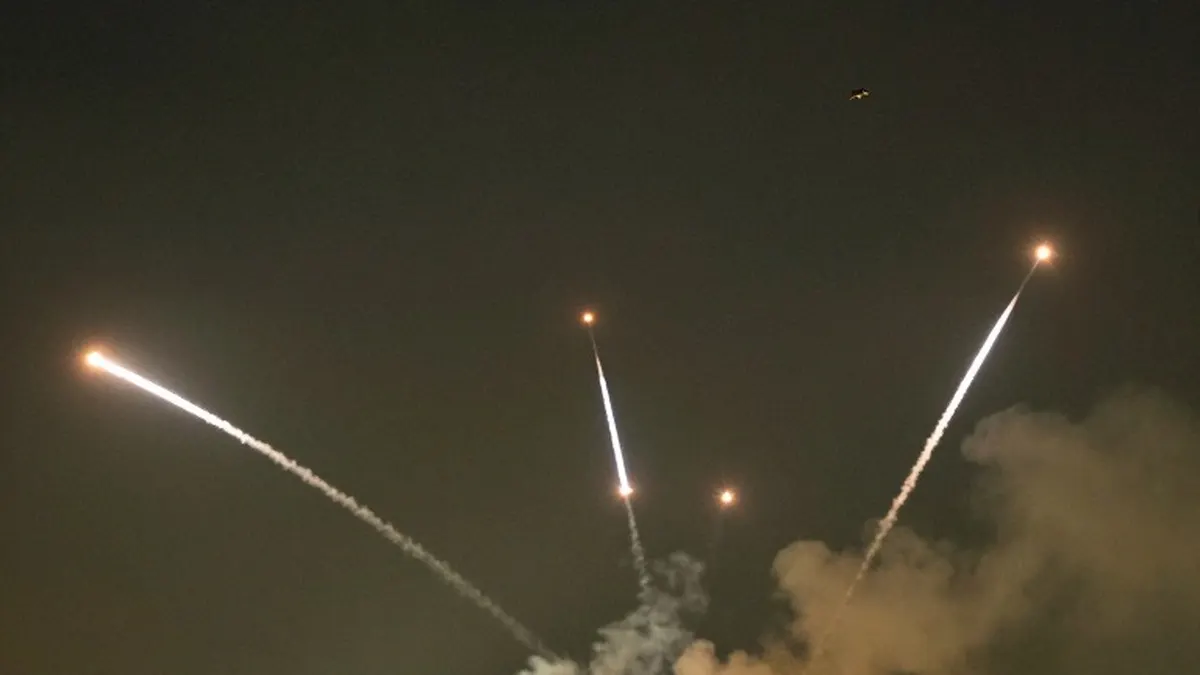
Ukraine’s Air Force announced that air defence systems successfully brought down 462 Russian military assets during a large-scale combined strike that took place during the night of November 19 and 20. The assault involved a diverse array of weapons, including ballistic missiles, cruise missiles, and numerous types of unmanned aerial vehicles.
According to official details, the Russian forces launched the attack from multiple directions. Ballistic missiles, specifically Iskander-M and S-400 models, along with Zircon anti-ship missiles, were fired from the Rostov, Bryansk, and Kursk oblasts within Russia. Additionally, a significant number of cruise missiles were deployed from the Vologda Oblast and the Black Sea region.
The cruise missile component of the attack consisted of 84 air- and sea-launched projectiles. These included Kh-101 and Kalibr missiles, as well as Iskander-K variants. The sheer volume of these long-range weapons highlighted the scale of the offensive coordinated from various strategic locations.
A major portion of the assault relied on unmanned systems. Russian forces launched 404 Shahed-type strike drones, which included 123 jet-powered units. The attack also featured Gerbera drones and Parodiya-type decoy drones. These unmanned vehicles were dispatched from directions including Oryol, Kursk, Millerovo, and Primorsko-Akhtarsk in Russia, as well as from the temporarily occupied regions of Donetsk and Crimea.
Ukrainian air defence units, comprising aviation, anti-aircraft missile troops, electronic warfare specialists, and unmanned systems units, worked to repel the incoming threats. As of 10:30 on the morning of November 20, initial reports indicated that 462 assets had either been destroyed or jammed.
The breakdown of the intercepted targets included three ballistic missiles from the Iskander-M, S-400, and Zircon categories. Air defence systems also accounted for 79 Kh-101 and Kalibr cruise missiles. The majority of the interceptions involved unmanned aerial vehicles, with 380 Shahed-type drones, Gerberas, and other types of UAVs being neutralized. This figure includes 102 jet-powered drones among the downed targets.
Despite the high number of interceptions, the strike did cause damage on the ground. Hits from Russian missiles and strike UAVs were recorded at 23 distinct locations across Ukraine. Additionally, the impact of falling debris from downed targets was noted at 10 other sites.
The Air Force issued a statement noting that the attack was still ongoing at the time of the report, with several enemy UAVs remaining in the airspace. They urged the public to continue following all safety rules while the situation developed.
This incident marks another significant example of the intense aerial warfare that has characterized the conflict since Russia’s full-scale invasion. The combined use of various missile types and a large fleet of drones demonstrates the continued evolution of the air war between the two nations.