US Army seeks rapid construction of 17 reinforced bunkers in the Middle East
The US Army has issued an urgent procurement notice for 17 reinforced concrete shelters to protect troops in Israel, Saudi Arabia, and Lebanon amid heightened regional tensions.
By Renata Mehta ·
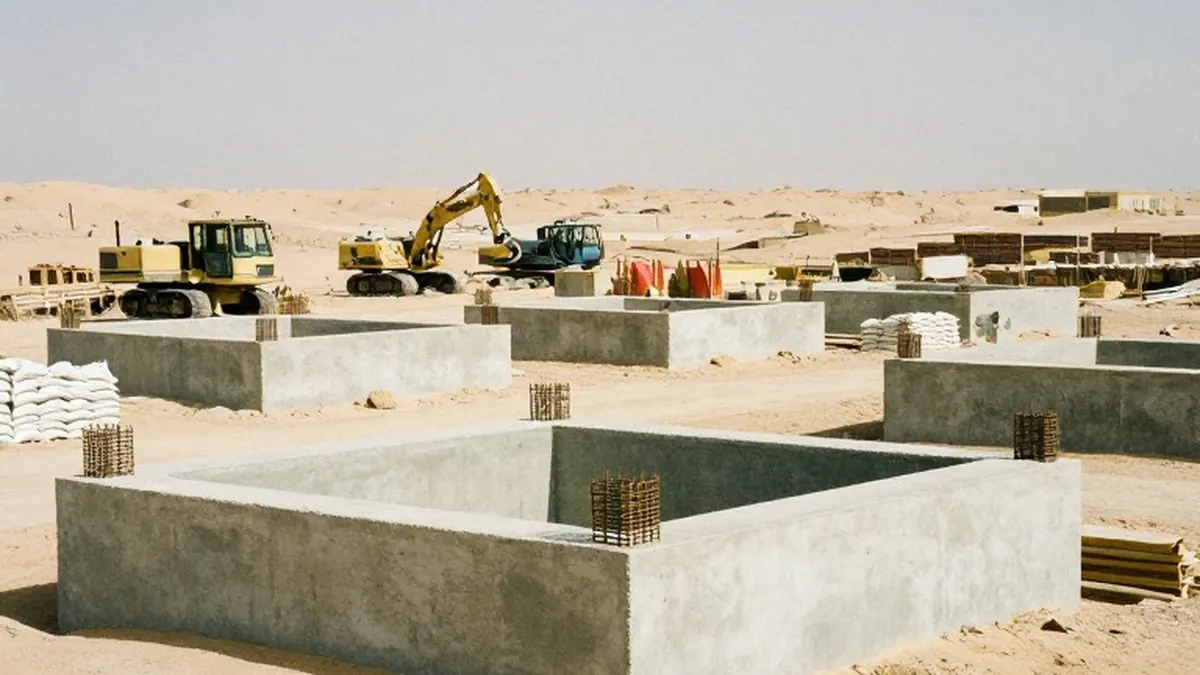
The United States Army has issued an urgent call for contractors to construct 17 reinforced concrete bunkers designed to shield American and coalition forces from missile and drone attacks. This move comes as regional tensions with Iran remain elevated, prompting a high-priority effort to improve force protection conditions across the area.
According to the government procurement notice, the new shelters must be capable of withstanding indirect fire, including strikes from missiles and drones. The distribution of these structures is specific, with ten bunkers planned for Israel, five for Saudi Arabia, and two for Lebanon. The Army aims to replace nonstandard personnel protection shelters, such as converted shipping containers, with standardized precast reinforced concrete units.
The notice emphasizes the need to safeguard service members operating in potentially hostile environments within the US Central Command area of responsibility. It highlights that the current use of nonstandard containerized shelters leaves soldiers at risk, necessitating an expedited procurement process to address these vulnerabilities.
For the ten bunkers designated for Israel, the specifications are detailed. Each structure will include three reinforced concrete sections and blast and fragmentation protection barriers known as Alaska barriers. These barriers, located one meter from entry or exit points, will be three meters high and weigh approximately 6.1 tons per piece. Additionally, the bunkers will feature sniper screens, with roofs covered by 18 inches of sandbags and sides protected by four feet of sandbags.
Due to the extreme operational urgency, the solicitation window for contractors to submit price quotes was limited to just three days. Once a contractor is selected, they will have a strict 45-day deadline to complete the work. The notice states that this rapid turnaround is anticipated due to the immediate risk faced by troops currently using less robust shelters.
The procurement document does not publicly list the specific base locations or coordinates. Instead, it indicates that these details will be provided to verified and eligible offerors upon the release of the solicitation. However, the document hints that the Israeli sites will be Air Force airbases, noting restrictions on where contractors can deposit materials without prior approval.
The notice also outlines material restrictions to ensure safety and compatibility with military infrastructure. Prohibited substances include mercury, lead, hexavalent chromium, toluene, asbestos, chlorinated solvents, polychlorinated biphenyls, hydrolysable chlorine derivatives, and ethylene-based glycol ethers. These materials are restricted because they can impact aircraft structure, systems, performance, and maintenance.
This procurement effort follows ongoing Iranian attacks, including ballistic missiles and attack drones targeted at Gulf States. During Operation Epic Fury, several American soldiers were killed when an Iranian drone struck a base in Kuwait. These attacks resulted in billions of dollars in damage to US military infrastructure across the region, including facilities in Jordan.
In March, US Defense Secretary Pete Hegseth stated that new hardened shelters were needed to better protect troops in the Middle East. He described the rapid fielding of these bunkers as a theater priority alongside layered air defenses. Later that month, the US Space Force identified vendors capable of providing prefabricated hardened shelter systems for delivery to Jordan within days of contract award.
Recent activity in the region supports the urgency of these measures. A report from the Institute for National Security Studies noted that air defense reinforcement has continued, with a Patriot system moved to Israel and dozens of transport flights landing at Ovda Air Base since mid-October. At least 32 C-17 transport aircraft flew from Fort Bliss, Texas, to Israel between late October and early November, and at least one THAAD battery is currently deployed in the country.