US Air Traffic Control Crisis Sparks Calls to Follow Canada's Privatized Model
Recent flight disruptions in the United States have renewed debate over privatizing air traffic control, with experts pointing to Canada's successful 30-year experiment with Nav Canada as a potential template for modernization and efficiency.
By Renata Mehta ·
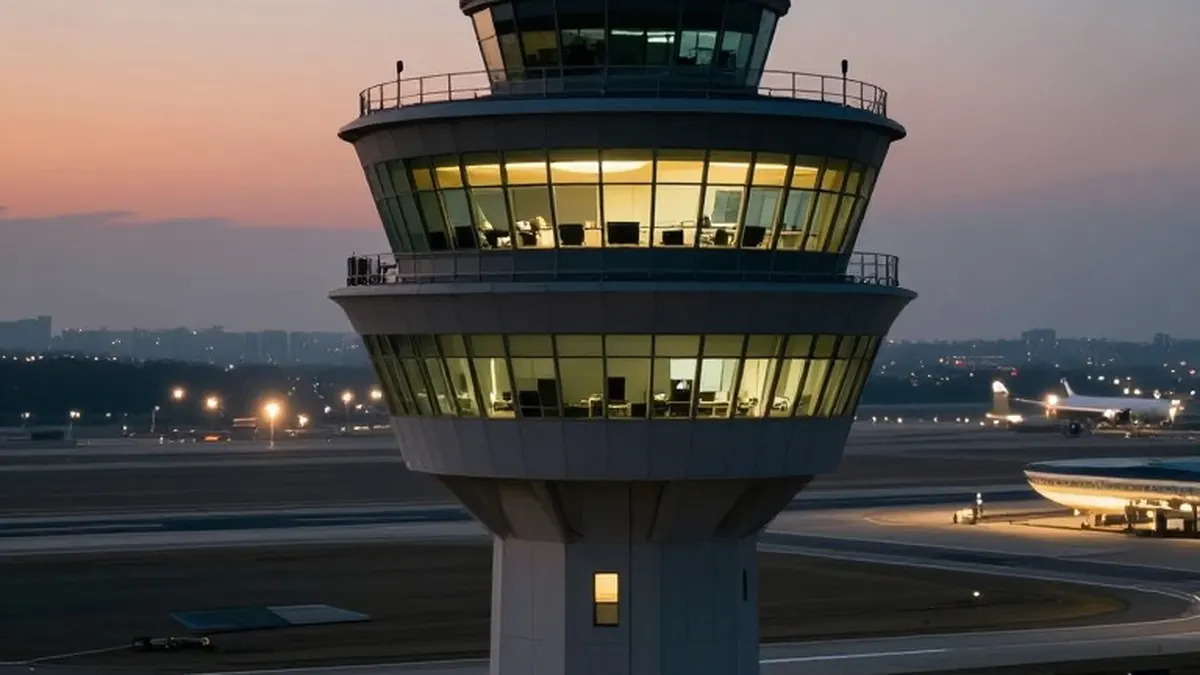
The recent grounding of thousands of flights in the United States due to a technical router issue has reignited a long-standing debate regarding the management of air traffic control. While it is uncommon for commentators on the U.S. political right to look north for policy inspiration, the disruption has prompted renewed calls for the United States to adopt a privatized system similar to the one established in Canada three decades ago.
A recent editorial in the conservative publication National Review praised Canada's approach, highlighting the country's technological lead and the speed at which its system can be upgraded. Canadian aviation experts agree that the American infrastructure, which is in urgent need of updates, could benefit significantly from the structural changes implemented in the north.
Anthony Perl, a political science professor and transportation policy specialist at Simon Fraser University, noted that Canadians can feel a sense of superiority given their three decades of experience with the current model. He observed that at least some in the United States have finally recognized the value of this approach after years of underfunding and technological stagnation.
The origins of Canada's current system date back to the 1980s and early 1990s, when the government-run air traffic control network was outdated and required millions of dollars in investment. Faced with a substantial financial burden, the Canadian government transitioned the service to a privatized model. In 1996, Nav Canada, a non-profit organization, began managing air traffic, making Canada the first nation in the world to privatize its civil air navigation system.
Under this structure, Nav Canada is not controlled by the government or funded through taxes that must pass through Parliament. Instead, it generates revenue by charging user fees directly to the airlines that utilize its services. Perl compared this model to a cell phone plan, where bills are sent based on usage volume, and rates are correlated with the actual cost of running the system and delivering services.
Despite the privatization, regulation remains a critical component of the system. Transport Canada continues to play a key role in ensuring that Nav Canada does not cut corners, a balance that Perl described as essential for maintaining high standards. The organization uses business modeling to forecast operational costs and ensure the system remains in good repair, allowing it to track its financial state and operating expenses at any given time.
John Gradek, a faculty lecturer in supply networks and aviation management at McGill University, highlighted the efficiency of this model. He pointed out that Nav Canada replaced paper-based flight data strips with electronic touchscreens in 1998, just two years after it began operations. In contrast, the United States has yet to complete a similar upgrade. Gradek attributed this lag primarily to funding challenges, noting that money for the Federal Aviation Administration is often treated as a political football in Congress.
While the user-fee structure means Canadian travelers may pay slightly more for flights, experts argue this reflects paying for the actual cost of infrastructure rather than underfunding it. Aidan Hollis, an economics professor at the University of Calgary, stated that it makes logical sense for users to pay for the service they consume, rather than having non-flying citizens support the system through taxes.
The idea of privatization is not new to American politics. In 2017, President Donald Trump urged Congress to approve a privatization plan intended to boost safety and reduce wait times, though the effort stalled. Skeptics, including the National Business Aviation Association, have raised concerns about funding instability and safety, citing a 2023 International Civil Aviation Organization report that gave Canada a C grade on oversight.
Nav Canada has pushed back against these criticisms. Maryam Amini, a spokeswoman for the organization, stated in an email to CBC News that the claims are not supported by facts. She clarified that the cited ICAO audit assessed Transport Canada's safety oversight system, not Nav Canada itself, and maintained that Canada's air navigation system remains among the safest in the world.