FAA Halts Juniper Router Installations After Ground Stop
The agency is relying on 25-year-old Cisco equipment while investigating why new hardware caused a cascade of signal failures.
By Amit Chukwu ·
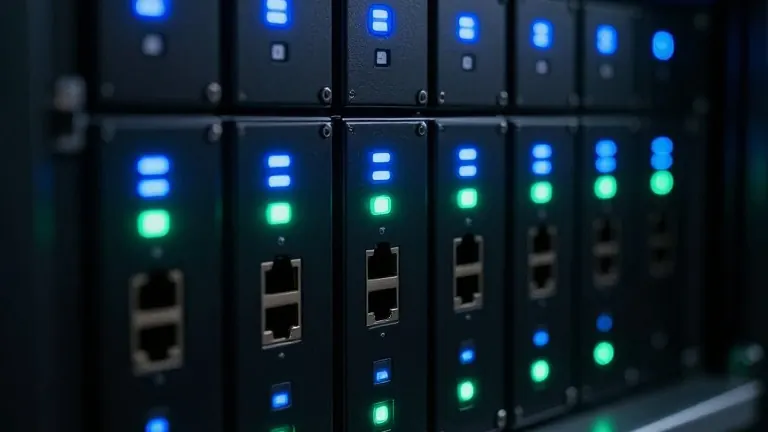
The Federal Aviation Administration paused all new installations of Juniper routers and disabled existing units on Friday after technicians traced a system failure to a device in El Dorado, Arkansas. FAA spokesperson Ian Gregor said the agency took the step to stop the spread of problems that had already disrupted air travel nationwide.
The halt follows a ground stop that occurred last week. Transportation Secretary Sean Duffy said the new router installed by L3Harris in Arkansas triggered intermittent communications and radar signals at 17 of the 22 regional air traffic control centers. The FAA reported that excessive data flooded the network at a rate of 1,000 connection attempts every four to five seconds, creating instability in aircraft communications and radar feeds.
The agency is currently operating its telecommunications network using older Cisco routers that have been in place for 25 years. Meanwhile, the Juniper routers involved in the incident are undergoing testing in a laboratory at the headquarters of L3Harris. Hewlett Packard Enterprise, the parent company of Juniper, stated that the devices functioned as configured by the installer and did not fail or act improperly.
The system became overloaded while a federal contractor replaced outdated copper wires with fiber optic lines across the country. Democrats on the Senate Commerce Committee sent a letter to Duffy arguing that identifying the failed device does not explain why it failed. They noted that only 400 of more than 3,600 new routers have been installed and demanded a root cause analysis before future issues occur.
President Donald Trump blamed old technology and Democratic opposition for the grounding. The FAA has struggled to modernize the air traffic control system for decades, a challenge that predates the current administration. The administration sent a letter to key lawmakers on Tuesday requesting $50.1 billion to modernize the system.
The budget request includes $10.1 billion for updating the air traffic control system. Additional funds would support airport infrastructure, refurbish terminals at high-impact hubs, build five new traffic control centers, and improve or replace up to 140 FAA-owned towers. Congress approved $12.5 billion last year for similar modernization efforts, including the replacement of 1980s-era radars and copper wiring.
Bernstein analysts estimated the ground stop and subsequent recovery work cost the four largest U.S. airlines $345 million combined. American Airlines lost $113 million, while Delta and United each lost $96 million. Southwest Airlines lost $40 million. The analysts noted that these figures will affect quarterly earnings for the four carriers.