Army blows Iowa lead azide
The military detonated 5 tons of unstable explosive material in Middletown after a court ruling cleared the way for the blast.
By Amit Chukwu ·
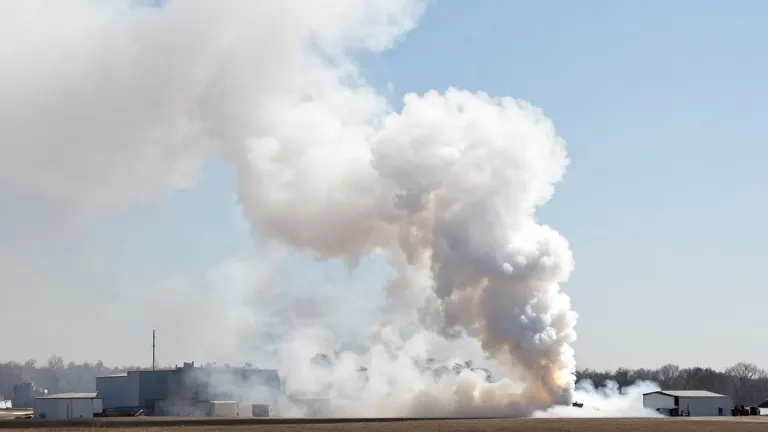
The U.S. Army detonated the nation's entire stockpile of lead azide at the Iowa Army Ammunition Plant in Middletown on Wednesday morning. Officials ordered the controlled explosion because the degrading bomb-making chemicals posed a risk of spontaneous detonation as temperatures cooled.
The blast targeted roughly 5 tons, or 4.54 metric tonnes, of degraded lead azide. The material had been stored in two bunkers since 2009, when it was consolidated from bases across the country. Routine inspections in March revealed the chemical had partially crystallized, making it sensitive to friction and cold.
Iowa Gov. Kim Reynolds called the detonation successful in a statement on Wednesday. She cited initial feedback from state experts and federal partners. The Army plans to hold a news conference late Wednesday morning to provide further updates.
The detonation was the third time the Army changed the date for the blast. A federal appeals court approved the new timeline after environmentalists sued to stop the operation. The original schedule called for a blast last Friday, but the military rescheduled to allow for better wind conditions and additional safety measures.
Burlington resident Tim Brandt watched the event from less than a mile away. He described the sound as similar to noisemakers cracking on the ground. "It was nothing," Brandt told The Associated Press. "It seemed like government put fear in a lot of people over nothing."
The Environmental Protection Agency monitored air quality in the area. Their devices did not detect lead in the air during the first 15 minutes following the blast. The agency had collected more than 1,200 samples from air, land, and water sources before the detonation.
Farmers in the region remain concerned about long-term impacts. Doug Seyb, a 71-year-old resident of Donnellson, lives 18 miles southwest of the plant. He worries about potential soil contamination and effects on his cattle. "We can just cross our fingers," Seyb said. The U.S. Department of Agriculture estimates that about 350 farms could be affected by the projected plume.
The Federal Emergency Management Agency issued an alert an hour before the blast. It advised residents within 20 miles to shelter in place and close windows to block lead dust. The Army used barriers and ballistic gels to limit the plume and doused the materials with thousands of gallons of water.