Midterm elections force US farmers to weigh crop choices and political shifts
Rising input costs from the Iran war and trade disruptions are driving American farmers to rethink their plantings and potentially their votes ahead of the 2026 midterms.
By Grace Almasi ·
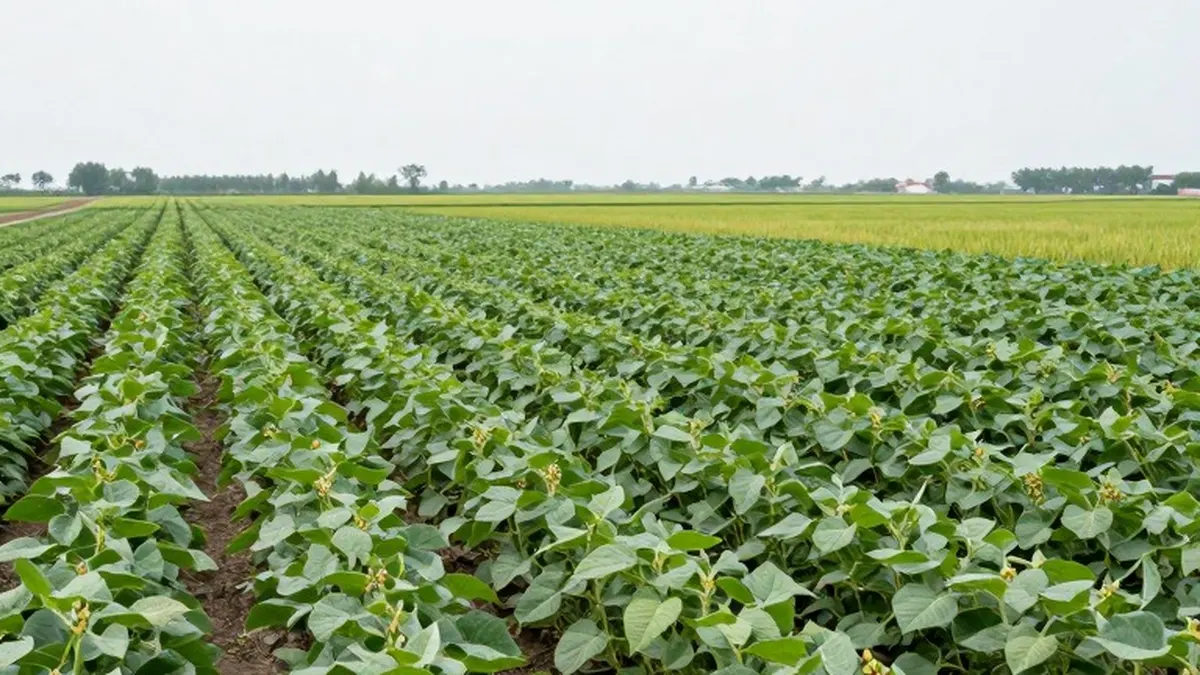
Paul McKinney, a farmer in northeast Arkansas, recalls his son playing in flooded rice fields during his childhood. He described the experience to a child as being like a giant, 40-acre swimming pool. Rice has been a staple crop on the McKinney family farm for four generations, but next year the family plans to plant significantly less of it. Instead, they will shift their focus to soya, a crop that is cheaper to produce. This decision mirrors the tough choices facing farmers across the United States as they respond to skyrocketing fuel and fertiliser costs since the start of the war on Iran.
This week, farmers also face critical decisions at the polls. Democrats are expected to make gains in the midterm elections as voters react to high prices across the economy by switching parties or staying home. Observers are closely watching farm country, where Texas and Kansas could send Democrats to the Senate for the first time in decades. In the House of Representatives, two majority rural districts, Wisconsin’s Third and North Carolina’s First, could become tipping points for Democratic control.
Despite these potential shifts, many of the country’s most rural areas, including Arkansas, remain safely Republican. This creates an uphill battle for Democrat Hallie Shoffner, a sixth-generation farmer who quit farming last year to challenge Republican Senator Tom Cotton. Her campaign is squarely focused on the issue of rising costs.
Ryan Loy, an extension economist for the University of Arkansas’ Division of Agriculture, noted that high input costs were straining farmers even before the US-Israel war on Iran. He pointed to the trade war with China that began in 2018, the ongoing war in Ukraine, and disruptions related to 2025 tariffs as factors driving up costs. A drought across the US heartland, worsened by climate change, has added to the strain. In Arkansas, many farmers skipped rice in favor of soya, which Loy described as the least input-intensive crop.
The war on Iran intensified these pressures. With the Strait of Hormuz blocked, fertiliser costs jumped just as farmers were planting in the spring. Loy tracked these increases in a sample budget for Arkansas row crop farmers, finding that urea fertiliser peaked about 39 percent over the budgeted amount. Diesel costs came in about 72 percent more than budgeted across the planting, growing, and harvesting seasons. This represents an additional cost of about $343 million for the state alone.
Last week, US President Donald Trump announced an $8 billion fuel relief programme for farmers, following $12 billion in tariff-related aid in 2025. McKinney, a member of the Arkansas Farm Bureau, said the announcement was welcome but hoped for longer-term solutions to prevent a constant battle for survival. Farm bankruptcies for the first three quarters of 2026 were up 19 percent compared to the same time last year, according to the University of Arkansas’ National Agricultural Law Center.
Shoffner’s decision to leave farming came after higher costs and lower crop prices made the numbers stop working for their 2,000-acre operation. She said she decided that if she could not farm, she would fight. If elected, she wants to end the war on Iran, build trade policies farmers can plan around, and pass a robust Farm Bill. Cotton did not respond to a request for comment.
Michael Shepherd, a political scientist at the University of Michigan, noted that many rural voters are committed Republicans whose voting choices are not particularly responsive to changes in the agricultural economy. However, some polling suggests potential movement. A September poll from Purdue showed that a majority of farmers surveyed think the country is on the wrong track. Shoffner’s campaign has been far outspent by Cotton’s, who has received funding from interest groups and corporate leaders.
McKinney, who now farms one of the Shoffner family’s former fields, observed that farmers represent a shrinking percentage of rural voters. Even where candidates like Shoffner do not win, their campaigns may signal to funders that similar races could be competitive in the future. In Arkansas’ second congressional district, the Democratic Congressional Campaign Committee is betting on Democrat Chris Jones. Shepherd stated that all indications suggest this will be one of the biggest shifts away from the president’s party observed in recent history.
Source: Al Jazeera