Anthropic IPO Tests Resilience of AI Market Amid Bubble Concerns
The massive public offering aims to validate AI valuations while investors grapple with questions about sustainability and market saturation.
By Grace Almasi ·
Anthropic, the developer of the Claude AI model, is preparing for a historic Initial Public Offering that could value the company at approximately $1.4 trillion. This valuation would place it among the top ten most valuable firms in the United States. The move comes at a pivotal moment for the artificial intelligence sector, which faces growing scrutiny over whether its rapid expansion is sustainable or if a correction is imminent.
The company was founded six years ago by Daniela and Dario Amodei, who left OpenAI due to concerns about safety protocols. Daniela Amodei, who previously oversaw safety and policy at OpenAI, recalled asking a friend for advice before making the decision to depart. Her friend’s direct response was that she already knew the answer. The siblings, joined by several colleagues, established Anthropic as a rival focused on responsible development.
Analysts project that Anthropic will generate $52 billion in revenue in 2026 and $135 billion in 2027. The IPO involves selling roughly $65 billion in shares to the public and an additional $26 billion to large technology firms. This makes it the largest capital raise in US corporate history. The event is seen as a critical benchmark for the broader AI ecosystem, as it offers public investors their first direct access to a pure-play AI provider rather than just its infrastructure suppliers.
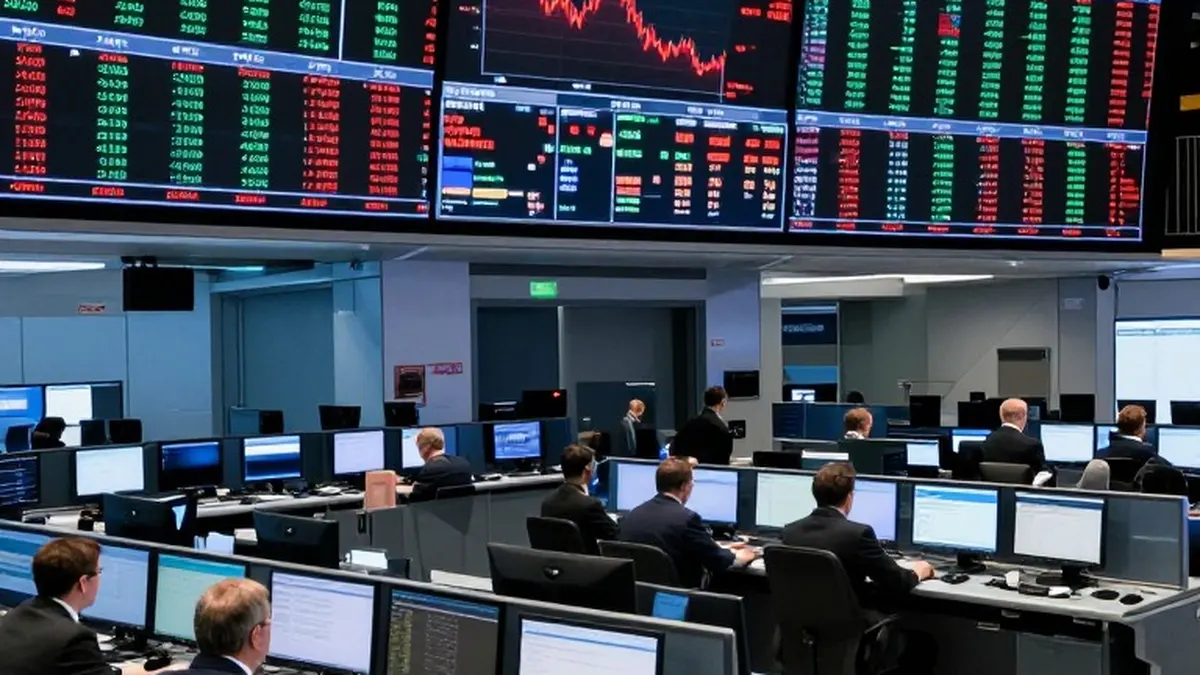
Despite the massive scale of the offering, skepticism persists. Market leaders in AI hardware have seen significant drops in value. Shares in computing power providers like Coreweave and Nebius have halved, while Nvidia, the world’s most valuable company, has lost approximately 30% of its value, a decline worth $2 trillion. This volatility has led some investors to hedge their bets, fearing that AI costs will drop as the technology becomes commoditized.
Critics argue that the current economics of AI do not fully add up. Gary Marcus, a professor emeritus at New York University, noted that while large language models offer genuine utility, the financial bubble is evident. He warned that as more companies build models, competitive advantages will erode, driving prices down. Furthermore, Anthropic’s revenue is heavily concentrated, with a quarter coming from a few major clients such as Google and Amazon, and two-thirds generated within the United States.
The industry is also marked by complex financial relationships. Anthropic has agreements to purchase hundreds of billions of dollars in chips and computing power from firms that are also its investors and customers. This circular financing raises questions about the durability of the growth. Additionally, public sentiment in the US has shifted, with local moratoriums on data centers and political candidates opposing big tech associations becoming more common.
The narrative around AI leadership is also evolving. Jensen Huang, CEO of Nvidia, recently resigned after a personal scandal involving an affair with a suspected Chinese spy. His departure leaves investors seeking a new figurehead for the sector. Dario Amodei presents a different profile, emphasizing caution and warning about potential risks such as biological weapon development and mass surveillance, even as his company continues to release powerful new models rapidly.
Demand for the Anthropic shares is reportedly more than six times the supply, suggesting a strong initial launch. However, historical examples like SpaceX show that early gains do not guarantee long-term returns. Eileen Burbidge of Passion Capital believes the IPO could reignite investor confidence, while Fiona Cincotta views it as a valuation benchmark for the entire AI trade.
Ultimately, the success of the offering will test the market's appetite for AI. While fear of missing out may drive immediate purchases, underlying concerns about job displacement, energy consumption, and financial sustainability remain. The IPO will serve as a definitive gauge of whether the AI boom can withstand the pressure of public scrutiny and economic reality.