Nepal Families Rebuild Homes and Livelihoods After Glacial Floods
Januka Dhital and other survivors in Uttargaya are working with nonprofits to screen for malnutrition and restore basic services while waiting for a $5 billion recovery plan.
By Renata Mehta ·
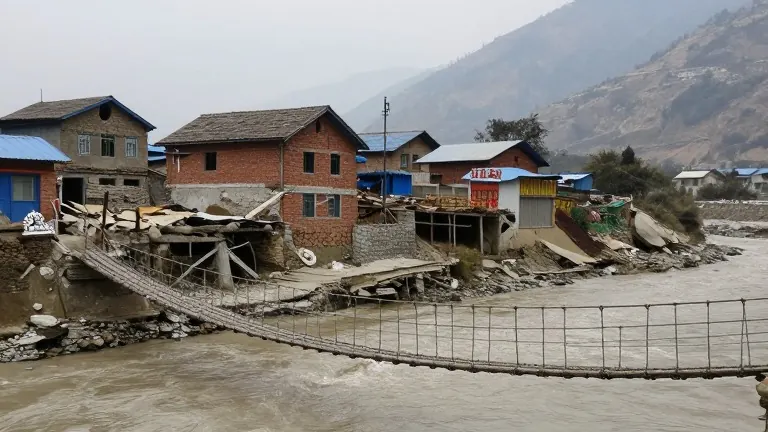
Januka Dhital was preparing snacks for a catering event in her home in Uttargaya, Nepal, when a man on a scooter warned her of a flood. She looked outside, saw the hillside collapsing, and grabbed her young son. The two escaped to higher ground on the scooter. Her husband and daughter were at work and school. After hours of searching, the family reunited. Dhital said her husband was naked, injured, but alive. She described the relief of their survival as unbelievable, noting that the water and mud destroyed their home.
Dhital is one of more than 100,000 people affected by the glacial melt floods. At least 1,500 people have died, and more than 5,000 remain missing. The United Nations reports that seven health facilities, 23 schools, 10,000 toilets, and 64 water systems were damaged or destroyed. Shyam Pathak, a chief of health at UNICEF, said the magnitude of devastation is unimaginable. He noted that international attention has shifted from search and rescue to long-term community restoration.
Dhital stayed in a holding center for a month before moving to a relative's house. She described feeling mentally unstable and needing work. She joined Helen Keller Intl, a nonprofit responding to the disaster. After training that included mental health support, she began screening survivors for malnutrition. She also works with postpartum mothers, pregnant women, and children under five. Dhital said the work is the only thing keeping her going.
Pooja Pandey Rana, who directs Helen Keller's work in Nepal, said moderate acute malnutrition in Naukunda Gaunpalika rose from 0.8% in June to 8.7% in October. She called this a big jump likely driven by the flood. Families lost gardens and farms, forcing them to rely on dried and packaged foods like instant noodles. Poor sanitation and a lack of clean drinking water have also become major issues. Many residents lost their livelihoods and have little money for food.
Infrastructure damage complicates aid delivery. More than 100 bridges were destroyed, according to the U.N. Ayush Joshi of Save the Children said many areas in the upper north of the impact zone are cut off. Pushmaya Tamang, a community aid worker from Nuwakot, often crosses makeshift bridges to reach families. She said the bridges shake and become dangerous when people cross from both directions. Tamang's village is now largely dark and gloomy after the flood. She lost her younger sister in the disaster.
Winter brings colder temperatures to survivors in temporary shelters. Joshi said exposure to cold, overcrowding, and poor ventilation increases health risks. Responders are winterizing tents and moving families into safer shelters. Pandey Rana said there are still no final plans for where to rebuild homes or how to fix water systems and schools. Preliminary estimates place the cost of rebuilding at roughly $5 billion. The U.N. Climate Fund approved $20 million, and other donors have provided over $100 million, but the total remains far short of the estimated need.