Ceasefire Visit to Lebanon Village Ends in Strikes, Killing Reporter Khalil
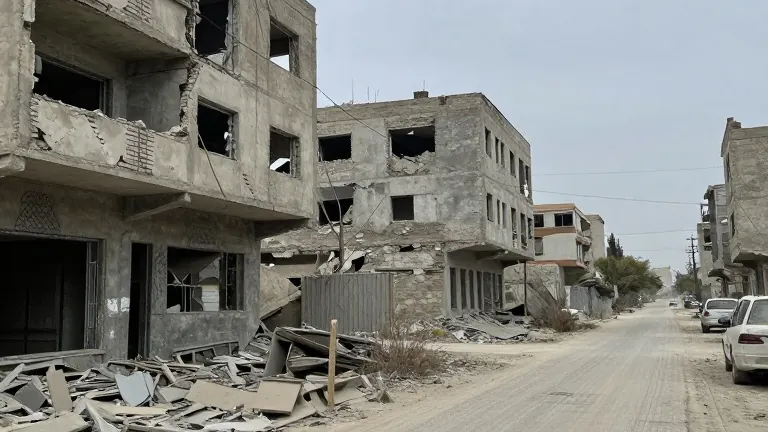
A photojournalist and a reporter drove to al-Tiri on 22 April to document war damage after Israel agreed to a truce in mid-April.
By Renata Mehta ·
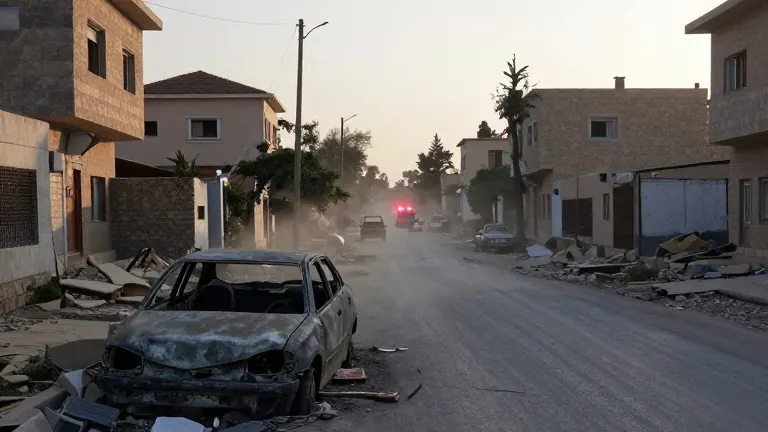
Residents and journalists who had been waiting to inspect damage in southern Lebanon after a mid-April ceasefire faced renewed fire on 22 April. Zeinab Faraj, 21, a photojournalist finishing a degree in radio and TV, joined Amal Khalil, 42, a newspaper reporter, on a trip to al-Tiri that afternoon. The two had worked together on assignments after Khalil saw Faraj's work on social media and contacted her.
The pair had met Ali Nabil Bazzi, 27, a municipal official in Bint Jbeil, and Mohammed Hourani, 37, a friend of the mayor, earlier that day at Tebnine governmental hospital, which people used as a gathering point because they considered it relatively safe. Bazzi was due to sign a marriage contract that evening but joined the trip anyway. A missile struck the car carrying Bazzi and Hourani while Faraj and Khalil were following behind.
The Israeli military said it had identified saboteurs violating the ceasefire. Human rights groups called the attack a war crime. As the two women took shelter in a building, the Israeli military received repeated messages urging it to allow a rescue operation. A week before the attack, an Israeli military spokesperson shared a video of Khalil published by her newspaper and described it as "terrorist media." Khalil had also received death threats from Israeli numbers.
Paramedics reached Faraj after a missile struck the house where the two women had taken cover. Faraj was pulled from rubble as drones circled overhead. At a hospital, nurses first tried to reassure her about Khalil, then fell silent. "That's when I knew she was gone," Faraj said. Khalil is believed to have died about an hour before paramedics were allowed to return to the area.
Faraj, who was born and raised in Bint Jbeil, is preparing to return to university. She still has visible injuries to a hand, and an injury to her face has affected the movement of one eyebrow. She wakes at night screaming and buries herself in pillows, and the sound of drones and warplanes puts her on edge. "His head was turned towards me. His eyes open and looking at me. That is something I will never get out of my head," Faraj said of Hourani after the first missile struck.
Source: The Guardian