Central Texas Gardeners Should Plant Now
Holly Wilson advises homeowners to use the cooler months to establish root systems before summer heat returns.
By Amit Chukwu ·
Holly Wilson has spent four decades tending vegetable and flower gardens in Kyle, Texas.
The practice began in childhood, when she helped her mother and grandfather maintain their plots. That early exposure shaped her approach to horticulture and her current work as an organic gardening instructor.
Wilson serves on the City of Kyle Conservation and Parks and Recreation board and also teaches for the Native Plant Society of Texas. She emphasizes that humans and nature exist in a symbiotic relationship.
"I care very much about people being outside and enjoying nature and protecting our environment and nature," Wilson said.
The best window for planting in Central Texas runs from mid-October through late November. Wilson notes that plants started in the fall face cooler temperatures and a higher probability of rain. These conditions encourage plants to build deeper root systems. Those established roots help plants survive the drought conditions typical of spring and summer.
Beginners often make errors in plant placement. They fail to check whether a specific spot offers the required sunlight or shade year-round. They also ignore the mature size of the plant. Wilson advises buyers to research soil, water, and sun requirements before purchasing. This information determines where a plant will fit in a garden bed.
Wilson uses integrated pest management in her own garden. She avoids chemical pesticides, herbicides, and fungicides. Instead, she creates compost from vegetable scraps, leaves, and twigs. She also uses vermicompost, or worm compost, as fertilizer. Beneficial insects, lizards, and frogs help control unwanted pests in this balanced ecosystem.
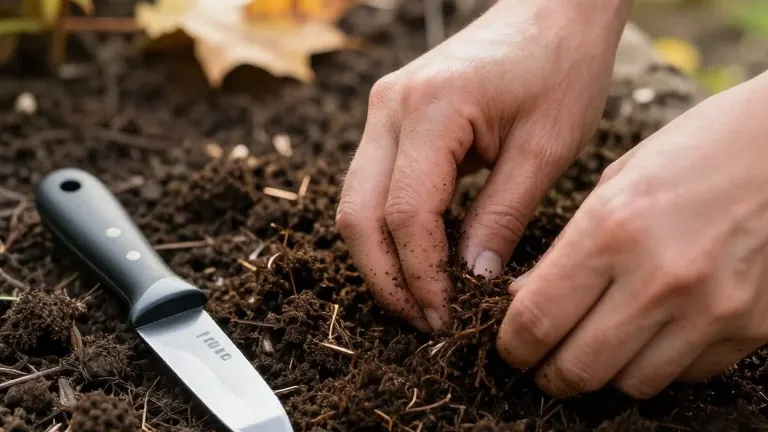
Soil health is critical for plant vitality. Wilson mixes compost into the soil before planting. For established plants, she gently removes surface soil to work in new compost without disturbing roots. She warns that synthetic fertilizers, which are often petroleum-based, can starve beneficial microorganisms in the soil. This makes plants dependent on chemical inputs rather than natural nutrients.
Wilson recommends the Hori Hori knife, a Japanese gardening tool, for basic tasks. For research, she points gardeners to the Native Plant Society of Texas website. The site includes a database where users can input their specific eco-region to find suitable native plants.
A shift is occurring in Central Texas landscaping. Homeowners are recognizing that non-native turf grasses waste water. Wilson observes an awakening toward using native plants, which are better adapted to local conditions. Ninety percent of native insects are specialists that feed only on native plants. Fifteen percent of adapted non-native plants eventually become invasive, causing environmental and economic damage.
Wilson suggests that time spent in nature reduces stress levels and increases dopamine. She encourages gardeners to accept beneficial insects in their yards to maintain ecosystem balance. For those overwhelmed by conflicting advice, she recommends exposing themselves to multiple sources to identify consistent truths.
Source: Community Impact Austin