Citizens Budget Commission urges MTA to cut over 1,000 jobs
A new report suggests the transit agency could save $2.5 billion a year by reducing staff and raising retiree healthcare costs to close a projected $900 million gap by 2030.
By Amit Chukwu ·
The Citizens Budget Commission has recommended that the Metropolitan Transportation Authority eliminate more than 1,000 positions to address a looming financial crisis. The watchdog group says the MTA faces a funding shortfall of nearly $900 million by 2030 if spending continues to outpace fare revenue. The report argues that technology has made several roles redundant and suggests specific cuts to close the gap.
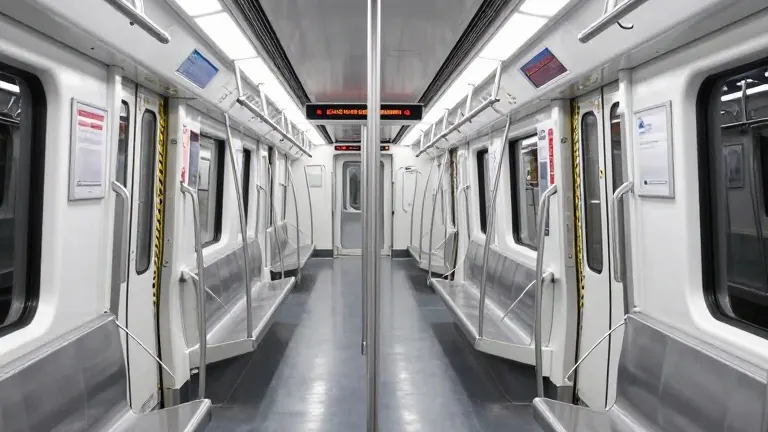
A central part of the proposal involves reducing the number of workers required to operate subway trains. The commission suggests allowing trains to run with a single operator instead of two. It points to the L and 7 lines, which use new computer-based signals and automated announcements, as evidence that this model works. On those lines, the operator’s primary duty is hitting a button every 20 seconds to prove they are alert. The report estimates that cutting operator jobs on just the L and 7 lines would save $36.5 million annually. If the agency phased out two-person crews across the entire system, the annual savings could reach $500 million.
The MTA is currently installing similar new signals on the A, C, E, F, G, M, and R lines. Those routes still require two workers to operate trains at this time. The commission argues that legislative mandates requiring two workers prevent the agency from modernizing and realizing financial benefits. It notes that the MTA has already saved $576 million this year through operating efficiencies, but says labor and healthcare costs remain the main drivers of the budget gap.
Beyond subway operations, the report recommends streamlining ticket checks on commuter railroads. It suggests verifying tickets before boarding to reduce the need for staff to walk through trains. The commission estimates that cutting more than 1,000 jobs on Metro-North and the Long Island Rail Road could save $380 million per year. Additionally, the report proposes that MTA retirees pay higher healthcare premiums, a move that could generate an extra $315 million annually. Together, these reforms could save the agency $2.5 billion each year.
The recommendations arrive while the Transport Workers Union Local 100 negotiates a new contract with the MTA for its 40,000 subway and bus workers. The agency plans to release its financial plan for next year within weeks, which includes a 4% increase in fares and tolls. The MTA board is scheduled to vote on that plan in December.
John Samuelsen, president of the Transport Workers Union of America, said the same recommendations have been made for decades. He described the proposal as an attempt to balance alleged deficits by cutting costs from working people. Samuelsen noted that many MTA laborers, ironworkers, track workers, and crane operators earn less than their private sector counterparts but accept lower wages in exchange for generous retirement benefits.
Last year, the state legislature attempted to pass a law requiring two MTA workers on every train. Governor Kathy Hochul vetoed the bill, leaving the door open for one-person train operations in the future. The MTA’s financial plan will determine how much of the projected $300 million budget gap for next year is addressed before the larger 2030 shortfall becomes an issue.
Source: Gothamist
More Business · Customer Complaints · Report a business · Got a Story?