Striped Bass Decline Threatens $8 Billion East Coast Industry
Veteran guides in Montauk report a sharp drop in fish numbers, citing a lack of small prey and a population that has failed to replenish.
By Grace Almasi ·
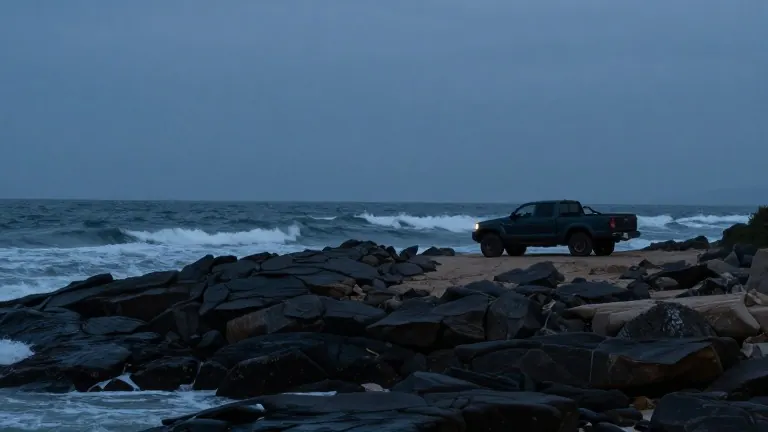
Bill Wetzel drives a modified 4x4 pickup across the boulders and sand of Montauk, New York, to prepare for the night shift. For more than 25 years, he has guided anglers to the surf to catch striped bass. He tracks current seams, sandbar cuts, and bird activity with precision. Yet despite his experience, he admits uncertainty about whether fish will even be present on his next outing.
The decline of the striped bass population has put an $8 billion industry at risk. Scientists attribute the drop to human, environmental, and ecological changes. Fishermen who once made more than 17 million trips annually to catch the species now face empty waters. The trend threatens a tradition that spans generations on the East Coast.
Wetzel notes that the chaotic feeding frenzies, known as blitzes, have disappeared from the Montauk shores for four years. He states that small fish are gone, leaving only large individuals that are not enough to sustain the population. He fears a return to the mid-1980s, when a stock collapse forced a fishing shutdown.
Jason Markowitz, an IT professional and former president of the Montauk Surfcasters Association, swims to offshore rocks to fish. He describes the current situation as a race for the last remaining fish. He says that while some anglers still find targets, the abundance has vanished. The risk of strong waves and predators no longer guarantees a catch.
John Skinner, a 65-year-old author and YouTube creator, has fished Long Island for 55 years. He observes a lack of small prey like menhaden that striped bass need to feed. He also notes a decline in other large predatory fish. Skinner sometimes leaves his prime spots on the North Fork without a catch, a development he finds devastating.
John Mahan has fished Montauk since 1987. This is the first year in four decades that he has not caught a striped bass. He suggests that leaving the fish alone for a period may be the only way to save them. The town, once known for a specific fishing culture, is changing as it blends with the nearby Hamptons.
Mahan recalls the late 1980s and 1990s as spectacular times for the sport. He stands on the rocks near the lighthouse, noting that the conditions appear ideal for fishing. Yet the water remains quiet, reflecting the broader uncertainty facing the local fishing community.
Source: KSAT-TV
More Business · Customer Complaints · Report a business · Got a Story?