Democrats Take 29 Governorships
A massive wave of state legislative wins gives the party a unified advantage in policy arenas.
By Amit Chukwu ·
Statehouse control determines the pace of energy regulation and infrastructure spending. Democrats captured the majority of competitive state races on Tuesday, erasing the Republican advantage in state governments.
The shift reverses the pre-election map where Republicans held more governorships, legislative seats, and unified control of state legislatures. Democrats now hold 29 governorships against 19 for Republicans. Officials have yet to call the races in Kansas and Alaska.
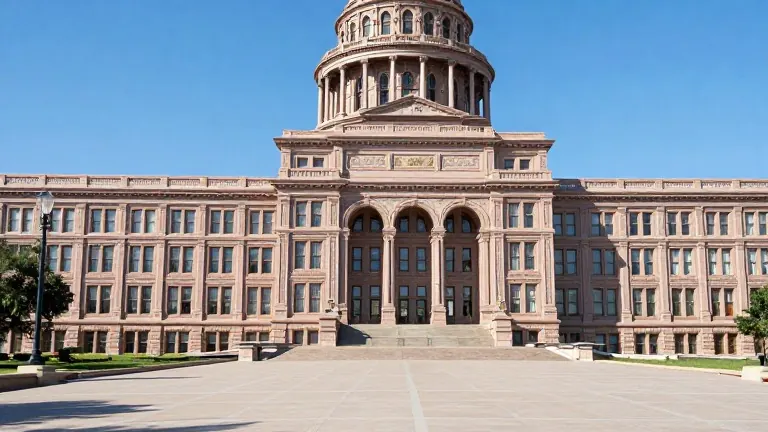
The party flipped five key governorships from Republican control in Georgia, Iowa, Ohio, Nevada, and Texas. This expansion in executive power aligns with a net gain of more than 350 state legislative seats so far.
Before the vote, Republicans occupied 4,072 legislative seats compared to 3,257 for Democrats, according to MultiState. The research firm projects Democrats will add several hundred more seats as tabulation continues. This trajectory may give Democrats more total state legislative seats nationwide for the first time in over a decade.
Democrats secured five new trifectas in Michigan, Minnesota, Nevada, Pennsylvania, and Wisconsin. Arizona is likely to become the sixth once counting concludes. The party now controls 22 trifectas, while Republicans hold 18. Nine states remain under split control.
Republicans lost unified control in Iowa, Georgia, Texas, New Hampshire, and Ohio. The party previously held trifectas in 23 states, a lead that has now reversed.
Caroline Spears, executive director of Climate Cabinet, stated on a conference call that a generational political window has opened to lower costs and reduce climate pollution. The full extent of the Democratic gains will not be final until counting ends in several states.
More Politics · National news · Report a business · Got a Story?