
Drone attacks damage Khartoum homes and UN facility as Sudan conflict enters fourth year
Sudanese military blames Ethiopia for early Sunday drone strikes on the capital, which left a UN building damaged and residents injured.
By Amit Chukwu ·
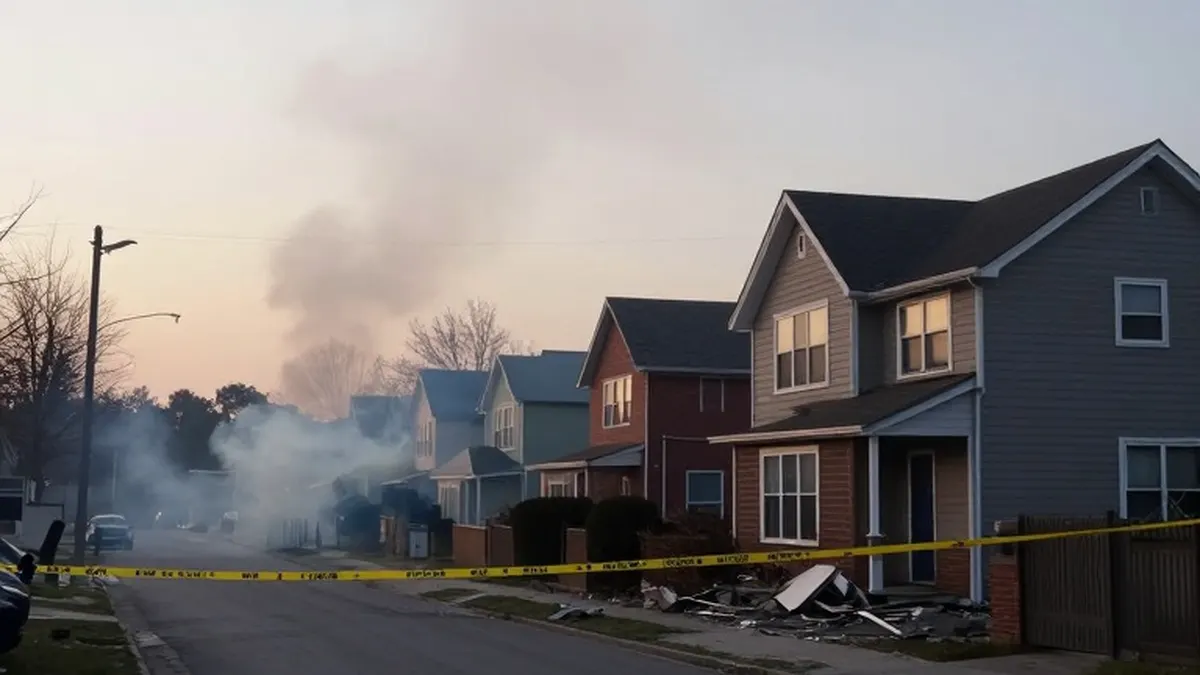
Drone strikes damaged residential properties and a United Nations facility in Sudan's capital, Khartoum, early on Sunday, November 22. The attacks occurred as the country's civil war enters its fourth year, marking a continued intensification of aerial bombardment in the region. The Sudanese army has formally accused neighboring Ethiopia of launching the drones, a claim that adds a new diplomatic layer to the ongoing conflict.
Witnesses reported that explosions were heard in the vicinity of Khartoum airport and other parts of the city between 2:00 am and 4:30 am. One resident stated that a house was completely destroyed by a strike. A source within the Sudanese military told the AFP news agency that the drones were launched from Bahir Dar airport in Ethiopia. The official described the dawn attack as a continuation of Ethiopian aggression against Sudanese territory.
The Sudanese military has repeatedly claimed that Ethiopia is supporting the Rapid Support Forces, the paramilitary group it has been fighting since April 2023. This support allegedly includes drone attacks originating from Ethiopian soil. While Ethiopia has denied these accusations in the past, the recent strikes have renewed the debate over the neighboring country's involvement in the war.
Footage from the scene showed a house reduced to rubble, with a security perimeter established around the site. Debris, including furniture and clothing, was scattered across the area. Al-Nour Adam, a local resident, described finding a man injured in the arm, chest, and head on a bed after entering the damaged home. Adam characterized the strikes as indiscriminate, noting the terror of waking up to find family members gone.
Another resident, Yasser Hassan, highlighted the precarious situation for families who have only recently found shelter. He noted that the occupants of the destroyed home had just moved in after a long search for safety. Hassan questioned where such displaced families were supposed to go next. In the Jebel Aulia area, approximately 45 kilometers south of the capital, a drone struck the home of a mosque muezzin, trapping family members under the rubble as neighbors attempted to rescue them.
The United Nations confirmed that a premises housing UN colleagues was damaged during the attack. The UN's humanitarian office, OCHA, stated in a post on X that the incident occurred in a civilian neighborhood. The organization condemned the risk posed to humanitarian workers, calling it unacceptable for UN personnel to be exposed to such danger during their operations.
Saudi Arabia, a key supporter of the Sudanese regular army, reacted swiftly to the news. The kingdom stated on X that it categorically rejects the brutal attacks, aligning its public stance with the military's accusations against Ethiopia. Meanwhile, local authorities have not yet released an official count of casualties from the early morning strikes.
The broader conflict between the Sudanese army and the Rapid Support Forces has resulted in significant humanitarian consequences. Aid workers estimate that more than 200,000 people have been killed, triggering the world's largest displacement and hunger crises. The UN has criticized both sides for their rampant use of drones, which killed over 1,100 people in the first half of 2026.
Child casualties have been particularly severe, with the UN reporting that two-thirds of the hundreds of children killed or injured this year were victims of drone strikes. In a related incident days prior, a Sudanese army drone attack killed 15 people, including four children, in a village in West Kordofan. This occurred as the army recaptured territory from the RSF in the resource-rich southern Kordofan region.
For the past year, the rival forces have contested control of this strategic area, which connects army-held central and eastern regions to RSF-controlled Darfur. In recent months, both factions have increasingly relied on long-range drones capable of striking targets hundreds of kilometers away. This shift in tactics allows them to project force while minimizing the risk to their own fighters on the ground.