Europe faces wave of bomb threats to flights and TV stations
More than 40 flights were affected this week, with no explosives found and no group officially claimed.
By Grace Almasi ·
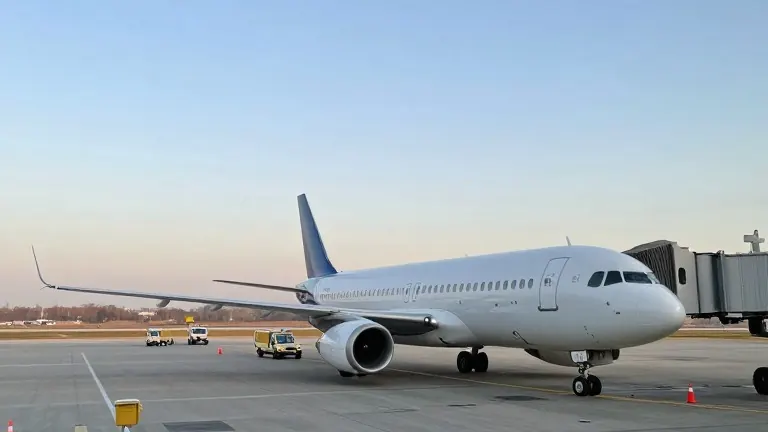
A series of coordinated bomb threats has disrupted air travel and broadcasting across Europe this week, forcing emergency landings and office evacuations. The incidents began on Tuesday and have since expanded from airlines to newsrooms. No explosives have been found, and all affected planes landed safely.
The first wave hit on Tuesday, affecting at least seven flights and a cruise ship in Poland, Bulgaria, Italy, and Spain. A second wave followed on Thursday, impacting at least 27 flights. By Friday, Prague's Vaclav Havel Airport reported nine additional threats. These incidents follow a string of other disruptions, including attacks on supermarket refrigeration systems and drone incursions.
On Friday, bomb threats reached newsrooms in Ireland and Bulgaria. The emails, sent to Bulgaria's Nova TV and Irish public broadcaster RTE, claimed responsibility from a sender named Mikhail Andropov. The messages were titled "Message to the West" and suggested the flight threats were a prelude to further attacks on transport. RTE evacuated its offices and suspended programming. The British broadcaster Sky also received a security threat.
Investigators have not linked the newsroom threats to the flight threats. Reuters could not confirm the sender's identity or the origin of the emails. A Prague airport representative told CNN that the airline threats arrived via anonymous email. Czech police said similar emails went to other European airports.
When a threat is received, airline security teams run a checklist and alert authorities. This often results in fighter jet escorts or diverts to designated airports for full sweeps. Eric Schouten, head of aviation security group Dyami, explained that sweeps involve unloading passengers and baggage, searching the aircraft, and reloading. This process can push crews past duty limits and cause missed connections.
Authorities have not attributed the threats to any specific group or state actor. However, the timing aligns with accusations that Russia is conducting a campaign of hybrid disruptions. Countries including Denmark, Poland, and Romania have previously accused Moscow. Russia denies involvement. In Italy, threats were purported to come from "fighters of the Male State," a far-right group banned in Russia. Vladislav Pozdnyakov, who founded the group in 2016, said it no longer exists.
European technology commissioner Henna Virkkunen stated that Europe has faced hybrid operations since 2022, including sabotage and cyber breaches. She told Reuters that these operations aim to destabilize societies and create mistrust. She noted that while not every operation is led by Russia, it is frequently the actor behind them.
Eurocontrol, the European air traffic authority, reported that the threats caused minimal disruption to overall aviation. However, carriers bear the costs of fuel, rebooking, and crew disruption. Air France-KLM chief executive Ben Smith said he had never seen threats reported in such a coordinated fashion. He stated that the company is confident in its current security measures and has no request for governments to change how they manage these situations.