Gen Z and Baby Boomers face different pressures as Germany weighs its future
Protests by young Europeans highlight concerns over pensions, housing, education and climate change, while older generations also face financial and environmental risks.
By Renata Mehta ·
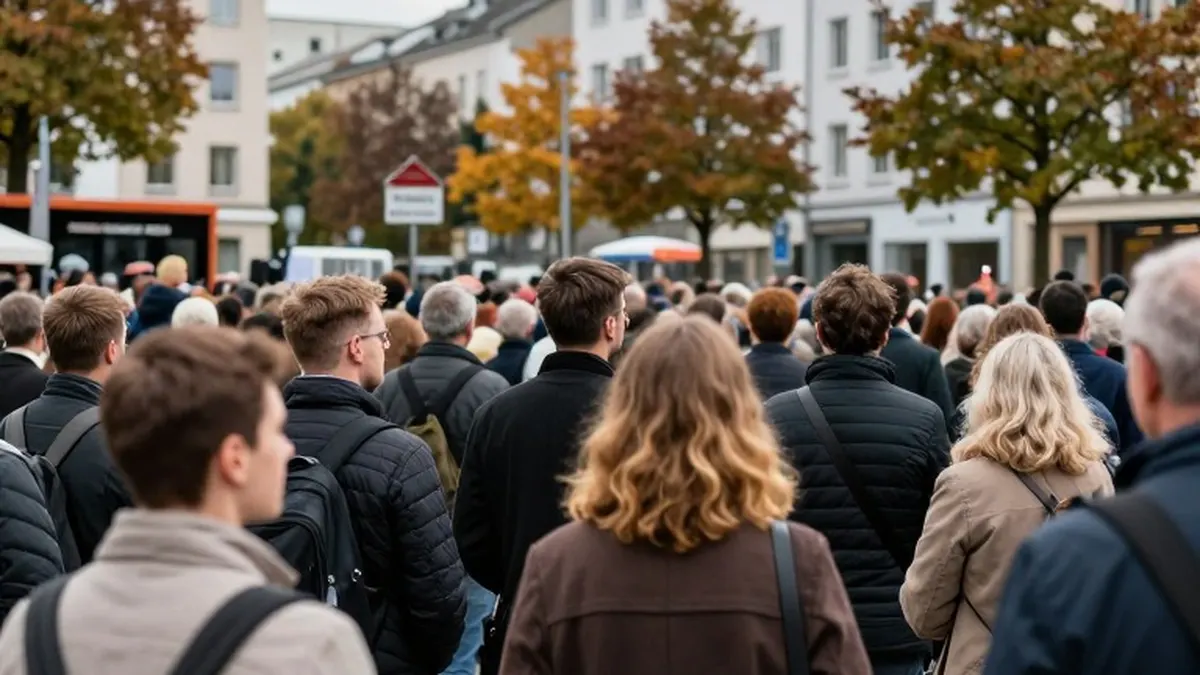
Young people protesting across Germany and Europe are expressing anxiety about their prospects, raising questions about whether their generation faces greater obstacles than Baby Boomers did. Data examined by Deutsche Welle on pensions, housing, education and climate change show pressures affecting both generations, though their experiences differ.
Youth researcher Simon Schnetzer, author of the annual Youth in Germany study, told DW that comparisons with earlier generations should not obscure the support young people need now. He said the demonstrations raise a fundamental question about whether society has provided conditions that allow young people to live and work confidently while continuing to finance the system. In his assessment, it has not.
Germany's pension system illustrates the changing balance between generations. According to the public pension insurance system, each retiree was supported by 3.73 contributors in 1957, compared with 2.1 in 2025. That ratio is projected to fall to 1.73 by 2045. Annual government subsidies already total around €118 billion, roughly a quarter of the federal budget, to help stabilize contribution rates. Meanwhile, the number of retirees receiving federal basic income support climbed from 257,000 in 2003 to 738,000 in 2024.
Housing costs place a particularly heavy burden on households with low incomes. The German Institute for Economic Research reported that their average share of income devoted to rent increased from about 24% in 1990 to almost 36% in 2021. That was 14 percentage points above the share paid by high-income households. Federal Statistical Office figures show that 11% of the population spent more than 40% of disposable income on housing in 2025, rising to 35% among people at risk of poverty.
Properties held by Baby Boomers could eventually relieve some housing pressure. Real estate platform Jacasa calculates that the generation owns around 4.8 million owner-occupied houses and apartments. Over the coming decades, sales, moves into assisted living and inheritances are expected to transfer those properties to new owners. Jacasa projects that some regions could consequently have more properties available than needed, bringing prices down.
Education spending has increased, but staffing remains a concern. The federal Education Finance Report puts annual public spending per person under 30 at approximately €8,000, double the roughly €4,000 recorded in 2011. Germany nevertheless spent 4.6% of GDP on public education in 2022, below the OECD average of 4.7%. Education ministers estimate a shortage of about 27,000 teachers by 2035, driven mainly by Baby Boomer retirements and a smaller supply of younger teachers linked to declining birth rates.
Climate change presents another unequal generational burden. The United Nations says the world is heading toward warming of 2.6°C above pre-industrial levels by the century's end. A 2025 study by Vrije University in Brussels found that, under current climate policies, children aged six in 2026 could experience heat waves two to seven times as frequently over their lifetimes as Baby Boomers.
Older people are already bearing much of the deadly impact of heat. Germany's Robert Koch Institute estimated around 16,000 heat-related deaths nationwide by mid-September 2026, including more than 14,000 people older than 65.
Schnetzer urged cooperation rather than division. “Gen Z and Baby Boomers are in the same boat,” he told DW. He proposed that the generations demonstrate together, followed by a constructive effort to agree on shared goals and measures, even where sacrifices are necessary.