B-2 Pilots Reveal Details of Operation Midnight Hammer Strike on Iran
New interviews with air crews involved in the June 2025 attack on the Fordow nuclear facility provide a detailed account of the mission's planning, execution, and aftermath.
By Grace Almasi ·
A new investigation by Air and Space Forces Magazine provides a detailed look inside Operation Midnight Hammer, the American airstrike on Iran’s Fordow nuclear facility conducted in June 2025. The report, authored by journalists Chris Gordon and Tobias Naegele, relies on interviews with the aircrews who participated in the mission. For security reasons, the individuals involved were given pseudonyms, but their accounts offer the first comprehensive view of the events from the cockpit and the planning rooms.
The story of the attack begins with the pilots approaching their target after an 18-hour flight. Under the light of a thin red moon, two B-2 pilots noticed the lights of Tehran below them. One pilot recalled the moment as a surreal realization, stating, "Oh my God, it’s Tehran!" After a final check of their instruments, they released two 30,000-pound bombs from the aircraft's belly. These massive ordnance penetrators were designed to strike the underground facility at Fordow.
The planning for this specific strike dates back to 2009, when US intelligence first identified suspicious construction in the mountains southwest of Tehran. For approximately 15 years, experts analyzed the facility's structure, ventilation, and electrical systems. A critical component of the strategy was the development of the GBU-57 bomb, a weapon capable of penetrating deep underground fortifications. The B-2 bomber is the only aircraft currently able to carry this specific munition.
The original plan focused on using the facility's ventilation shafts to channel the force of the explosions into the buried infrastructure. However, in the days before the attack, American intelligence discovered that Iranian forces had attempted to seal these shafts with concrete. This discovery forced a last-minute change in the bombing order. Planners had to ensure the concrete layer was destroyed first before targeting the facilities beneath it. According to the investigation, the final plan was approved just 16 hours before the mission began.
Concealing the departure of the seven B-2 bombers from Whiteman Air Force Base in Missouri was a major logistical challenge. To mislead trackers, additional bombers took off westward in plain sight, leading media speculation that they were heading to Guam or Diego Garcia. In reality, the seven attack aircraft took off eastward, crossing the Atlantic and Mediterranean to reach the Middle East. The pilots' families were kept in the dark, with one pilot noting that he simply went to work and did not return until the mission was complete.
The mission was an extreme endurance test for the crews. With only two pilots per plane, the flight involved long hours in a cramped cabin, mid-air refueling, and sleep in short bursts of 30 to 45 minutes. Some pilots relied on prescribed stimulants, while others used coffee and energy drinks. The operation was supported by approximately 125 other aircraft, including F-22 and F-35 fighters and refueling tankers, which the pilots cited as decisive factors in the mission's success.
Israeli air power played a significant role in clearing the way for the American strike. Israeli F-35 and F-15 aircraft, operating as part of Operation Rising Lion starting on June 13, neutralized many of the air defense threats that had concerned US planners. One pilot described the Israeli operation as an impressive display of Western air power that made the American mission much safer.
The bombing wave began at 2:10 a.m. Iranian time. Six bombers targeted Fordow, while the seventh struck the Natanz facility. The first aircraft dropped its bomb to clear the concrete, followed by five others in a precise timed sequence. The pilots noted that the time window for the operation was narrow, with a margin of error of only about 15 seconds in each direction. After the release, the planes raced to exit Iranian airspace. Although warnings of hostile activity were heard, post-mission analysis indicated that Iran did not fire at the B-2s directly.
The crews broadcast a message of safety only after leaving Iranian skies. On the return journey, a refueling crew discovered that President Trump had already announced the operation to the public while the bombers were still en route. The flights lasted approximately 37 hours in total. Upon landing in Missouri, the exhausted crews were given medical examinations and entered a classified debriefing where they viewed satellite images of the targets. It was during this debriefing that some participants learned the official name of the operation.
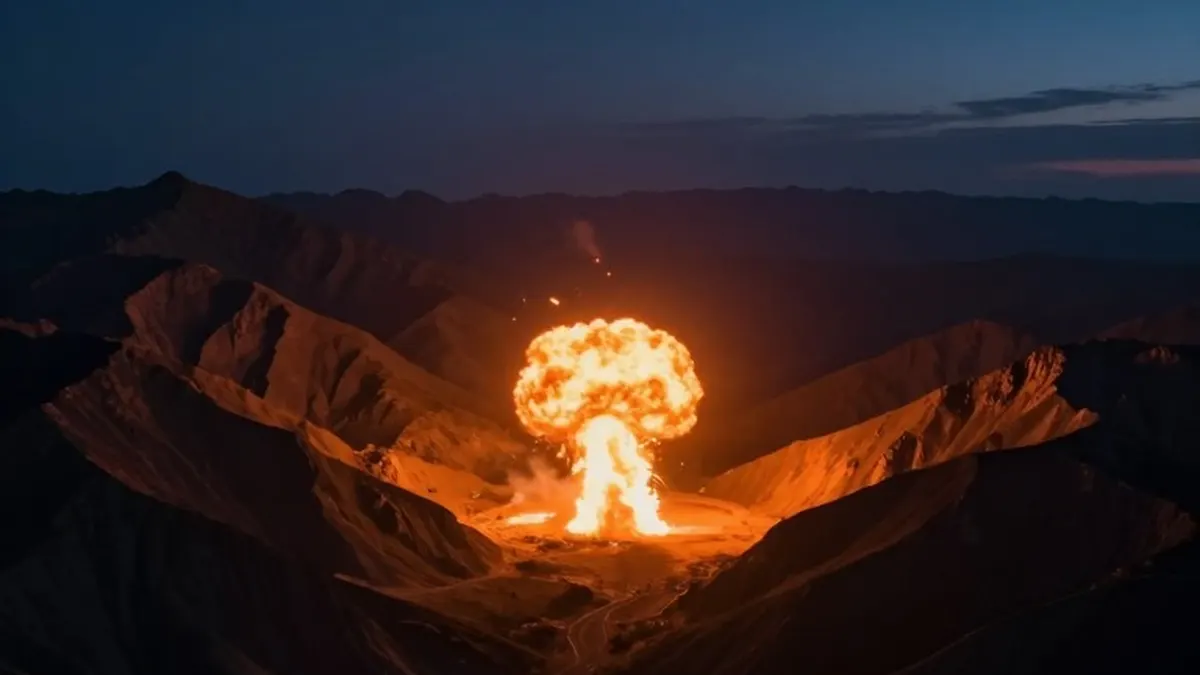
In total, 14 bunker-penetrating bombs were dropped, weighing approximately 190 metric tons. Submarine-launched Tomahawk missiles also struck the Isfahan nuclear facility. Damage assessments suggest that the attacks destroyed a large portion of Iran's ability to enrich nuclear material to military-grade levels. David Albright, president of the Institute for Science and International Security, stated that the pre-attack centrifuge program no longer exists. For the pilots, however, the memory remains of the tension, the falling bombs, and the fireball that lit up the Iranian mountains.