Iraqi Forces Enter Kataeb Hezbollah Base After Last Minute Truce
Security units moved into Jurf al-Sakhar on Friday under a brokered agreement that prevented a potential clash between the government and the Iran-aligned militia.
By Renata Mehta ·
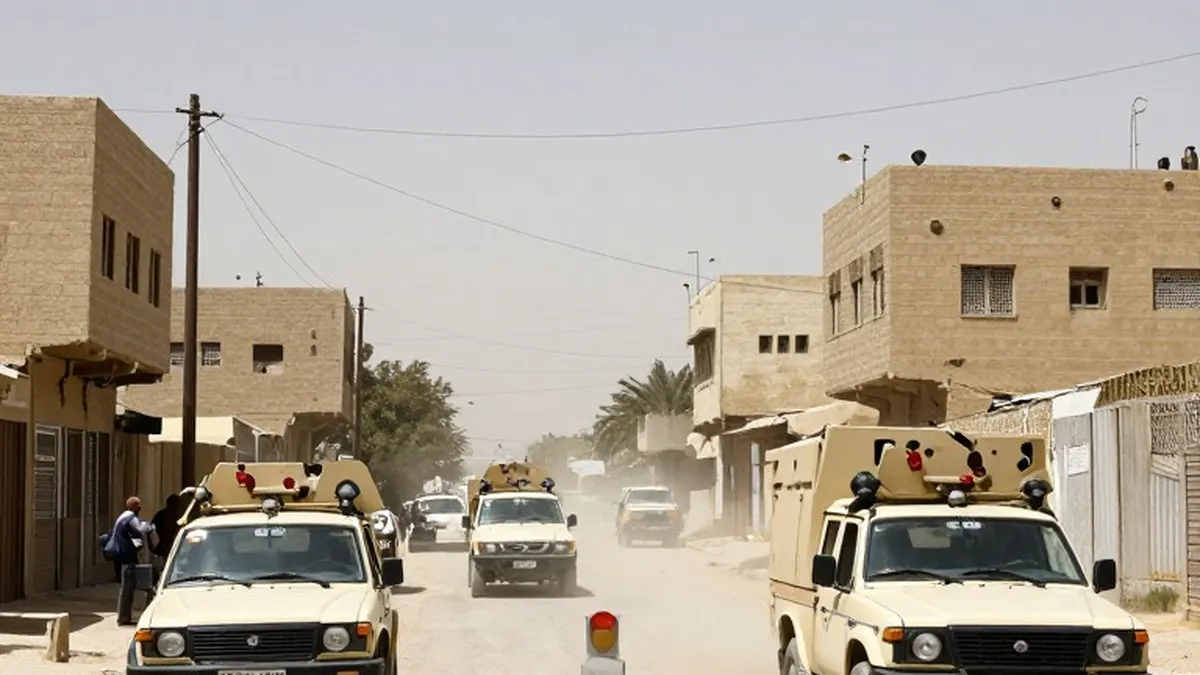
Iraqi security forces entered the stronghold of Kataeb Hezbollah in Jurf al-Sakhar on Friday, marking a significant shift in the balance of power in the area. This deployment followed a narrowly negotiated compromise that averted what many feared would become open conflict. Local journalists documented police units passing through checkpoints previously controlled by the militia, which is located south of Baghdad. State media confirmed that joint Iraqi forces had begun redeploying to the region.
The government had issued a deadline for the armed group to relinquish control of the area by Friday. Prime Minister Ali al-Zaidi had positioned security forces on the outskirts, preparing for a potential forced entry. Tensions had risen sharply after officials accused Kataeb Hezbollah of operating a smuggling network from Jurf al-Sakhar. This operation was alleged to have diverted hundreds of millions of dollars worth of state-owned oil revenue.
A deal was reached on Thursday, according to three senior security officials who spoke to Reuters. The agreement allowed government forces to enter the town on Friday. Senior Shia political leaders brokered the arrangement to ease tensions. Additionally, Esmail Qaani, the commander of Iran's Quds Force, arrived in Baghdad late on Monday to assist in defusing the situation.
Lieutenant-General Saad Maan, head of Iraq's Security Media Cell, explained that Kataeb Hezbollah forces would relocate to other areas. A new headquarters, reporting directly to the federal police, would begin operations in Jurf al-Sakhar. Maan told state television on Friday that cooperation with the Kataeb Hezbollah brigades within the Popular Mobilisation Forces had been very good so far.
This move increases pressure on Prime Minister Zaidi to rein in and disarm the powerful armed groups that have dominated much of the country since the fall of Saddam Hussein in 2003. In a brief statement broadcast on state TV on Friday, Zaidi emphasized that he was not waging war against Kataeb Hezbollah, a group designated as a terrorist organization by the United States in 2009. He described the group's members as brothers and sons of the nation, noting that their blood is shared with the rest of the country.
Despite the agreement, a source from Kataeb Hezbollah told AFP on Friday that the group had allowed the government a way out of the predicament it created. However, the source insisted that the militia would not be leaving Jurf al-Sakhar entirely. This statement suggests that while the immediate threat of a standoff has passed, the long-term strategic presence of the group in the area remains a point of contention.
Observers had warned that without a compromise, Iraq could have tipped into civil conflict. Hayder al-Shakeri, a research fellow at Chatham House, noted that all parties had strong incentives to avoid a clash. He explained that the risk remained high if Zaidi continued to push for changes while Kataeb Hezbollah refused to move. A limited clash could have escalated quickly, especially if other factions interpreted it as a broader move against them. The deal provided both sides a way to step back without appearing to surrender.
Prime Minister Zaidi has previously set a deadline of June 30, 2027, for armed groups in Iraq to disarm or come under direct state control. However, the most powerful groups, including Kataeb Hezbollah, Harakat Hezbollah al-Nujaba, and Kataeb Sayyid al-Shuhada, have indicated they are unwilling to meet this deadline. These groups have a complex history, having played key roles during the US-led occupation and the war against the Islamic State group.
Critics point out that these militias were responsible for killing, kidnapping, and torturing thousands of Iraqis during previous conflicts. They also helped suppress the pro-democracy Tishreen movement that erupted in 2019. In recent years, several of these groups have joined forces under the banner of the Islamic Resistance in Iraq to target Israeli and US assets, citing the ongoing genocide in Gaza as a primary motivator for their actions.