PHRI report highlights 350 percent jump in attacks on West Bank medical staff
A new study reveals a sharp increase in violence against Palestinian healthcare workers, with 25 interviewed medics describing systemic barriers to providing emergency care.
By Grace Almasi ·
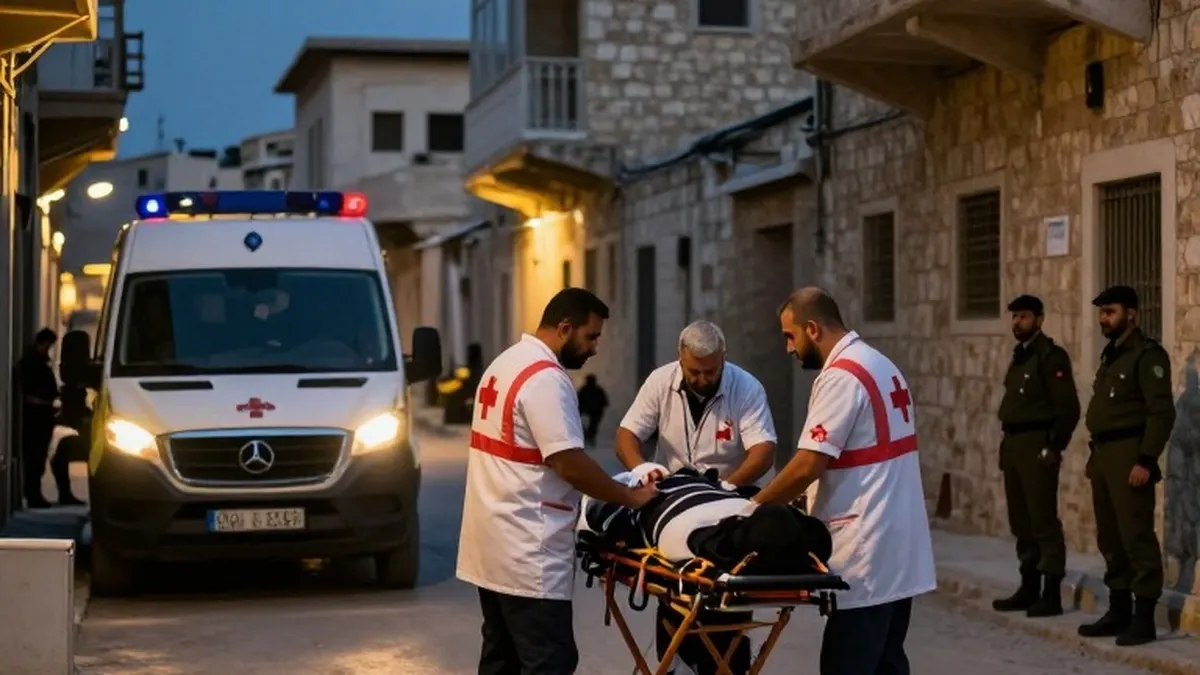
Healthcare workers in the occupied West Bank are facing a significant rise in violence from Israeli soldiers and settlers, according to a new report by Physicians for Human Rights Israel (PHRI). The organization released findings on Monday indicating that incidents involving Palestinian medical staff surged by 350 percent between 2022 and 2024. The data suggests that emergency response teams are frequently subjected to assaults, threats, and intimidation, even when they are clearly identified as medical personnel.
The report is based on interviews with 25 medical professionals who shared their experiences of working under increasingly hostile conditions. One paramedic from the Nablus area recounted a specific incident where Israeli soldiers blocked his path to a wounded man. He stated that he was standing close enough to reach the patient easily, but the soldiers stopped him. The man bled out and died before the soldiers moved, allowing the medics to finally access the body.
Interviewees described a range of abuses, including physical beatings, threats at gunpoint, verbal harassment, and humiliating searches. All participants in the study reported feeling constantly on edge, with persistent worries that they might be stopped, attacked, or prevented from reaching patients. The psychological toll of this uncertainty has become a defining feature of daily work for these staff members.
The fear of danger is so prevalent that routine tasks have become high-stakes events. One ambulance driver explained that every phone call requires a level of caution and every trip out of the home carries the risk of not returning. This pervasive sense of vulnerability affects not just the safety of the medics but also the speed and effectiveness of their response to emergencies.
PHRI also documented cases where medical staff were compelled to continue treating patients while simultaneously facing violence and threats themselves. This dual pressure compromises the quality of care and increases the risk of injury to both the provider and the patient. The report highlights how the environment of care has deteriorated significantly over the past few years.
Imran Anati, the author of the report, characterized the situation as a dangerous escalation. He noted that this trend accelerated after October 7, 2023, which marked the beginning of what he described as Israel's genocidal war on Gaza. Anati argued that these events are not isolated occurrences but represent a systematic assault on Palestinian emergency medical services for which Israel holds responsibility.
Global health data supports these findings. Last year, the World Health Organization recorded 233 attacks on healthcare facilities and personnel in the occupied West Bank. Of these, 165 incidents specifically affected medical transport, highlighting the critical role that ambulances and mobile units play in the region's fragmented healthcare system.
Logistical challenges further compound the crisis. Israeli checkpoints often force ambulances to take long detours to reach hospitals. This delay can be fatal, with some patients dying en route to care. Pregnant women have also been forced to give birth outside of hospital settings due to these transportation hurdles, adding to the strain on an already stressed system.
PHRI has previously warned that the medical infrastructure in the occupied West Bank is on the verge of collapse. The latest report underscores the urgency of this warning, showing that the combination of direct violence and systemic obstruction is eroding the capacity of healthcare workers to save lives.
The findings released on Monday provide a detailed account of the changing landscape for medical staff in the region. As the number of incidents continues to rise, the report calls for a deeper understanding of how these attacks impact the broader health ecosystem and the people it serves.