UN Court Rules Myanmar Committed Genocide Against Rohingya
In a historic 9-6 decision, the International Court of Justice determined that Myanmar's 2017 military operations in Rakhine state constituted genocide against the Rohingya people.
By Renata Mehta ·
The Hague, Netherlands. The United Nations' highest judicial body has issued a landmark ruling, determining that Myanmar committed genocide against the Rohingya ethnic group during a brutal military campaign in 2017. This decision, delivered on Thursday, marks the first time the International Court of Justice has found that a state has committed the crime of genocide.
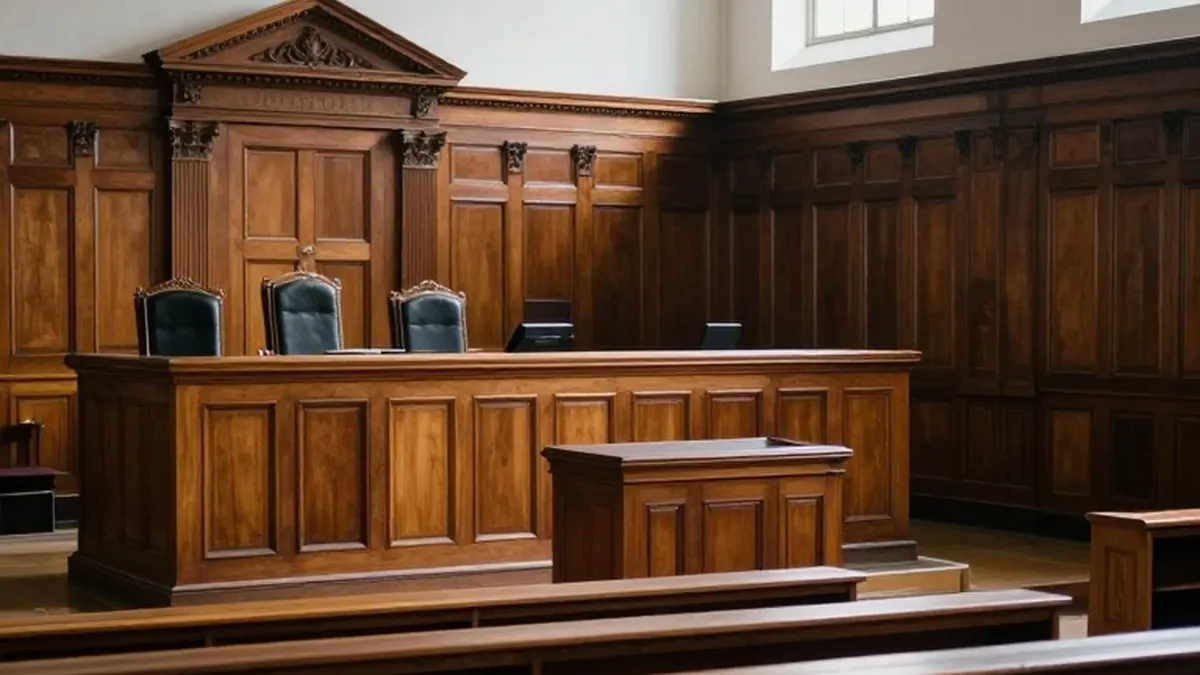
Yuji Iwasawa, the President of the International Court of Justice, announced the verdict from the court's wood-paneled Great Hall of Justice. Speaking to the assembled audience, Iwasawa stated that the panel of 15 judges reached a 9-6 decision. He declared that Myanmar violated its obligations under the Genocide Convention by targeting the Rohingya in northern Rakhine state. The court formally rejected Myanmar's argument that the military actions were a legitimate operation against insurgents.
The judgment details specific acts of violence that met the legal threshold for genocide. Iwasawa noted that the court found Myanmar's security forces killed thousands of civilians, perpetrated widespread sexual violence, and inflicted extreme violence on children. The ruling also highlighted attacks on Rohingya who were attempting to flee in large numbers. Under international law, establishing genocide requires proof of an intent to destroy a group in whole or in part, a standard the court said the evidence satisfied.
The proceedings were initiated in 2019 by The Gambia, a Muslim-majority nation, which asked the court to rule that Myanmar had breached the 1948 Genocide Convention. Gambia sought orders for Myanmar to stop illegal activities, punish those responsible, and eventually grant the Rohingya full citizenship and the right to return home. The court's evidence indicated that approximately 10,000 Rohingya were killed during the operations that began in August 2017.
Yasmin Ullah, a Rohingya rights activist who has lived in exile since the 1990s, attended the three-hour reading of the ruling. She described the day as significant for all oppressed people who have felt their suffering was ignored. Ullah emphasized that the community has spent nearly a decade in a state of limbo, living in precarious conditions across the Asia-Pacific region. The decision aims to provide recognition and dignity to a group that has been displaced for years.
Currently, about 1.2 million Rohingya refugees reside primarily in crowded camps in Cox's Bazar district. These refugees face harsh conditions, including risks from fires, infectious diseases, and monsoon landslides, along with inadequate sanitation and strict work restrictions. While the court's rulings are legally binding, the institution lacks direct enforcement power and relies on reporting noncompliance to the U.N. Security Council.
Legal experts suggest this ruling may influence other pending cases. Melanie O'Brien, a professor of international law at the University of Western Australia, noted that genocides share similarities in how they are committed. The court is currently handling other allegations, including a case brought by Ukraine against Russia regarding the 2022 invasion and a case brought by South Africa accusing Israel of breaching the Genocide Convention in Gaza. In a previous 2007 judgment, the court found that Serbia violated its obligation to prevent genocide during the 1995 Srebrenica massacre.
In March 2022, the United States officially declared that Myanmar's treatment of the Rohingya amounted to genocide. At the time, Secretary of State Antony Blinken stated that those responsible for the acts would eventually have to answer for them. The current ruling reinforces that position, providing a definitive legal conclusion to the events of 2017.
More News · National news · Report a business · Got a Story?