NASA Debuts X-70 Fractal Design
The agency promises a modular, Mach 0.75 testbed that could fly within two years.
By Amit Chukwu ·
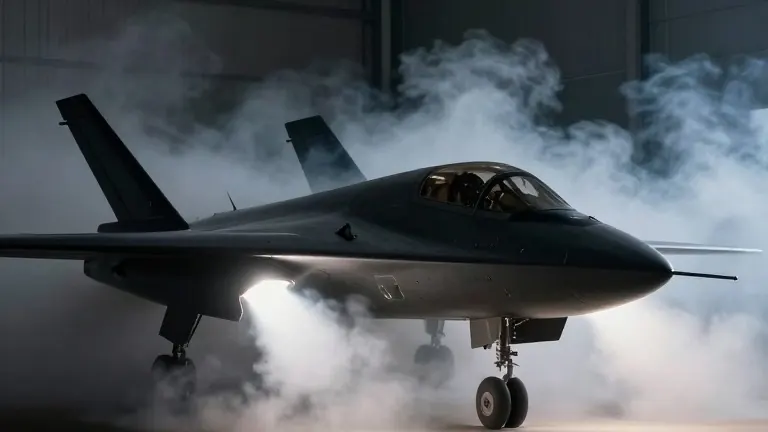
NASA Administrator Jared Isaacman introduced the X-70 Fractal on November 4 at the UP.Summit in Kennedy Space Center, Florida. The agency describes the new aircraft as a crewed platform built for high-performance testing. Isaacman stated the design allows for rapid swaps of internal and external payloads.
The press release provided specific performance metrics for the X-70. The aircraft is designed to cruise at Mach 0.75 and reach altitudes up to 45,000 feet. Its operational range extends beyond 1,726 miles, or 2,778 kilometers. These figures suggest a versatile testbed capable of sustained high-speed flight.
Weight specifications indicate a takeoff mass of 10,000 pounds, which is equivalent to 4,536 kilograms. The modular architecture supports up to 2,000 pounds, or 907 kilograms, of experimental equipment. This payload capacity allows engineers to test various systems without requiring a new airframe for each experiment.
Isaacman said the X-plane could take flight within two years. He emphasized that the reconfigurable flight-control technology will help teams move quickly between experiments. The announcement included an image of the aircraft, which appeared as a dark silhouette obscured by smoke. The visual style of the graphic suggests it was generated by artificial intelligence.
The official release did not name a specific manufacturer for the project. NASA has not yet disclosed which company will build the airframe. Isaacman noted that the modular design keeps teams learning and moving fast from one test to the next. The agency aims to use the platform to advance maneuverability and control technologies in real flight.
More Business · Customer Complaints · Report a business · Got a Story?