Suspected AI Images in Nigeria’s Voter Register Raise Election Concerns
Nigeria’s electoral commission is investigating suspected AI-generated images in its preliminary voter register as concerns grow over disinformation and public trust ahead of the 2027 elections.
By Amit Chukwu ·
Nigeria’s electoral commission faces questions about its readiness for the 2027 general elections after its preliminary voter register reportedly included images suspected of being generated by artificial intelligence. With just over two months remaining before voting, the findings have added to concerns about how emerging technology could affect confidence in the electoral process.
The Independent National Electoral Commission, known as INEC, released the register to public scrutiny, but reported irregularities have drawn criticism. These include images with exaggerated facial characteristics, repeated names and entries for people who have died since the previous election. Commission chairman Joash Amupitan said investigators were examining discrepancies potentially linked to AI. He also announced a dedicated unit to track AI threats, identify deepfakes and protect electoral integrity.
President Bola Tinubu is seeking another term with a campaign centered on tackling insecurity and the country’s economic crisis. His opponents include former Vice President Atiku Abubakar and senior opposition politician Peter Obi. Manipulated political material is already familiar in Nigeria: before the 2023 elections, social media circulated deepfakes that falsely associated candidates with terrorism. AI could expand the scale of campaigns intended to boost candidates or damage their rivals.
Lois Ugbede, assistant editor at the fact-checking platform DUBAWA, told DW that monitoring showed AI-driven disinformation was becoming widespread. She said political parties were already using inflated crowd images to suggest they enjoyed substantial support. Such material, she warned, could shape political discussion and influence voters before the 2027 election.
Another risk is that awareness of convincing fakes could make people reject authentic evidence, according to Akintunde Babatunde, executive director of the Abuja-based Center for Journalism, Innovation and Development. He cited a lawmaker who made inflammatory comments at a campaign rally and subsequently claimed recordings had been manipulated. The concern extends beyond believing fabricated content to dismissing genuine information as artificial.
Chibuike Mgbeahuruike, an election consultant at CDD-West Africa, told DW that AI intrusion into INEC’s portal could further weaken an institution already facing low public confidence. He argued that the central problem was inadequate accountability around AI use, rather than the technology itself. Voters, he said, need transparent systems that can be independently examined and remain under human and institutional oversight.
Journalists also face pressure to verify potentially manipulated material. At a recent conference, Voice of Nigeria Director-General Mallam Jibrin Baba Ndace urged reporters to guard against accepting reports that could later prove false because of AI manipulation. He emphasized verification and protective measures as AI and other election technologies complicate the provision of impartial information by public institutions.
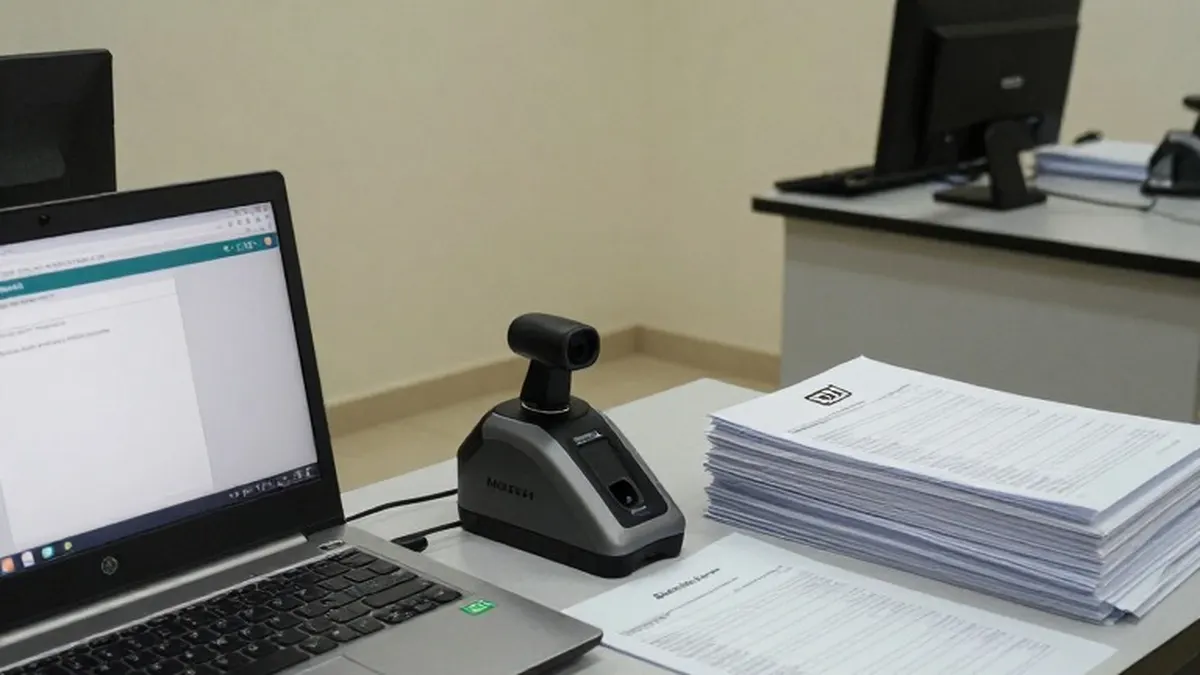
Nigeria has previously introduced electoral technology to improve efficiency and transparency. Direct Data Capture Machines arrived in 2011 to gather biometric information and help prevent multiple voting. The Bimodal Voter Accreditation System followed a decade later, combining fingerprint and facial recognition. During the 2023 elections, however, system failures and weak mobile signals delayed voter accreditation.
INEC counts more than 103 million registered voters for the coming election, but technological reliability and disinformation are only part of the challenge. Apathy, particularly among young Nigerians, remains a concern. In 2023, just 27 percent of registered voters cast ballots, the lowest turnout since democratic rule returned in 1999.