Portuguese Protesters Demand Action on Housing Crisis in Nationwide March
Tens of thousands of demonstrators across Portugal protested surging rents and housing costs, calling for stronger tenant protections and government intervention.
By Grace Almasi ·
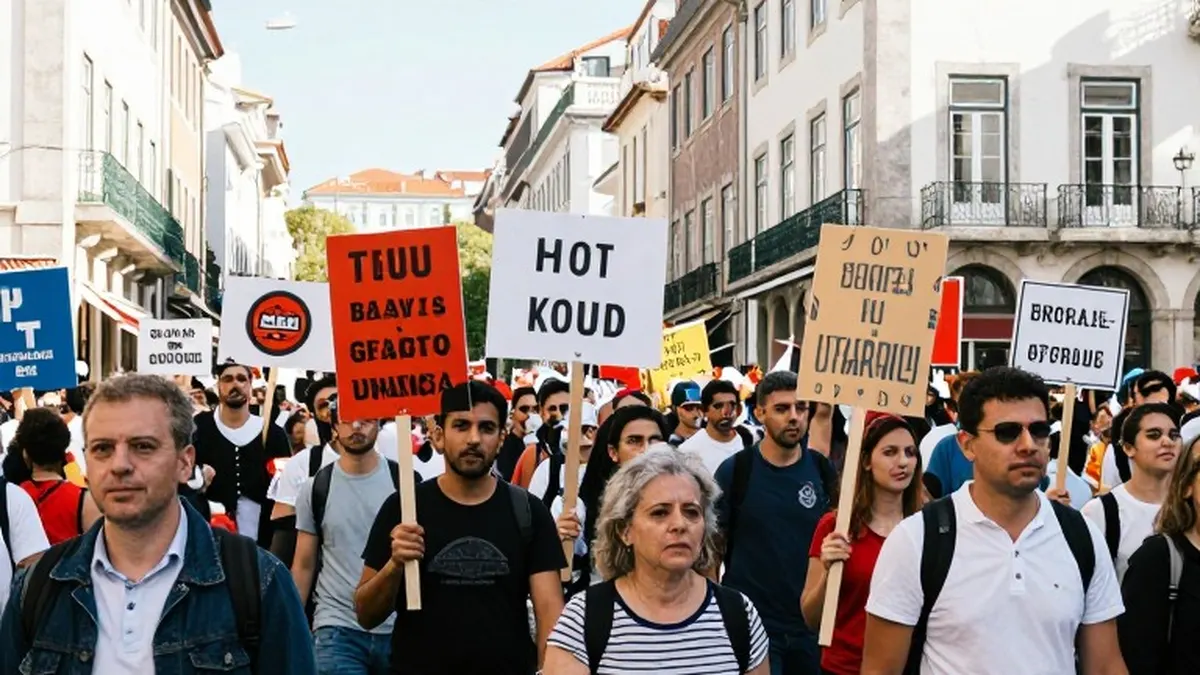
Tens of thousands of people took to the streets in more than 30 towns and cities across Portugal on Saturday to protest against sharply rising rental prices. The demonstrations were organized by the Casa Para Viver platform, which translates to A Home to Live In, and were held under the slogan They will not steal our right to a home. This event marked the largest national demonstration since the social movement began several weeks ago.
The protests were held in major cities including Lisbon, Porto, Faro, Portimao, Coimbra, and Braga. Participants ranged in age from teenagers to retirees, marching behind large banners. In Lisbon, the march was accompanied by drums, music, and chanting, creating a vibrant atmosphere as people voiced their concerns about the worsening housing situation.
Protesters made several specific demands of the government. They called for caps to be placed on rent increases and sought greater legal protections for tenants against eviction. Additionally, they demanded the construction of more affordable housing and the reversal of proposed changes to existing rental legislation. These changes had recently been approved by parliament to provide greater flexibility in rental contracts and accelerate eviction procedures, a move that housing campaigners warned could weaken tenant protections.
Rita Silva, a spokesperson for Casa Para Viver, told the Lusa news agency that the nationwide mobilization demonstrated that the housing crisis is affecting the entire country, not just major urban centers. The platform brings together approximately 100 housing associations and grassroots organizations. It is seeking tighter regulation on rental contracts, short-term tourist accommodations, and vacant properties to help stabilize the market.
Statistics indicate that house prices in Portugal have risen significantly faster than incomes in recent years. According to the EU statistical office Eurostat, Portugal recorded the largest increase in the home price-to-income ratio in the European Union between 2015 and 2025. The ratio increased by 61 percent, compared to 34 percent in the Netherlands, which was the second highest in the bloc.
The upward trend in housing costs shows no signs of slowing down. The National Statistics Institute reported last month that property prices rose by almost 20 percent between the first quarter of last year and the first quarter of 2026. Rental prices have also climbed significantly, recording a 68 percent increase since 2020, according to government data.
Much of the jump in real estate costs has been driven by foreign buyers and investment funds. The country's relaxed climate and proximity to the ocean have attracted many remote workers and retirees, further intensifying demand in the housing market. This influx of external capital has contributed to the pressure on local residents seeking affordable housing options.
The government has responded to the growing discontent by lowering taxes on new construction and restricting short-term rentals. It has also promised to build 145,000 new homes to address the shortage. However, officials acknowledged that the effects of these measures will not be immediate. Prime Minister Luis Montenegro has been urged by Casa Para Viver representatives to engage directly with the movement to find lasting solutions.
The recent protests in Portugal were inspired by demonstrations in neighboring Spain last month, which focused on similar issues of housing affordability and forced evictions. A broader wave of youth-led protests has swept across Europe in the latter half of this year, with demonstrators across the continent denouncing rising prices and a lack of future prospects.