Trump seeks trilateral nuclear accord as rivals remain cautious
President Trump aims to launch a new arms control framework with China and Russia during a meeting in Shenzhen, though Beijing and Moscow have shown limited enthusiasm for binding commitments.
By Amit Chukwu ·
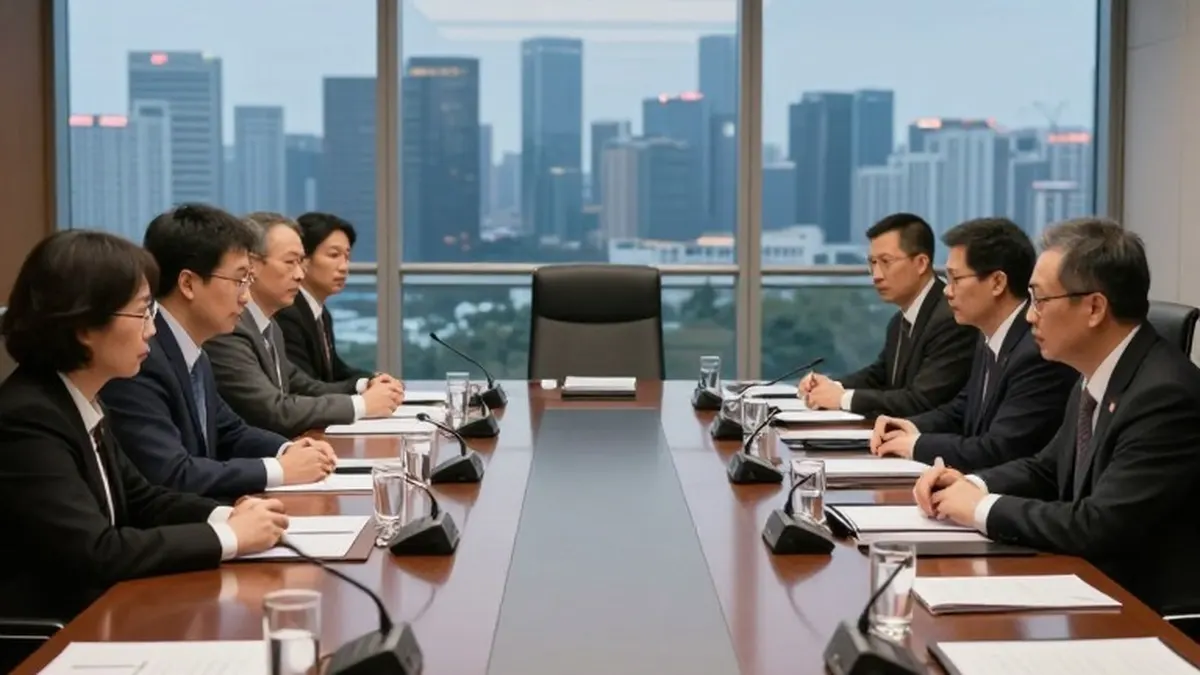
President Donald Trump has positioned nuclear nonproliferation as a central theme for his upcoming trilateral summit with Chinese President Xi Jinping and Russian President Vladimir Putin in Shenzhen, China. The meeting, taking place on Thursday on the sidelines of an Asia-Pacific leaders' summit, represents a significant diplomatic effort to manage the world's three most powerful nuclear arsenals. Despite Trump's focus, his counterparts have signaled a degree of reluctance regarding the adoption of new, binding limitations on their respective stockpiles.
The push to include China in a formal arms control agreement is not new for the American president, having been a goal since his first term. However, expectations for immediate breakthroughs have been tempered. The backdrop for these negotiations is complex, particularly following Russia's suspension of its participation in the New START treaty in 2022 during its invasion of Ukraine. This move effectively halted inspections of Russian nuclear sites. Although the original treaty expired in February of this year, Russia indicated it would voluntarily adhere to the existing limits for one additional year. Trump has argued that any new framework must go beyond the traditional bilateral model to include China and potentially other nuclear states.
Beijing has generally maintained that arms control should remain a bilateral issue between Washington and Moscow. The two nations together account for nearly 90 percent of the global nuclear arsenal, with each possessing more than 5,000 warheads. In contrast, China's stockpile is significantly smaller, with Pentagon estimates placing it at approximately 600 warheads. Projections suggest that if current expansion rates continue, China's arsenal could reach 1,000 warheads by 2030. David Sacks, a senior fellow for Asia studies at the Council on Foreign Relations, noted that China is building up its capabilities to a very significant degree and intends to continue doing so.
Diplomatic messaging from the three nations has revealed distinct differences in emphasis. The Chinese foreign ministry, through spokesperson Mao Ning, stated that the leaders would engage in an in-depth exchange of views on issues bearing on global peace, without explicitly confirming that nuclear arms control would be a formal agenda item. Meanwhile, a U.S. readout of a recent call between Secretary of State Marco Rubio and Chinese Foreign Minister Wang Yi highlighted an agreement on the importance of leader-level conversations to advance goals such as peace and denuclearization. The Chinese side's summary of that same conversation made no reference to such specific discussions.
Trump has been candid about the challenges facing these talks, acknowledging that persuading other nations to reduce their nuclear stockpiles is a difficult endeavor. He remarked on Monday that while denuclearization is a tough subject because no nation wants to relinquish its nukes, the topic would definitely be on the table during the summit.
The diplomatic talks come amid heightened displays of military power. Just before the Asia-Pacific Economic Cooperation summit began, the United States conducted a previously unannounced test of an unarmed intercontinental ballistic missile from Vandenberg Space Force Base in California. Shortly after, Russia landed two strategic bombers in Vietnam, a move that coincided with Vladimir Putin's arrival in China.
Experts suggest that while a single meeting is unlikely to yield dramatic results, it could serve as a catalyst for sustained negotiations. Daryl Kimball, executive director of the Arms Control Association, emphasized that a top priority for all three leaders should be preventing a costly and escalatory arms race. He warned against the further buildup of nuclear forces and the potential resumption of nuclear testing by any state.
However, not all analysts are convinced that a trilateral format is ideal. Da Wei, director of the Center for International Security and Strategy at Tsinghua University, argued that nuclear arms control is a complex topic and may not be a proper focus given the limited time the leaders will spend together. Nevertheless, he suggested that even a simple statement acknowledging that nuclear war is unwinnable and should not be fought would be helpful.
Secretary of State Rubio has also acknowledged the long timeline required for such agreements. Writing in February, he noted that past pacts like New START took years to negotiate and were built on decades of precedent between two powers. He concluded that just because a task is hard does not mean it should not be pursued, nor should the international community settle for less.
More News · National news · Report a business · Got a Story?