Ukraine confirms long-range naval drone attack on Russian ships in Libyan waters
Kyiv deployed seven domestically built drones to strike two Russian vessels off the coast of Libya, sinking the corvette Merkury and damaging a cargo ship.
By Grace Almasi ·
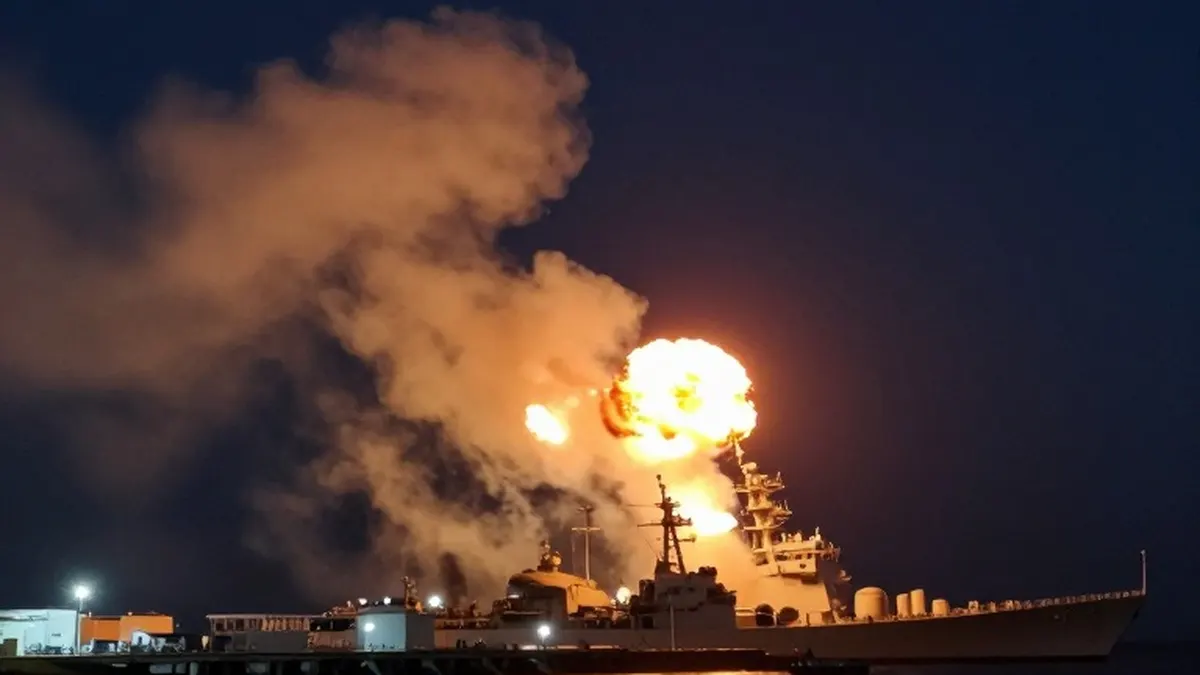
Ukraine has officially confirmed that its forces used naval drones to attack two Russian vessels off the coast of Libya on Sunday. The operation resulted in the sinking of the corvette Merkury, which is considered one of the newest additions to the Russian naval fleet.
The Security Service of Ukraine, or SBU, stated that seven home-grown naval drones were launched from a mothership for the mission. President Volodymyr Zelenskyy described the operation as exemplary and emphasized that Ukraine is continuing its activities in designated waters to counter Russian aggression while advancing its own weapons development.
Video footage released by the Ukrainian president, captured by an approaching drone, showed the weapons striking the side of the warship while it was docked at the Benghazi naval base. The impact caused significant explosions that illuminated the night sky. The SBU noted in a statement that the strike demonstrated that Russian naval logistics networks lack safe routes, even at distances far beyond the Black Sea.
The second target was the dry cargo ship MV Angara. According to Zelenskyy, Russia was utilizing this vessel to transport weapons. The attack was conducted approximately 2,400 kilometers from the main frontline in Ukraine, marking another bold long-range assault by Kyiv’s forces. This follows recent Ukrainian strikes on the Kerch bridge, a key supply line to occupied Crimea, and the Russian Baltic port of Kaliningrad.
Local residents in Benghazi reported hearing loud explosions and seeing flames at the naval base early on Sunday. Civil defense units responded quickly to extinguish the fires, according to authorities in eastern Libya. The Merkury had been docked to refuel and resupply under a cooperation agreement between Russia and the eastern-based Libyan government.
Russian President Vladimir Putin had shown personal interest in the Merkury. In 2019, he visited the shipyard in St. Petersburg where it was under construction and supported naming it after a historical brig that defeated Turkish warships in 1829. During a 2023 Navy Day parade, Putin highlighted the vessel as proof of Russia’s consistent naval buildup, praising its St. George flag as a symbol of naval tradition.
Russian state media also promoted the ship’s capabilities. The news agency Tass referred to it as the newest missile corvette, while TV Tsentr claimed its stealth technology rendered it invisible to radar. Libya has increasingly become a proxy battlefield, with Moscow supporting Khalifa Haftar’s breakaway government in Benghazi to establish a military presence in North Africa and the Sahel.
In recent months, reports have emerged of growing Ukrainian operations in the region. In April, the Associated Press noted Ukrainian drone specialists operating at military sites in western Libya. In September, Libyan authorities denied reports that they allowed Ukraine to use a military base to launch drones at Russian shadow fleet vessels in the Mediterranean.
The UN-recognized government in Tripoli expressed alarm over the risks of involving civilian ports in external conflicts. The UN mission in Libya, UNSMIL, voiced serious concern over the attacks and called for an immediate, independent, and transparent investigation. The mission stated on social media that Libya must not become a battleground for foreign conflicts, though Russia has not yet issued an immediate comment on the strikes.
Ukraine has widely publicized its progress in drone technology since the start of the war over four and a half years ago. Naval drones have been used extensively to target Russian infrastructure and ships in the Black Sea. In 2024, Ukraine claimed to have destroyed the Russian landing ship Cesar Kunikov near Crimea. It has also targeted the Russian shadow fleet, including an attack on an LNG carrier off the Libyan coast in March that was blamed on Kyiv.