Nepali Survivors Rebuild Community Amidst Ongoing Flood Recovery Efforts
Months after devastating glacial floods killed over 1,500 people, local aid workers in Nepal are helping their neighbors recover while managing their own trauma and the approach of winter.
By Amit Chukwu ·
Januka Dhital recalls the moment the floodwaters struck her home in Uttargaya, Nepal. She had been preparing snacks for a catering event when a man on a scooter warned her of the rising water. Stepping outside, she witnessed the hillside collapsing in a wall of dust and darkness. She grabbed her young son and escaped to higher ground, leaving her husband and daughter behind at their respective workplaces. After hours of anxious searching, the family was reunited, though her husband was injured and their home was obliterated.
Dhital is one of approximately 100,000 people whose lives have been upended by floods triggered by glacial melt, a phenomenon exacerbated by climate change. The disaster has claimed at least 1,500 lives, with more than 5,000 individuals still missing. According to United Nations data, the floods damaged or destroyed seven health facilities, 23 schools, 10,000 toilets, and 64 water systems. As winter approaches, health officials report early signs of a spike in malnutrition among the displaced population.
Shyam Pathak, a chief of health at UNICEF, describes the magnitude of the devastation as unimaginable. While international attention and the noise of rescue helicopters have faded, the focus has shifted to the intricate work of helping communities rebuild. Pathak notes that this disaster is unique because many of the aid workers are also victims trying to restore their own lives. Dhital found employment through the nonprofit Helen Keller Intl after a short training program that included mental health support. She now works with postpartum mothers, pregnant women, and children under five, a role she says is keeping her going.
Nutritional challenges are growing as families lose access to local farms and gardens. Pooja Pandey Rana, who directs Helen Keller’s work in Nepal, points to preliminary data from Naukunda Gaunpalika showing moderate acute malnutrition rising from 0.8 percent in June to 8.7 percent in October. Dhital explains that many families now rely on dried and packaged foods like instant noodles due to lost livelihoods and poor sanitation. These conservative estimates likely underestimate the true extent of the problem.
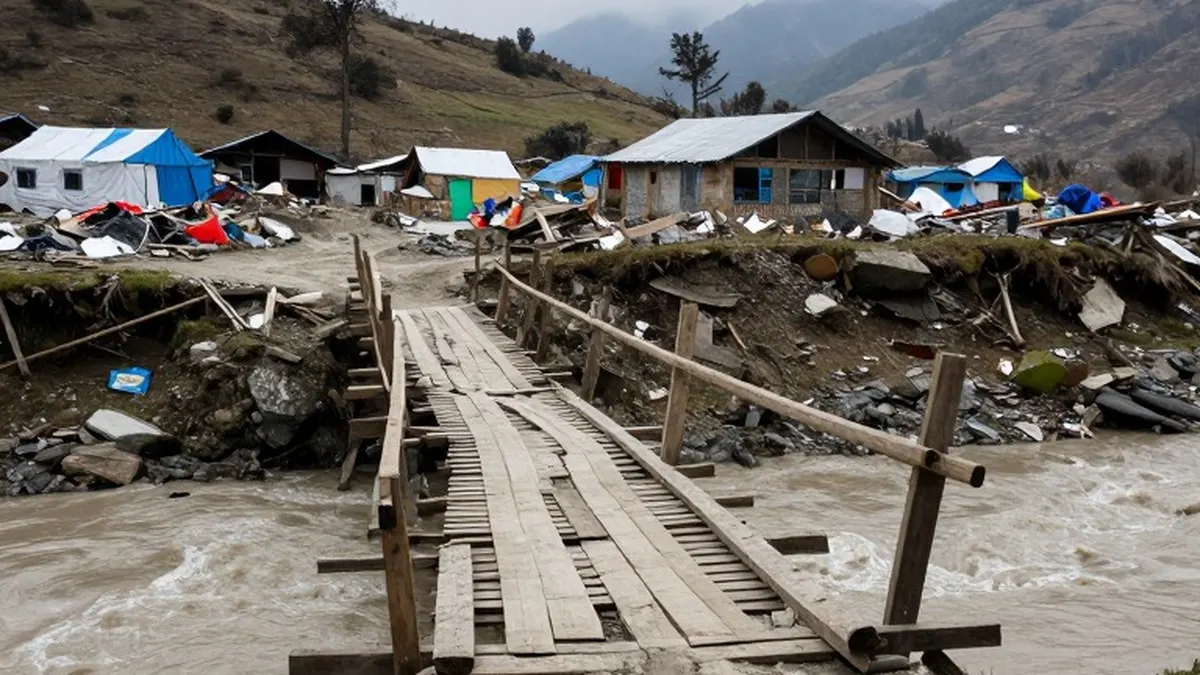
Infrastructure damage has compounded the recovery efforts. More than 100 bridges have been destroyed, severing connections for communities in the upper north of the impacted areas. Ayush Joshi of Save the Children notes that delivering food and life-saving support to these cut-off regions remains a significant challenge. Pushmaya Tamang, a community aid worker, often crosses makeshift bridges to reach these isolated villages. She describes the structures as shaky and dangerous, particularly when people attempt to cross from both directions simultaneously.
Tamang’s home village in Nuwakot has essentially vanished, leaving her with a heavy sense of grief. She lost her younger sister in the floods and finds it difficult to find the right words to comfort other grieving families. Despite this, she continues her work, noting that the daily tasks help her cope with the loss. "Our hearts cannot bear to see the destruction," she says, describing her once vibrant village as now gloomy and dark.
The approaching winter presents additional threats to survivors living in temporary shelters. Joshi warns that cold exposure, overcrowding, and poor ventilation increase health risks. Responders are currently winterizing tents and moving families into safer shelters while providing medical care. In the longer term, the question of how to rebuild remains unresolved, with no clear plans yet for housing, water systems, or schools.
Preliminary estimates place the cost of rebuilding at roughly five billion dollars, a substantial figure for the small nation. The U.N. Climate Fund has approved twenty million dollars for recovery, and domestic and international donors have contributed over one hundred million dollars, though this remains far short of the total need. For now, aid organizations are prioritizing immediate needs, relying on workers like Dhital and Tamang who are helping their communities heal while processing their own trauma.
The resilience of these local workers is a hallmark of the current response. Pathak from UNICEF observes that health workers are returning to their duties despite being victims themselves, which has significantly aided the recovery process. As life continues, survivors and workers alike are learning to accept the changes nature has brought upon them while working to stitch their communities back together.
More News · National news · Report a business · Got a Story?