AI Music Now Indistinguishable From Human Recordings, Studio Owners Say
Producers in San Antonio report that generative tools can mimic live performances so closely that trained ears struggle to tell the difference, raising questions about future jobs and creative control.
By Renata Mehta ·
Generative AI platforms can now produce music that is nearly impossible to distinguish from human-created recordings, according to local producers who say the technology is reshaping the industry.
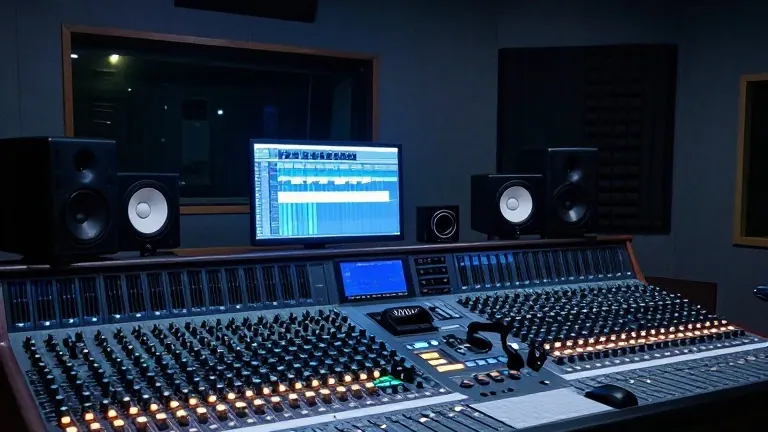
Mack Damon, owner of Stone Creek Sound in Helotes, just outside San Antonio, stated that AI has reached a level where even a trained ear can barely detect the difference. He cited a specific instance where he listened to a violin track generated by a computer. "I can’t believe that violin is fake, like it's really, really impressive," Damon said.
The technology is already moving from novelty to standard practice in professional studios. Damon and his colleagues are currently using AI tools to separate tracks and clean up existing audio files. Their goal is to integrate these utilities into their workflow to support their creative process rather than replace the human element. "We're trying to figure out a way to use the tools to enhance our creativity, not replace it," Damon explained.
While some adopt the tools, other artists remain wary of how their work is being used. Garrett T. Capps, a progressive country musician and co-owner of the Lonesome Rose Bar in San Antonio, recently learned his music is included in a database that may be used to train AI software. Capps said he did not grant permission for this use. "I kind of just assume that all of my information is already being exploited, like every single part of my life, along with everyone else," he said.
Capps has experimented with the technology but does not use it in his own compositions. He views his music as a personal expression that requires human collaboration. "It's hard for me to collaborate with people, other humans. So why would I do it with a machine?" he said.
RB Blackstone, a musician and computer programmer, offers a technical perspective on the process. He argues that AI does not create music in a traditional sense but instead reorganizes patterns it has learned from existing works. "It’s reformulating different relationships between different things that it's heard, that someone has created at some point," Blackstone said. He noted that while the output may move listeners, the software lacks an internal drive to communicate a specific message or emotion.
Damon warned that the technology could displace workers in the lower tiers of the music industry. He believes the live, in-person connection between musicians remains difficult for machines to replicate. Beyond the creative sector, all three experts raised concerns about the environmental cost of the data centers required to power these digital platforms.
More Business · Customer Complaints · Report a business · Got a Story?