San Antonio innovation sector posts job gains despite sharp drop in startup formation
A new regional report finds that while innovation employment rose in 2025, new venture creation and capital investment declined significantly, prompting a call for deeper local reinvestment.
By Grace Almasi ·
A consortium of four local institutions released a 2026 report on Wednesday that establishes a baseline for San Antonio’s innovation economy. The study, produced by Geekdom, Port San Antonio, Tech Bloc, and VelocityTX, assesses the city’s performance in biotechnology, software, cybersecurity, defense, and aerospace. Greater:SATX served as the lead data partner for the project. The findings indicate a mixed picture for the region, showing growth in employment alongside a contraction in new business activity.
Innovation sector employment in the San Antonio metropolitan area increased to 55,054 jobs in 2025, up from 53,703 in the previous year. The Austin metro area recorded the fastest employment growth among major U.S. cities at 3.1 percent. San Antonio followed with growth of 2.5 percent, outpacing Charlotte at 2.2 percent and Dallas at 1.3 percent. However, the report notes that innovation industries represent a smaller share of local employment than the national average.
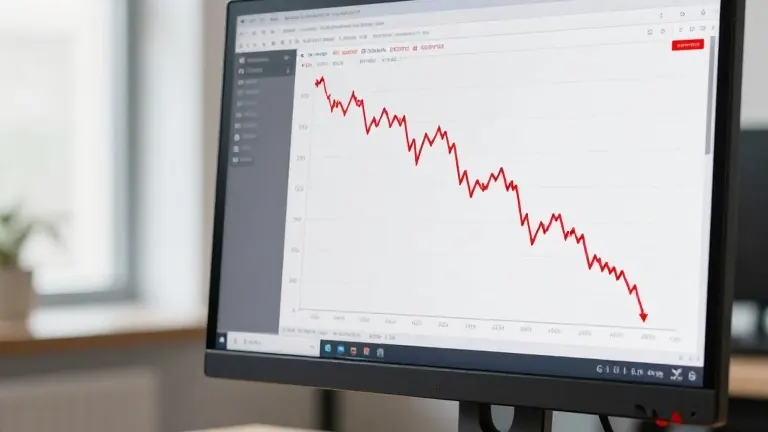
New business formation declined sharply. Twenty-three new startups launched in 2025, down from 49 in 2024. Venture investment dropped by 31 percent, and patent grants fell by 24 percent. Early-stage venture capital, which totaled $127.5 million in 2024, decreased by 92 percent. Venture capital per San Antonio resident is down 77 percent. These figures suggest a tightening of the capital cycle required to sustain long-term growth.
Nathan Anderson, a chief technology officer and entrepreneur, described the report as containing hard truths mixed with optimism. He noted that San Antonio struggles compared to other major cities due to a lack of connection between founders and investors. Anderson, who owns a tech consulting firm, said the draw to Silicon Valley or Austin makes it difficult to secure funding locally. He stated that major investors often require headquarters relocation to be closer to their assets.
Rene Dominguez, president and CEO of VelocityTX, emphasized that the city is not starting from scratch. He stated that the region possesses the elements of a strong innovation economy but must convert those assets into economic outcomes. The report cites the need for a deeper cycle of company creation and investor participation. It highlights that successful founders and investors must help finance future projects to maintain momentum.
The study also examined federal research and development funding. Southwest Research Institute received the largest share of the region’s $2.55 billion in qualifying contracts. Port San Antonio received almost $224 million, and San Antonio International Airport received $88 million. UT San Antonio secured nearly $35 million, while the South Texas Medical Center received $16 million. The report identifies physical proximity to test cells, lab benches, and airspace as critical for the specific type of innovation the city pursues.
Positive indicators include a 1.3 percent increase in STEM degrees awarded by local universities and research institutions in 2024. Jim Perschbach, president and CEO of Port San Antonio, said the city must focus on employment in the innovation sector. He argued that investing in people and optimism leads to success. The report states that the region is building on a decade of groundwork, though constraints in capital and startup formation remain evident.
Source: San Antonio Report
More Business · Customer Complaints · Report a business · Got a Story?